The world’s biggest auction site has implemented a ratings system designed to promote high selling standards. Unfortunately, its effect is to punish good sellers as well as bad.
Here’s how it works. Buyers are invited to leave seller feedback after a transaction ends. They rate the transaction positive, negative or neutral, and then offer “Detailed seller ratings”. Buyers are asked to rate the transaction in four categories: description, communication, speed of dispatch, and fairness of p&p charges:
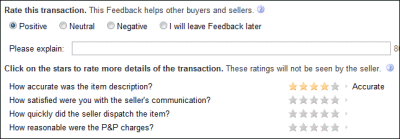
The difference between a four and five star rating is that for five stars the word “very” is added. For example, for communication you could be “satisfied” or “very satisfied”.
What the buyer does not know is that if the seller gets an average rating below 4.1, they can no longer list items for sale. If they are below 4.3, their listings may be “demoted” in search results. Here is the announcement from ebay.com:
What happens to sellers who do not meet the DSR requirements by November 3, 2008?
Sellers with a DSR below 4.1 will be blocked from listing on eBay.com. Sellers with a DSR below 4.3 but higher than 4.1 may have their listings further demoted in search results.
Sellers caught out by this are furious, partly because a buyer who awards 4 stars in all four categories is likely under the impression that they gave positive feedback. After all, what is the difference between “Accurate” and “Very accurate”? I am likely to do this myself, giving four stars if generally satisfied, and five for exceptional service.
The possibility of a seller getting banned from listing with an average four-star rating would not occur to me.
eBay’s intention seems to be to tilt the balance of its policies away from sellers and towards buyers. Another example of this is that sellers cannot give a fraudulent or unreasonable buyer negative feedback. However, it is the sellers who pay eBay’s fees, not the buyers, and it risks losing the goodwill of its customers.
In eBay-speak then, “satisfied” means “unsatisfied”.