The new year beckons, so here’s a quick look back at my web stats.
I’m surprised by the most popular search phrase. Believe it or not, it’s vb.net database. I wrote a short article on getting started with a vb.net database app. This was in .NET 1.1 days. My presumption was that when you fire up VB.NET with the intention of writing a simple database application, it is not particularly obvious how to go about it. I wasn’t altogether happy with the piece; yet the number of hits suggests that this is indeed a common source of puzzlement.
Next up is dreamweaver 9. Back in June I picked up some information about the next version of Adobe’s web design tool. There’s clearly keen interest out there.
Other bit hits are .net mac (are you listening Microsoft?), htmleditor (looking for this) and wpfe, attracting more interest now that the CTP is out (here’s the interview on the subject).
The list in full:
- vb.net database
- dreamweaver 9
- jbuilder
- htmleditor
- .net mac
- private bytes
- tablet pc
- wpfe
- sqlite delphi
- msi editor
What about pages retrieved? At the top is the blog, of course, with twice as many hits to the blog home page than there are RSS retrievals. When you consider that each RSS subscriber typically creates several hits per day, that’s surprising.
Here are the other most read articles:
- The htmleditor phorum, now a useful archive of information on mshtml, and the c# htmleditor download page.
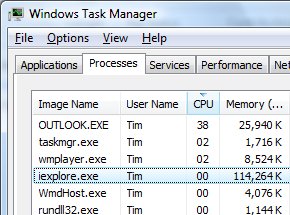
- Why does my dot net app use so much memory? – lot of people shocked to see what Task Manager is telling them
- Wrestling with the Windows installer – reflecting your frustrations with MSI
- Notes on Sqlite – out of date now
- ipodphoto.php – also out of date, though I gather these older iPods are sought-after for things like the firewire port and according to some, superior audio quality
- wpfe.php – as mentioned above
- Sqlite wrapper for Delphi
- Running .NET on a Mac – very out of date, but reflects the interest in this subject
- VB.NET Database sample as mentioned above
- Why Microsoft froze VB 6.0 – a subject of enduring interest
Other points of interest:
Browsers: 79% Windows but only 60% Internet Explorer, 14% Firefox. I reckon the figures are distorted somewhat by bots that awstats is failing to detect.
Search engines: 93% Google. 2.1% MSN, 1.6% Yahoo. This is not only an indicator of Google’s market dominance. For some reason Google tends to rank pages on this site higher than the other search engines. This makes a big difference to the hits.
How many visits? Around 1 million, from 250,000 unique visitors.
Finally, tons of spambots, mostly trying to post comments, but some just trying to get into referral stats (as far as I can tell). It is a huge and offensive problem. Very little muck actually gets posted, but some of it gets into the stats, so don’t take the figures above too seriously.