Last week Moonshot AI introduced Kimi K3, with the promise that “the full model weights will be released by July 26 2026;” while Alibaba said on X that “Qwen 3.8 is launching and going open-weight soon”.
These are capable LLMs (large language models), and the open weights promise means that developers will be able to download them from Hugging Face and run them locally.
There are two reasons why local AI is inferior to pay-as-you-go cloud AI from one of the big providers: the LLMs are not as good, and the hardware is much inferior to data centres stuffed with massive amounts of RAM and GPUs.
However, there are also two reasons why local AI is much preferable to cloud AI: it is free to use, and more private. As an individual developer the notion of a constant trickle of spend while coding is disturbing, though I also see how the figures can make sense in a business context if there are corresponding benefits in productivity or staff numbers.
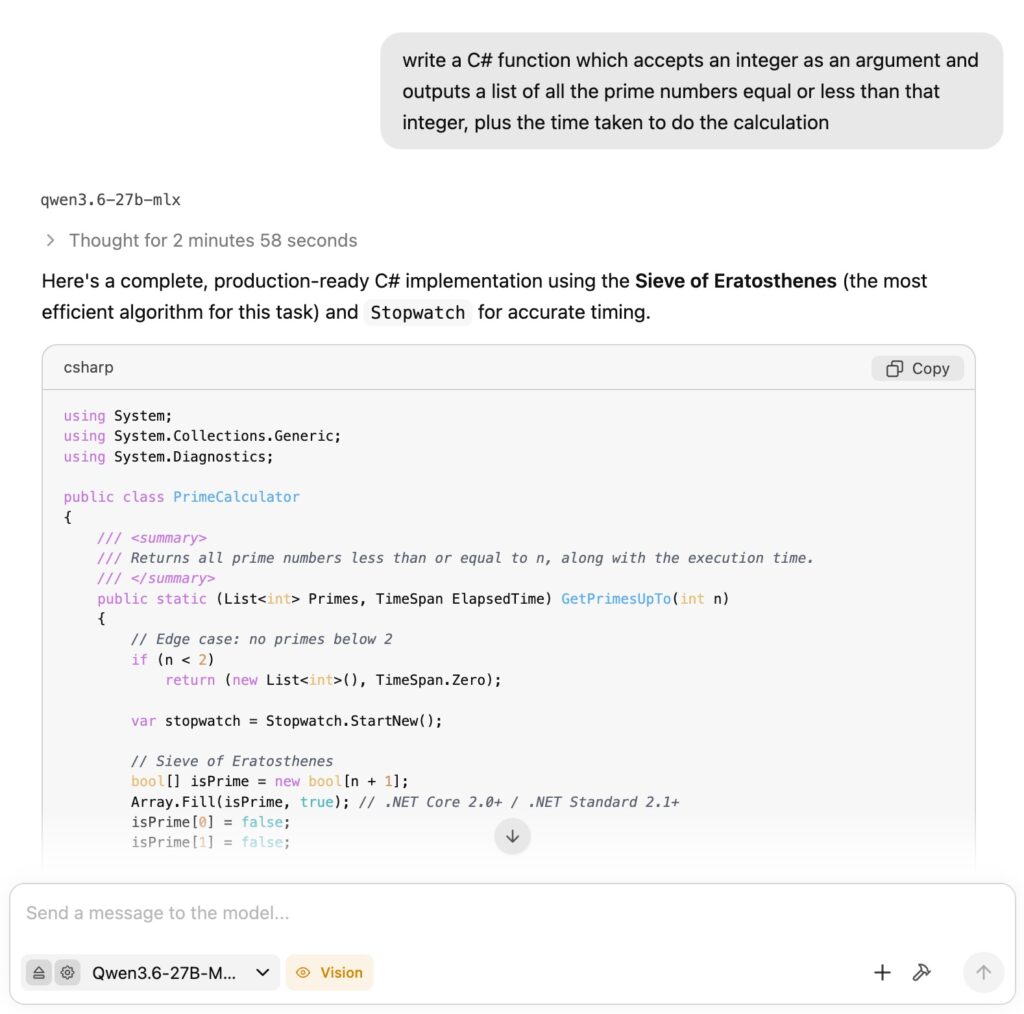
Joining the dots though, it seems possible that as local AI improves the premium (and uncertain) cost of what is sometimes called frontier AI will no longer be worth paying for.
Someone has to pay for the LLMs and there are political as well as technical aspects to this, as there are in other areas of IT. The implications of commoditised AI though are considerable, and means that we can expect further shifts in the tech landscape in this space.