AI coding makes it easier and quicker to re-create existing applications with new code, side-stepping copyright concerns since copyright protects code rather than specification.
In February this year Cloudflare rebuilt Next.js with AI in one week and then followed with a WordPress-compatible CMS (content management system) called EmDash.
Brandon Thomas, a developer from Atlanta, Georgia in the USA, founded Artcraft with the goal of creating clean-room implementations of popular (and expensive) applications including Adobe Photoshop, LightRoom and InDesign; Figma; Microsoft Word, Excel and PowerPoint; AutoDesk’s AutoCAD, and more.
The applications are coded in Rust, run cross-platform on Windows, macOS, Linux and FreeBSD, and Web via WebAssembly, and are open source on GitHub under the Apache 2.0 license. The GUI is driven by the egui library, which means controls are not native but drawn by the library.
On LinkedIn, Thomas said that “we do not decompile binaries or copy Adobe Code” and “yes, I am actually an engineer.”
The ArtCraft implementations have some advantages over the commercial originals, in that they run on Linux, promise no tracking or ads or telemetry gathering, and can perform well thanks to the Rust’s efficiency.
On Hacker News Thomas said that “software is over” and that this initiative heralds a new era of escape from what he called “cellphone incrementalism and platform lock-in.”
Let us not get carried away yet. I tried WordCraft (whose name I recall from a word processor for the Commodore Pet which could only hold a few paragraphs in memory before painful paging to disk) and was both impressed and disappointed. It looks great but failed to render a complex Word document which I have used before to test LibreOffice.
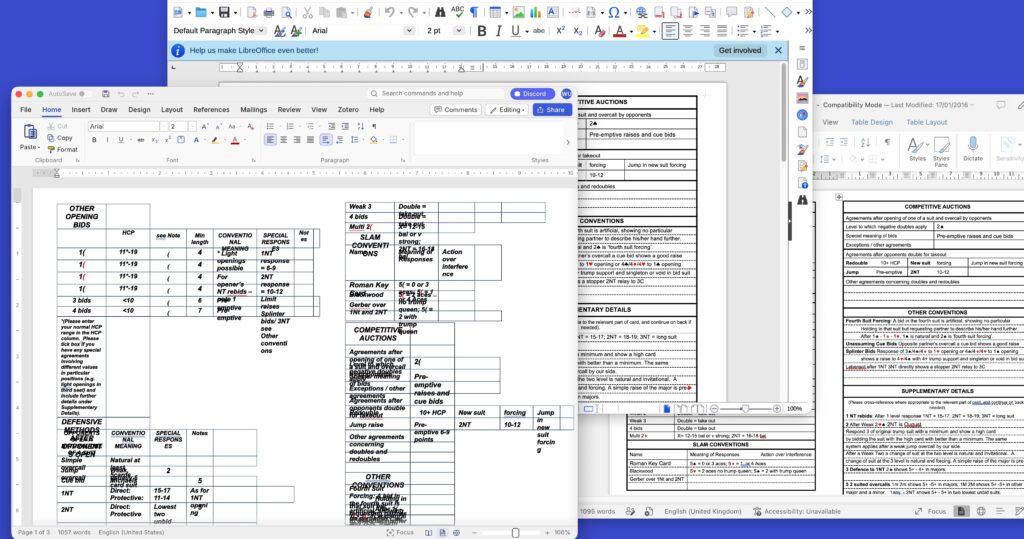
It is early days though and no doubt these and other issues will be fixed; most of the ArtCraft applications are described as Alpha releases.
Although the clean-room method is well established as a defence against copyright infringement, it does not remove patent restrictions. It is also now obvious that treating code as the essence of an application’s intellectual property is no longer possible and one must expect legal arguments if these applications, or other similar works, gain ground.
Nevertheless, the assumption that recreating applications to escape vendor lock-in is too expensive and difficult is now breaking down.; it is a big change for the industry even if, right now, it is hard to see all the implications.