WinUI Reactor: yet another way to code for the Windows desktop

Microsoft principal software developer engineer Alexandre Chohfi has posted about WinUI Reactor, an experimental framework for building WinUI applications using C# and a reactive pattern. The rationale for Reactor is two-fold:

  1. The popularity of React for web applications, and other reactive frameworks like SwiftUI and Jetpack Compose, makes using XAML for the user interface a barrier to adoption.
  2. Writing the user interface in plain C# is “easy for coding agents to read, write and check, so we now design for agents as well as people,” said Chohfi.

Note that Reactor is not a new platform, it is another way to code for WinUI, the existing platform which is supposedly the native UI framework for Windows but which competes with old-style Win32 (targeted by Windows Forms) and the DirectX-based WPF (Windows Presentation Foundation).

The easiest way to get started with Reactor is via the winapp CLI. Install the latest version and type winapp new selecting Reactor MVU App.

Creating a Reactor app with winapp.

The template coincidentally creates a counter app similar to the one in Chohfi’s post. The UI is coded in a Render method and there is no XAML file, everything is done in C#.

The Reactor demo app in Visual Studio Code.

Chohfi’s variant, which is also in the docs, is simplified but functionally the same. The template demo app calls UseReducer, whereas the documented demo calls UseState.

This may seem a terrible time to introduce a new (first previewed at Build in May) C# framework for desktop Windows. The niche for Windows desktop apps, mainly business applications, continues to shrink. Developers already face too many choices. Legacy .NET applications generally use Windows Forms or WPF, both of which still work.

It is hard to see many React developers wanting to switch to WinUI, when there are many ways to code desktop applications in JavaScript or TypeScript, including React Native, which seems a more natural choice.

Another issue is that this is not cross-platform. Coding a new application for Windows only seems short-sighted in most scenarios, hopeless for the consumer market, and for business use limited to companies standardised on Windows. That said, there is always an argument for using native frameworks on each platform, if the resources exist to build WinUI for Windows, SwiftUI for Mac and so on.

There is a Rust variant of Reactor and one can see this being of considerable interest, to Microsoft internally as well as for other developers. AI plus Rust is a potent combination.

There are indications that Microsoft is serious about Reactor, particularly in the remarks in Chohfi’s post about new Reactor controls being “candidates to land in WinUI itself,” and that “we’re actively working with the C# team” such that Reactor may influence the C# language.

I was also interested in Chohfi’s remarks about the mental model required to understand application code. For a XAML-based app, he said that “what does this screen look like when Count is 5 is a question you answer by reading three files and mentally running a binding engine. In Reactor, that last question has a very boring answer: read Render().”

I suspect that this is a reason for the continuing appeal of the Windows Forms framework. The mental model seems easy: one places controls on a canvas, sets their properties, and for interactivity one can just double-click a button and write the code that will run. This does not work so well for a complex application, but for something simple it is fine.

The MVVM (model-view-viewmodel) architecture which is common (though not required) for .NET applications has advantages, but even Microsoft architect John Gossman who was an early advocate for the pattern said that “for simple UI MVVM can be overkill” and that large numbers of bindings impact performance.

Reactor is MVU (model-view-update), as is React. In this pattern, the model is the state of the application, the view displays the state to the user, and update sends messages to update the state, triggered by user interaction or server activity.

Dublin Marathon after injury-interrupted training – a surprising sub-4

This is my Dublin Marathon story but begins a long time before – as often said, the marathon is the training. 2025 was amazing for me, every run went well including being an England Masters Representative at the Abingdon Marathon (3:26:13) and PBs at every distance from 1 mile up. Running seemed so easy; but from around December my body started to protest. The first thing to go wrong was an unusual injury called Flexor Hallucis Longus tendinopathy, which went months without an accurate diagnosis, messing up my training for the London Marathon in April. I recovered just about in time to get in some decent runs and ran London in 3:40:41. After that I hoped to be back on track; but a chest infection slowed me down, and then when I began to ramp up the miles in preparation for Dublin I pulled a hamstring, a classic case when during a last sprint at Parkrun my right leg collapsed; it did not hurt at the time, but the next day I could not run a step without agonizing pain.

I am not sure why all this happened but consider it to be a combination of much reduced core strength training along with long-term fatigue. It was also a mental thing; during 2025 I was fired up to achieve certain goals, run a marathon sub-3:30, qualify for London good for age, and so on. Once you plateau or start slowing down your goals have to change, perhaps in a good way if you run more for enjoyment and put less pressure on yourself.

Fixing the hamstring meant lots of core strength training, but running at something like full pace and distance did not happen until late September when I ran the Winchester Half. After that I managed one 20-mile training run at a slow pace (between 10 and 11 minutes per mile), another long run of 16 ½ miles at a similar pace, and otherwise just shorter runs to keep my legs moving. 

Core strength training on the other hand – I have been obsessive since the hamstring problem with 4 or 5 sessions a week of a workout targeting various muscles.

Onto Dublin then, beginning with the Expo on the Friday before to collect the bib and a fine goody bag with a woolly hat and numerous free samples. I enjoyed the expo though there were many complaints about long wait times both in an out of the car park – my advice would be to park elsewhere (we walked from the city centre).

Next day was the usual calm-before-the-storm Saturday including a tasty pasta-based carb load at lunchtime followed by only light feed for the rest of the day. The usual taper capers; I had a cricked neck from sleeping in an unfamiliar bed and a sniffle but nothing major. I researched how to treat a crick in the neck and saw the advice, “do not run or jog.” Never mind!

Race morning I headed out too early. Note to self: races before the start are miserable and one should arrive as late as possible, bearing in mind bag drop times and the like. It was a cold October morning; windy, not the lashing rain and storm once feared, but I was shivering despite my throwaway hoody and glad of my decision to wear woolly hat and gloves for the race itself. Despite copious amounts of hanging around, a last minute loo break meant that I was late into the start wave and could not get near the 3:50 pacers I had planned to start with. My idea had been to stay with them or even get a little ahead, but to allow myself to slip a bit if necessary and hope to finish under 4 hours.

The start was congested which at least meant there was no need to make any pace decisions early on, there was little scope even for weaving. The first mile was at a comfortable 9:00 pace, then as the congestion eased I increased my pace a little. I remember thinking that reaching 5K seemed to take an age, but 10K arrived in no time; funny how time plays tricks during a marathon. I got the beginnings of a stich and insisted to myself that stiches always fade away for me, and fortunately this one did. We passed through Phoenix Park then out onto a road with some fine views of Castleknock, then back into Pheonix Park and out again to the halfway point in Crumlin Road, tough going with a strong headwind. The first half had passed in 1:56:26, on target for 4 hours but without much scope for slowing down.

Mentally I divide marathons into three sections: the first half, then 13 to 20 miles (which Pfitzinger and Douglas call the no-mans land of the marathon), then the final 6.2 miles. It was in this second section that I hit some serious fatigue, not surprising given the interrupted training. I felt I was slowing down but hardly checked my Garmin when it beeped each mile, especially since it was now well ahead of the actual mile posts: my recorded distance in the end was 26.45 miles, substantially more than a marathon. I began to think in terms of a 4:10 or 4:15 time and not to worry about it. That said, I wanted to run rather than walk and so pressed on, reminding myself that I was more than half-way to the finish.

This was my sixth marathon but every one has been an intense experience and one that is hard to describe, starting in earnest in the second part of the race. It is enjoyable in some ways, especially a race like Dublin with fantastic crowd support and lots of friendly faces, but also unrelenting as one tries to keep up the pace. My body was holding up pretty well; a few niggles from time to time and a moment which I thought might be the beginning of cramp in my right calf but which soon fixed itself. 

The miles ticked by and I was pleased to see mile 20 and to enter that difficult last 10K, just two parkruns to go. Of course they are also the hardest miles, but I had reached the point of not caring too much about my time and just to keep running. I braced myself for the “Irish heartbreak hill,” a 3K climb starting on Roebuck Road between miles 20 and 21. In the event I hardly noticed it, a benefit of training in hilly Winchester. Apparently an earlier hill in Phoenix Park is actually longer and steeper, but one notices it less.

After taking gels every five miles (and a Clif Blok just to vary it a bit) I had a trace of the nausea I had suffered before in New York, probably related to hydration, so I stopped at the last drink station, between mile 24 and 25, and drained a full cup. 

At mile 26 I saw my wife, waved for the camera, and looked at my watch. To my surprise it said 3:56 and sub-4 was on after all. Perhaps if I had realised, I would not have dawdled so long at the drink station. Picked up the pace a little and came in at 3:57:56. I had slowed down in the second half, but not as much as I had thought.

After receiving my medal and a nice long-sleeved finisher top I walked for what seemed like a long way to collect my things – the bag drop shuffle, surrounded by fast marathoners suddenly transformed into painful walkers. I was sore but in one piece; no hamstring issues, nothing that would not recover in a few days. It was still cold though, it seemed that the temperature had not risen much since the early morning despite some sunshine, and after emerging into the city we dived into the first available café for a snack and warm-up.

Dublin you were great; the crowd support was lovely, the medal and finisher top look really good, the pint of Guinness later very tasty, and thanks also to Sports Direct for a free medal engraving and photo the following day.

A new era of AI-driven application rebuilds – now it is Microsoft Office and Adobe Photoshop

AI coding makes it easier and quicker to re-create existing applications with new code, side-stepping copyright concerns since copyright protects code rather than specification.

In February this year Cloudflare rebuilt Next.js with AI in one week and then followed with a WordPress-compatible CMS (content management system) called EmDash.

Brandon Thomas, a developer from Atlanta, Georgia in the USA, founded Artcraft with the goal of creating clean-room implementations of popular (and expensive) applications including Adobe Photoshop, LightRoom and InDesign; Figma; Microsoft Word, Excel and PowerPoint; AutoDesk’s AutoCAD, and more.

The applications are coded in Rust, run cross-platform on Windows, macOS, Linux and FreeBSD, and Web via WebAssembly, and are open source on GitHub under the Apache 2.0 license. The GUI is driven by the egui library, which means controls are not native but drawn by the library.

On LinkedIn, Thomas said that “we do not decompile binaries or copy Adobe Code” and “yes, I am actually an engineer.”

The ArtCraft implementations have some advantages over the commercial originals, in that they run on Linux, promise no tracking or ads or telemetry gathering, and can perform well thanks to the Rust’s efficiency.

On Hacker News Thomas said that “software is over” and that this initiative heralds a new era of escape from what he called “cellphone incrementalism and platform lock-in.”

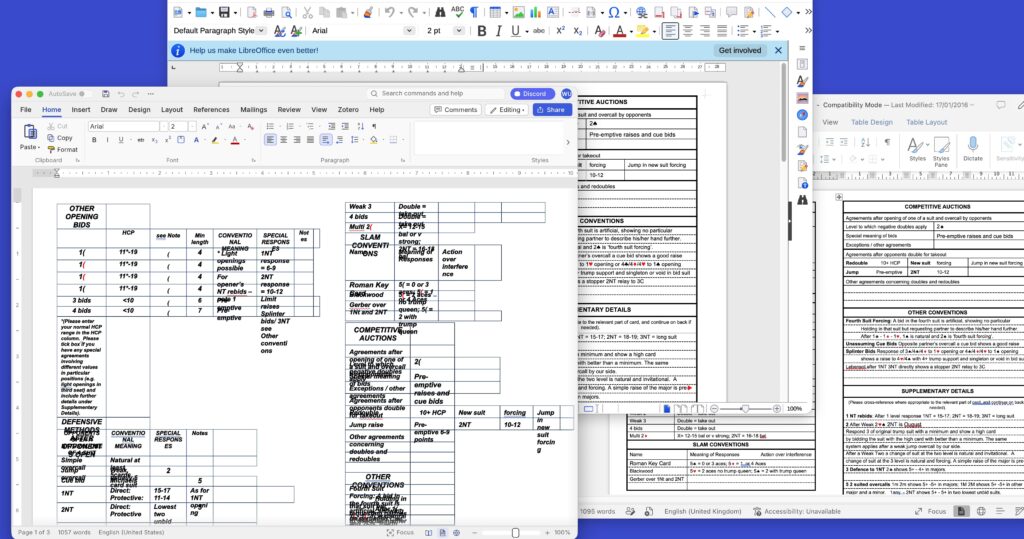
Let us not get carried away yet. I tried WordCraft (whose name I recall from a word processor for the Commodore Pet which could only hold a few paragraphs in memory before painful paging to disk) and was both impressed and disappointed. It looks great but failed to render a complex Word document which I have used before to test LibreOffice.

WordCraft scrambled this awkward Word document

It is early days though and no doubt these and other issues will be fixed; most of the ArtCraft applications are described as Alpha releases.

Although the clean-room method is well established as a defence against copyright infringement, it does not remove patent restrictions. It is also now obvious that treating code as the essence of an application’s intellectual property is no longer possible and one must expect legal arguments if these applications, or other similar works, gain ground.

Nevertheless, the assumption that recreating applications to escape vendor lock-in is too expensive and difficult is now breaking down.; it is a big change for the industry even if, right now, it is hard to see all the implications.

Counterfeit Braun shaver heads on eBay

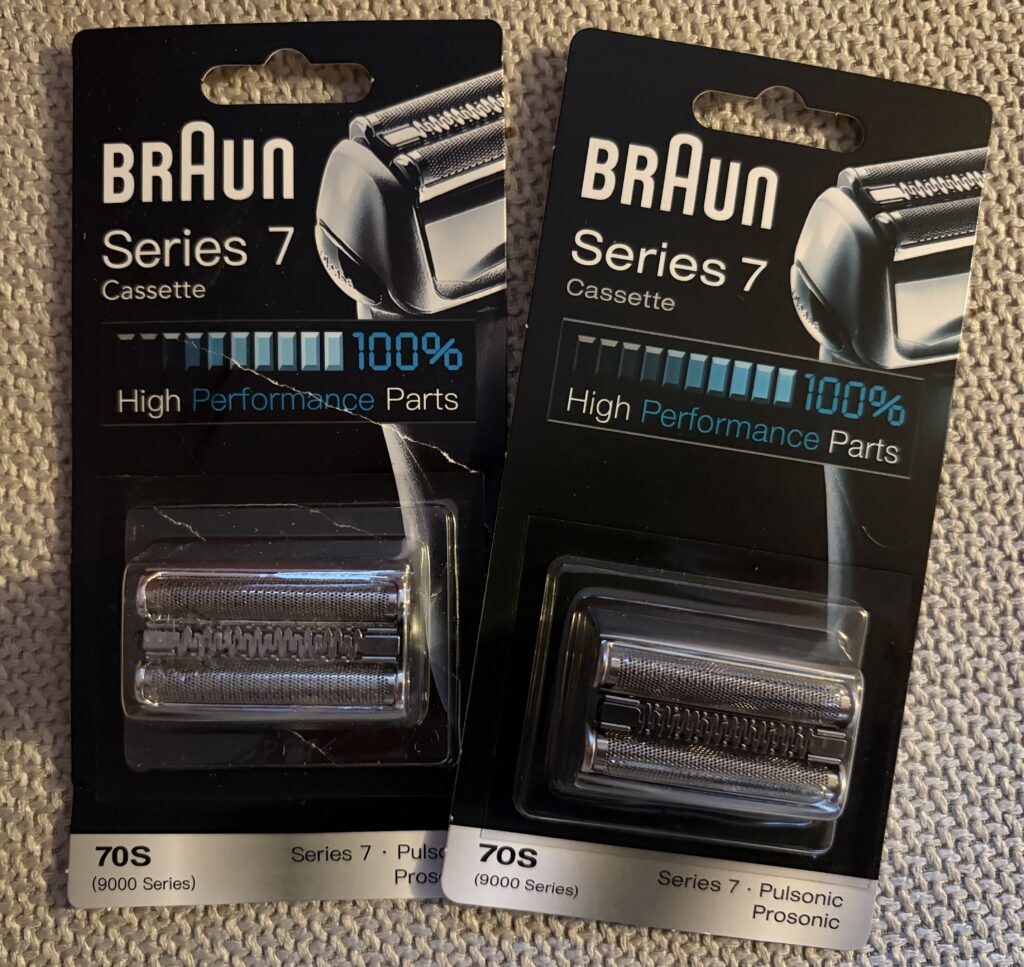
I have a Braun electric razor and needed a new 70S shaver head. There are plenty on eBay; some are advertised as compatible and sell from around £7.00 up, and some are presented as genuine Braun parts and sell for anywhere between £18.00 and £60.00 (the price from a Braun UK dealer is £45.00).

I am sure that some of the Braun spare are genuine but I purchased one I that was a counterfeit. How can you tell? First, it fits well but doesn’t give a good shave, it tears at your skin, showing that the engineering and manufacturing detail does make a difference. Second, there is no serial number on the inside of the shaver head (I am not saying all the counterfeits lack this, but it was the case with mine). Third, there are tiny springs in the original that were missing in my counterfeit.

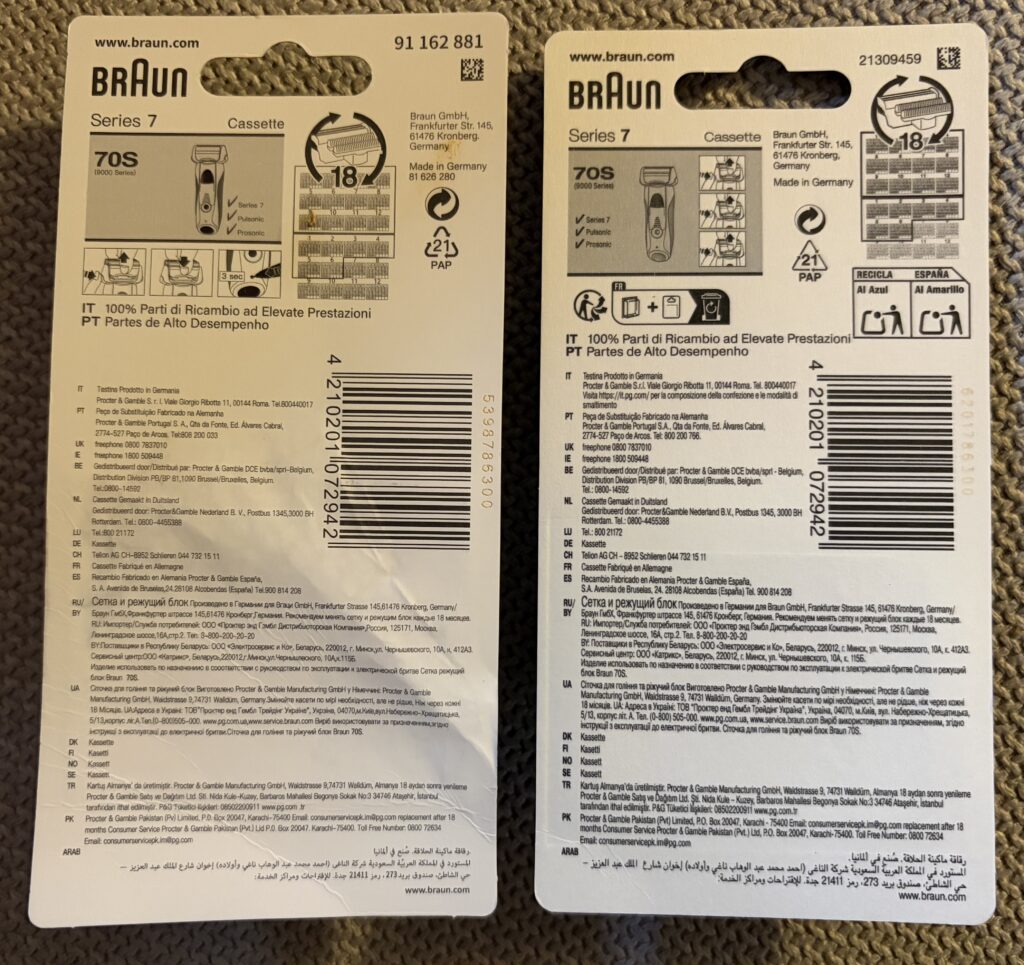
It is not easy to tell from the outside though. There are small differences in the packaging and printing but one would expect some minor variations; both say “Made in Germany.”

Here is a close up of an original showing the small springs that are missing in the counterfeit, and the product numbers:

My seller was very reasonable about the issue and refunded me in full. However the part is still on sale.

It is good for competition that channels like eBay and Amazon exist; and the Braun shaver heads do seem expensive relative to the price of a new razor. I wish though that these platforms cared more about counterfeits as they are not only infringing on the rights of the original manufacturer, they are also a poor buy.

Deno’s endo – team joins CloudFlare, runtime will be abandoned in one year’s time

Deno (and Node.js) inventor Ryan Dahl has posted that his team is joining Cloudflare and that after one more year of support “we will end our development of the Deno runtime. Deno will remain open source, and we welcome others who want to continue its development.”

Deno 1.0 was released in 2020 as an attempt to fix what Dahl called “design mistakes in Node”. Deno is built in Rust, supports TypeScript natively, takes advantage of V8 sandboxing, but at launch did not support Node modules, limiting compatibility.

Deno’s initial take-up was limited by lack of Node.js compatibility, a problem the project attempted to fix in Deno 2.0, released in October 2024. Retro-fitting Node.js compatibility must have been a big drain on resources, absorbing effort that could have gone into improving the runtime.

In the meantime, Node.js worked on adding native TypeScript support, delivered in early 2025 by Node.js 23.6 in experimental form.

Deno also suffered from the rise of Bun, another JavaScript runtime and bundler, first released in September 2023, with TypeScript support, some Node.js compatibility, and fast performance. Bun evolved rapidly and was acquired by Anthropic in December 2025. Bun continues to improve, with the latest 1.4.3 release adding a TypeScript type checker which is a port of Microsoft’s typescript-go (now just TypeScript 7) to Rust, with a claimed 3x performance improvement.

The Deno project’s business model depended on enterprise support contracts and hosting via Deno Deploy, perhaps not sufficient for the long-term health of the project.

Dahl writes that “we know this is a consequential change for people who have built on Deno,” but offers little comfort to users. Deno Deploy will be discontinued in 6 months. The JSR registry, designed as a superset of the npm registry and as TypeScript-first, will continue.

On Reddit Deno users debate where to go. Might Deno survive as an independent open source project (unlikely)? One says: “we are all back to Node these days” and another, “perhaps now is a good opportunity to consider .NET.”

JetBrains posts a loss (but revenue is up), puts spotlight on future of IDEs

A report that independent developer tools vendor JetBrains posted a financial loss for the first time in “tracked history” prompted much discussion on Hacker News, though the title of the thread was changed from one that was too negative, since the company is not in any sort of financial trouble, to one that is too positive.

Revenue is up 6.26% and at a record level so there is that; but staff expenses rose 34.2%, operating expenses rose 26.5%, and the figures are consistent with the idea that the company is attempting to find new AI-flavoured directions to support the future of software development, a challenging task since nobody knows what that is.

Perhaps most concerning for JetBrains are the many comments from developers cancelling subscriptions. “I’ve been a JetBrains subscriber for over a decade. Nobody is going to use their tools in five years. I certainly don’t need my subscription anymore,” said one.

The core issue is that AI agents do not need IDEs. “I was a big IDE user since they existed (I used Visual C++ beta releases in 1992). However, since adopting AI tools I really haven’t used an IDE. Once in a while for things I don’t know how to do without one (e.g. view a markdown file locally). That’s it though,” said another.

This view is by no means universal. As it happens I am personally using IDEs more than I have for a while, working on a project porting a Windows Forms project to modern cross-platform C# code (current MAUI though that could change). I am not using much AI for this, partly to control costs and partly because it does not seem well suited for it, though I could be wrong.

Developers empowered with AI sometimes deliver terrible code. This comment is an example:

“I have seen a bubble sort function in a PR from an engineer with 10 years of experience. Meanwhile sort from standard library is easily available with one single line … that same engineer sent out a PR of 200-file feature. The PR is so large that it freezes the latest MacBook Pro if you try to read it. Nobody reviewed it and he merged it himself. Nobody uses that feature, and nobody in the teams wants to maintain it. Now we are considering scrapping it.”

If AI is the future of software development, we have to get better at using it.

A new State of Devs report shows that developers are having a tough time. Burnout is high; 66% of respondents report “reduced motivation” and 57% are “emotionally drained.” Regarding AI, opinions are evenly divided on whether it is a net positive or negative; however there is a majority opinion that it has a negative impact on mental state and many reports that it has as many downsides as benefits. “AI has sapped the joy of the craft, shattered my focus, and every day I find myself closer to throwing in the towel and taking a year out to travel and decompress,” said one developer. There is anxiety not only about job security, but also code quality, deskilling, and pressure to deliver more features more quickly.

Finally, a comment from a JetBrains representative corrects a common misunderstanding, that the company has invested heavily in AI tools like Junie at the expense of maintaining the quality of its core IDE framework IntelliJ. “Junie is like 30-40 people (haven’t checked exactly, but the order of magnitude is correct), IntelliJ headcount is in thousands just for perspective. I don’t quite see how it can affect other products or financial health. Junie also doesn’t subsidise usage, so it is not a money burning machine either.”

Apple user interface catches me out

I’m in one of those long calls to support where you wait for ages before a human answers, which is my excuse for slipping up. I’ve had the iPhone keypad open to navigate menus but now I want to hide the keypad.

There is a button for this:

iPhone UI for hiding the keypad

Unfortunately the text that looks like a caption is a button, and the button that looks like it is captioned is the button for hanging up. And I have to call back and wait again.

Yes I should know better but I do not think this is good design. The “button” for Hide Keypad is not even underlined or highlighted to show that it might do something when tapped.

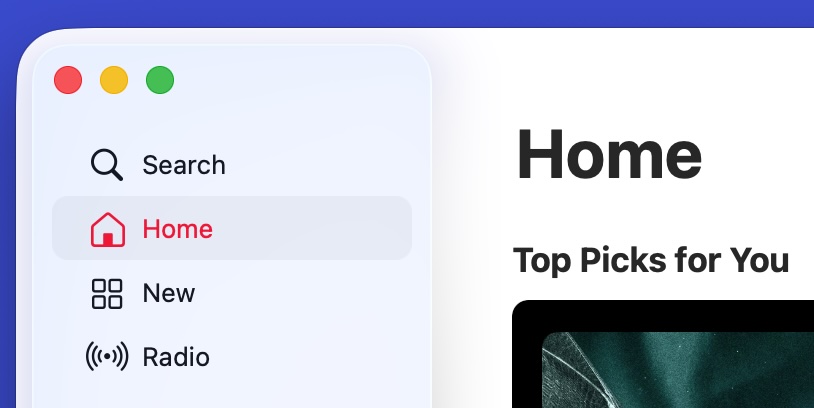
Here is another one, from Apple Music. I am on the home page and want to search for some music. There is a Search button or perhaps tab indicator top left:

Search tab/button

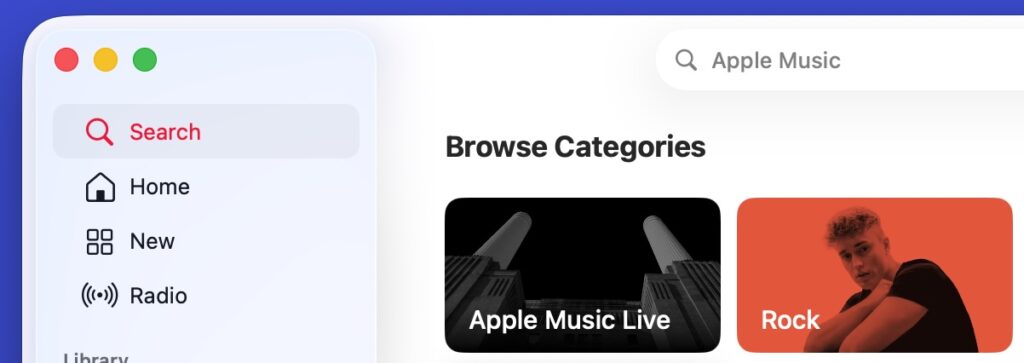
Tap Search though, and there is nowhere to type. Wait a moment, yes there is. It is up at the top and there is not even a flashing cursor to show that I can type there. I have to click again to do that, not where it says Search, but where it says Apple Music:

Apple Music search confusion

This is on the Mac desktop app; the mobile one is a little better but not great.

I am guilty of clicking Search multiple times before realising that I have to click where it says Apple Music.

I think I get the intent here; the UI is steering you towards clicking/tapping on categories rather than typing a search. To me though, that is browse rather than search.