Category Archives: microsoft

Why you probably don’t want to buy Microsoft SBS 2008 Premium CALs

I’ve been trying to figure out licensing for Microsoft’s Small Business Server 2008. It’s somewhat perplexing. There are two editions, Standard and Premium, but you can apparently use Standard CALs with the Premium SBS. The Premium edition offers two extra features over the Standard:

1. A second server license for Windows Server 2008.

2. SQL Server 2008 Standard Edition.

So what’s the difference between Standard and Premium CALs? First of all, price. A pack of 5 standard CALs is $385 full retail, while 5 Premium CALs is $945 – that’s 245% more, real money.

But what else? You would have thought that a Premium CAL would be needed to access Premium SBS, but this is not the case. The Pricing page says:

Microsoft offers several flexible licensing options to allow for complete scalability of your cost in relation to your usage, including various CAL quantities to suit your specific needs as well as the ability to purchase SBS 2008 CAL Suite for Premium Users or Devices for only those users or devices accessing the “premium” features.

OK, so what are the “premium” features? Does this mean anyone accessing the second server? Apparently not. The Licensing FAQ says:

The Windows Small Business Server 2008 CAL Suite for Premium Users or Devices should be purchased for only those users or devices accessing the SQL Server 2008 Standard for Small Business shipped as part of Windows Small Business Server 2008 Premium server software.

Now we are getting there. It seems that the “premium features” boil down to just one feature: SQL Server 2008 Standard.

It’s also worth bearing in mind that SBS 2008 can be used by a maximum of 75 users; and that Microsoft offers a free version of SQL Server 2008 called Express which is limited to using a single processor, 1GB RAM and 4GB maximum database size.

It follows that small businesses only need Premium CALs if they are running a SQL Server 2008 application that is beyond the capabilities of Express, and even then only for those users who access that application.

SBS 2008 Premium Edition comes with 5 Premium CALs and costs $1899 full retail, vs $1089 full retail for the Standard Edition. Real-world prices are likely to be less.

My conclusion is that Premium Edition plus Standard CALs is good value if you can make use of the second server, whereas Premium Edition with Premium CALs (beyond the bundled 5) is poor value for the majority of small businesses, who simply do not need those SQL CALs.

Microsoft could make this much clearer by striking out all the references to “Premium features” in its publicity for SBS 2008, and replacing it with “SQL Server 2008 Standard” – unless it is hoping to sell Premium CALs to customers who do not need them.

Microsoft’s confusing web sites

Scott Barnes draws attention to this study which compares the usability of the Apple vs the Microsoft web sites.

Some things are bad for so long that you stop complaining about them. This is one of them. Let’s acknowledge though that there are mitigating factors:

  • Microsoft is a huge organisation, has a vast number of products, and creating a coherent web presence that covers everything is a monumental task.
  • The goals and technical abilities of visitors to Microsoft’s web properties vary enormously.
  • Staying up-to-date is a challenge.

Against that though, Microsoft is in the IT business and supplies both web design and web server technology; it regularly talks up the importance of “user experience” and must be aware that potential users will judge to some extent by what they find.

I use “web sites” in the plural because there are many Microsoft web sites. Perhaps there should be one; but as the referenced study observes, there are numerous different designs. There are different domains too, such as Silverlight.net, ASP.Net and so on.

Take my experience this morning for example. My question: how many processors are supported by Windows Small Business Server 2008? My Google search got me to here, an overview showing the two editions, Standard and Premium. I clicked Compare Features and got to here, which says I have to visit the Server 2008 web site to find out more about the “Server 2008 product technologies”. I click the link, and now I am looking at info on Server 2008 R2 – only I know already that SBS is based on the original Server 2008, not the R2 version. It’s not clear where to go next, other than back to Google.

Some general observations, after clicking around various SBS sites (I had some other questions too):

  • It’s hard to get past the marketing blather to clear information
  • Too many links lead to menu pages with further links – sometimes it feels like an endless loop
  • I found lots of information in the future tense, clearly prepared before launch and not updated
  • Regionalisation is poor. You can start on the UK site but end up with pricing and availability information applicable only to the US
  • There’s a Technet site as well as a general site and the differentiation is not clear. I suppose the general site is meant to be more business/marketing focused, but there’s plenty of overlap
  • In general pages are too busy with each one offering a splurge of choices
  • Some things are just inherently confusing – like the CAL policy, which has four different types of CAL (user and device in combination with standard and premium) that can be mixed and matched: you can use standard CALs with SBS Premium if they are not used with “Premium features”. Whoever dreamt that up has never worked in a small business.

Clearly this is not a simple problem to solve. At the same time, it is hard to understand why it is so bad. It is a large company problem: maybe too much bureaucracy, conflicting kingdoms, little budget following initial launch, everyone knows it is a problem but nobody knows who should be fixing it, that kind of thing.

Incidentally, I think the processor limit is actually the same in SBS 2008 Standard as in Server 2008 Standard R2, and this chart shows it to be 4 sockets. In other words, you can have up to four physical processors and still benefit from multiple cores. Probably.

10 Mac alternatives to Windows utilities

I’ve been spending an extended time on the Mac in order to explore Snow Leopard. As far as possible, I’ve done all my work on the Mac since its release. The trial will be over soon … but in the meantime I’m sharing notes on some of the utilities I used for tasks I normally do on Windows, in no particular order.

1 Capturing screenshots

On Windows I press PrintScreen or Alt-PrintScreen (for the current window), then paste into an ancient copy of Paint Shop Pro 5.0 for trimming and re-sizing. No, it’s not PhotoShop, but it loads in a blink.

For the Mac I use Ctrl-Command-Shift-3 (whole screen) or Ctrl-Command-Shift-4 (selectable area) which adds a screenshot to the clipboard. Then I use the latest Preview, which has a File – New from Clipboard option. I love Preview – it has tools for further trimming and resizing, and when you save it shows the file size as you select different formats. Since I often want to minimise the size for a web page, it’s ideal.

2 Secure file transfer

I avoid FTP for security reasons, so on Windows I normally use WinSCP for secure file transfer.

On the Mac I use Fugu, and of the two I prefer it.

3 Word processing

On Windows I use Microsoft Word. On the Mac I mainly use NeoOffice, which actually felt a bit nicer than its parent, OpenOffice. I also spent some time with Word 2008 (good for compatibility, but slow) and Apple’s Pages from iWork 09. One nice feature of Pages, for journalism, is the stats window that shows the word count as you type.

4 Web browsing

I used Safari, in order to get the most complete Apple experience. I’m getting to like the Top Sites feature, though it’s hardly essential, especially the way it shows at a glance which pages have changed.

5 Sound editing

On Windows I use Audacity. On the Mac I use … Audacity, though for some reason I found it slightly less smooth.

6 Playing FLAC

Apple is still stubbornly refusing to support FLAC in iTunes or Quicktime. My solution was Songbird, a great alternative, which supports FLAC straight out of the box, or rather download.

For converting to FLAC I used MacFLAC, though I found it less than robust. I missed dbPowerAmp (Windows).

7 Remote desktop

I find Remote Desktop invaluable for managing servers. On the Mac I used the official Remote Desktop client, which worked well though it falls slightly short of the Windows version (perhaps this is a policy!).

8 Twitter

I use Twhirl on both Mac and Windows, an Adobe AIR application. One oddity (getting picky): the font spacing is slightly better on Windows. In the word Blog, for example, there is too much space between the B and the l, but only on the Mac.

9 Email

I never thought I’d say I missed Outlook, but I did. The thing is, after much experimentation I’ve found a permutation that works really well on Windows: 64-bit Windows and Outlook 2007 SP2 in online mode (only for a desktop, of course).

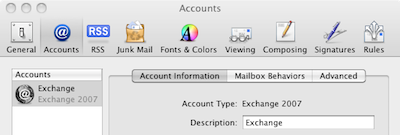
On the Mac I use Mail, but I’ve found it less than satisfactory even though I run Exchange 2007 with all the required configuration.

10 Blog authoring

On Windows I use Live Writer, which is superb.

On the Mac I write posts (like this one) in the WordPress online editor. I don’t like it as much, but it does the job.

11 Bridge

Now this one is a problem :-). I find JackBridge ideal for those moments when I need a break from work. It won this year’s World Champion computer bridge contest.

The Mac is not so well served, but I have trialled Bridge Baron and found it not bad at all.

Docx on a Mac: still rough without Microsoft Word

I’ve been living on a Mac recently, while thoroughly investigating the new Snow Leopard. One of the questions that interests me: how difficult is it to use a Mac in a Windows-centric environment? Once facet of this is Microsoft’s latest document formats, introduced with Office 2007: docx, xlsx and pptx. What if you get sent one of these, and don’t have Mac Office 2008 installed?

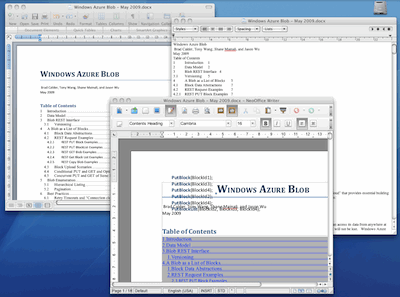
I downloaded a document on Azure blob storage from Microsoft – a random example. I opened it in four different applications: Apple’s TextEdit, which comes with docx support built-in; Microsoft Word 2008; Pages from Apple’s iWork 09, and NeoOffice, the Mac-specific port of OpenOffice. In the image below, Word is on the left, TextEdit on the right, and NeoOffice in the foreground.

Word 2008 opened it perfectly, as far as I could tell.

TextEdit crashed on the first attempt. On the second attempt it loaded, preserving the text but losing most of the formatting. Not a bad result, considering the scope of the application.

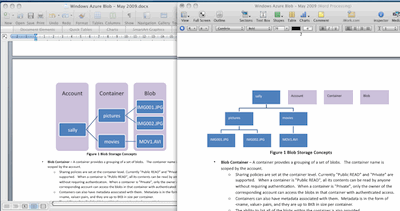
Pages was the best of the three non-Microsoft applications. It gave me a warning about paragraph borders being lost, but did not mention that the diagrams were messed up (Pages is on the right):

Image corruption in Pages with docx

NeoOffice made a fair stab at the formatting, but included some extraneous characters (you can spot these at top left in the screen grab) and omitted the pictures completely.

As a final test, I used Word’s Save As feature to convert the document to plain old .doc. This opened fine in Pages and in NeoOffice, though I have to say TextEdit gave a mixed result: the formatting was better, but the hyperlinked table of contents came out worse in .doc than in .docx.

Conclusion: don’t send .docx to Mac users unless you are sure that they have the latest Microsoft Word.

Apple Snow Leopard and Exchange: the real story

Apple’s Snow Leopard (OS 10.6) came out last week, and one of its most hyped features is native support for Microsoft Exchange. Here’s what Apple says:

With Snow Leopard, the Mac is the only computer with built-in support for the latest version of Microsoft Exchange Server. So you can use your Mac — with all the features and applications you love — at home and at work and have all your messages, meetings, and contacts in one place.

What this means is that eager Mac users will be upgrading to Snow Leopard and expecting to be able to connect to Exchange at work with Apple-style “it just works” ease of configuration.

The truth is more complex; and I’m disappointed with both Apple’s publicity and the number of reviews that have simply reported its claims without investigation. That said, it is a tricky subject, and I have some sympathy with Apple, which is doing more or less the right thing at a technical level.

Configuring Snow Leopard Mail to use Exchange

The first thing to understand is that there are myriad ways of connecting to Exchange, including:

  • MAPI, which is Microsoft’s proprietary API
  • IMAP, which is a standard protocol for server-based email
  • ActiveSync, which is a Microsoft protocol used for mobile devices
  • RPC over HTTPS, effectively MAPI over SSL, enabling Outlook to connect from outside the network without VPN
  • Outlook Web Access, a web UI for Outlook
  • WebDAV, now deprecated
  • Exchange Web Services, which communicate using SOAP XML messages

Which of these protocols are actually enabled, and whether they are published beyond the internal network, is a matter for Exchange admins to configure.

The usual generic method to connect to Exchange from a miscellaneous client is IMAP, and this is exactly what Apple supported in Mail before Snow Leopard, and still supports. IMAP works pretty well in my experience, but it is only for email and does not expose any Exchange-specific features.

Snow Leopard adds support for Exchange Web Services (EWS), giving a much richer level of access to Exchange. First snag: EWS is only supported in Exchange 2007, which is why Apple says in its small print:

requires Microsoft Exchange Server 2007 Service Pack 1 Update Rollup 4

Second snag: even EWS does not all the features of MAPI, and some features (notably public folder support) were only added in Exchange 2007 SP2, which has just been released. This probably explains why Mail does not (as far as I can tell) support public folders.

The key thing to understand is that Snow Leopard is not using the same protocol as Outlook and therefore does not have access to the same set of features.

What works and what doesn’t

Let’s assume that you have Snow Leopard and Exchange 2007 SP1. What works and what doesn’t? Based on my experience so far:

  • You will be able to connect on an internal network or VPN, provided that EWS is enabled, which it usually is. You may need to install a digital certificate to avoid warning messages.
  • Mail, Calendar (iCal), tasks and notes in your Exchange mailbox all appear nicely.
  • When outside the network, you will only be able to connect over the Internet if EWS is published externally, which it often is not. You cannot use RPC over HTTPS.
  • There is no access to public folders (note that these are deprecated, but still widely used).
  • It is not possible to send from an email address other than the default.
  • You cannot use Exchange delegation features, such as accessing other mailboxes.
  • Mail will download the entire mailbox; you cannot set it only to download recent items. There is no “online mode” as there is with Outlook.
  • When offline, you can access existing items, but new messages have to be saved as drafts. This is unlike Outlook, which gives you full access to send mail, delete etc, and synchronises on re-connect.

Snow Leopard vs Entourage

You might imagine that Microsoft’s own Entourage product would do a better job than Apple Mail at connecting to Exchange. This is not necessarily the case. The problem is that Entourage 2008 doesn’t use MAPI either. In its first incarnation it uses WebDAV. This proved so problematic that Microsoft quietly released a new Web Services Edition that uses EWS, like Snow Leopard. Even this is a temporary expedient, as the Mac Business Unit has announced Outlook for the Mac. The implication is that it will be closer to feature-parity with Outlook on Windows, though it’s not clear to me whether this means MAPI, or EWS, or who knows what?

My view is that unless you need some specific feature of Entourage, or find that Entourage mysteriously works where Snow Leopard does not, you are likely better off without it. This presumes Exchange 2007, of course. The fundamental reason is that Mail and iCal are nicely integrated with the operating system, whereas Entourage is not so good in this respect; there have also been quality issues with Entourage.

It would be good to see a detailed technical note from Apple and/or Microsoft on Snow Leopard’s Exchange support, how to configure Exchange for it, and any implications for security etc. In the meantime, there is an interesting discussion on Apple’s forums which highlights the issues.

For all its (many) faults, Outlook on Windows remains a better Exchange client than either Snow Leopard or Entourage.

Apple Snow Leopard: why don’t we all use Macs?

Last Friday I attended Apple’s press briefing for Snow Leopard, and I’ll be a Mac (mostly) for the next few days as I put OS 10.6 through its paces. For as long as I can remember, I’ve set up my desktop so that I can easily switch between Mac and Windows, so it is no great hardship.

Snow Leopard is a relatively low-key release, timed by accident or design to appear not long before Windows 7 makes its full public debut in October – though many IT professionals are already using the final build. In the unlikely event that you’ve missed the many reports, the headline new features are:

  • Many small refinements and speed improvements
  • Major applications re-written in 64-bit
  • Grand Central Dispatch – OS-level support for easier concurrent programming
  • OpenCL – standard means of using the GPU (graphics processing unit) for general processing, not just graphics
  • Exchange support in Mail, iCal and Address Book

The Exchange support is welcome, though unfortunately it is limited to Exchange 2007. It was already possible to access Exchange in Mail, though the older support (which still exists for pre-2007 Exchange) was based on IMAP, whereas the new support is based on Exchange web services and has richer features.

I use Exchange 2007, and found it easy to set up my account in Mail. Unfortunately I’m missing some Outlook features, such as the ability to choose a different Sender  address, and I’ve found it prone to a few mysterious pauses –  once it went into a sulk for over a minute when I marked a message as junk – but this might be a problem with Exchange web services rather than Mail, who knows? I also have some public folders which appear to be inaccessible from Mail or iCal. Then again – Entourage isn’t as flexible as Outlook either.

Still, I  expect the Exchange support will be good enough for many users, and this will make it easier to integrate Macs into Windows-based networks.

So, here’s a thought experiment. Let’s make an assumption:

  • Most people prefer the Mac operating system over Windows, and prefer the Mac hardware over most PC or laptop hardware.

If that is the case, why do we not all use Macs?  There’s a host of reasons which come to mind, starting with price. I looked at macwarehouse.co.uk and pcworld.co.uk, which are owned by the same group. The cheapest Mac I can find (Mac Mini + keyboard, mouse and display) is currently £536.96, vs £260.86 for a PC; and the cheapest laptop is £645.99 + VAT for a MacBook vs £216.52 for a cheapie PC laptop with Vista Basic. These differences are not small.

Note I am not saying that the Mac is poorer value; that is an entirely different argument.

A second big issue is application compatibility. Although there is no problem that cannot be solved with finding alternatives, or dual boot, or a virtual machine, it is all friction that impedes Mac acceptance.

Third, there is the greater manageability of Windows in a corporate environment based on Windows. This is a form of incumbent advantage, which is hard to break unless the incumbent messes up badly. Arguably Microsoft has messed up badly, though less in the business context than in the consumer context, and Windows 7 will pull back some lost ground.

The above leads me to believe that Snow Leopard is not likely to change the status quo significantly – understanding that the status quo is that Apple is gradually increasing its market share – even granting the assumption I made, which is somewhat controversial. On balance, I consider it more likely that Windows 7 will stem the flow towards Apple, though without a high degree of confidence.

More significant than either factor is the continuing migration towards the Internet. In this respect I’ve argued that Apple is like Microsoft. The Internet is a great leveller; it will reduce the friction of changing operating systems (helping Apple) but also make Apple’s UI advantage less noticeable (helping Windows/Linux/Google), and make it harder to sell expensive desktop software (Microsoft is the bigger loser here I think).

It’s fun to speculate; but I must add that so far Snow Leopard has been a pleasure to install and use. Technically, Apple hasn’t missed a beat with OS X since the first release, and that’s an impressive achievement.

Hope for old PCs with Windows 7

Yesterday I installed Windows 7 Professional on an older PC – it dates from 2001 or possibly 2002, and has a Pentium 4 1.8Ghz on Intel’s 845 chipset. Only 768MB RAM is installed – generous for XP in those days, but below the 1GB minimum spec for Windows 7.

I thought I would try it anyway. It turned out that Windows 7 installed without complaint – I believe you have to go down to 512MB before setup actually protests – and I was impressed with how smooth the process was. There is a Creative Audigy soundcard installed; and after logging on for the first time, Windows automatically downloaded an update which got this working. Device Manager shows no errors other than a “PCI Input Device” which I suspect is the joystick port on the Creative soundcard. A cheap USB wireless card was recognized first time, and the add-on USB 2.0 card also works fine.

I am also impressed by the performance. I stuck on Office 2007, ran up Word and Excel with a couple of documents open, and looked in Resource Monitor:

This shows 274MB still available; at this level of use, the machine is not under any pressure.

It is not fair to make a direct comparison with XP since it had been installed for a while and would have built up a bit of cruft. However, Windows 7 is subjectively slightly faster, if anything, and you could not say that for Vista on the same machine.

I am not recommending that anyone runs Windows 7 on a below-spec machine, but I found it interesting nonetheless.

I’ve also been pleased with the in-place upgrade I did on my laptop, a 2006 Toshiba M400. This machine is much younger of course; though at three years old laptop batteries tend to die and sometimes it is hard to justify the cost of a replacement. This one is running so well that I have replaced the battery.

I am sure the industry is counting on Windows 7 to drive sales of new machines. There is another angle on this though, which is that old machines that were not much fun with Vista may be rejuvenated by a Windows 7 installation. Extending their life is good for the balance sheet as well as for the environment, so I am all in favour.

Yet another angle on this is that there is more incentive to go through the pain of reinstalling the operating system for Windows 7 than there was for Vista. I suspect this means that we will see rapid adoption, exceeding most expectations. For developers, that means it will pay to support Windows 7 features like the new taskbar sooner rather than later.

Technorati Tags: ,,,

Getting picky about the Windows 7 Taskbar – real-world flaws?

The new taskbar in Windows 7 is for launching applications as well as showing what is running; and one of the first things you do with a new installation is to pin your favourites there so they are easy to start.

Very soon, you’ll run out of space. This is a problem that will get worse, too, because app vendors will discover that the notification area is no longer effective for getting the user’s attention and background applications will use the taskbar instead.

Unfortunately a scrolling taskbar is not much fun to use. In fact, it’s a disaster. The taskbar divides itself into pages, and a fiddly scroller lets you flip from one page to the next.

Further, if you activate a running application which is on a different page, then its page comes into view, hiding the other icons.

Now let’s say you want to launch an application which is on a page that is no longer in view. Instead of clicking one large target (especially nice if you are using touch), you have one tiny target (especially horrible if you are using touch) – the up or down arrow on the scroller – followed by a second click on the app icon. Maybe there is a keyboard shortcut for scrolling the taskbar, but the only one I know is Win-T which cycles through all the icons – tedious.

At this point, you have two further options. You can increase the height of the taskbar. Right click – Properties – untick Lock the taskbar – then drag the top border up. Now you have more space for icons, but you have also lost valuable working space on the screen.

The second option is to use small icons, which is another option in properties. When you do this, you can fit in a few more icons, though not as many extra as you might expect. It is easy to see why this is so unsatisfactory. Here is the Word icon in normal size, followed by the small icon version:


Two observations. First, the “small” version is not that much narrower than the large one. Second, if you look at the size of the icon versus the amount of background, the small version is mostly wasted space. The actual image on the small icon is roughly 25% the size of the large. You get a poor yield in terms of extra icons, but a severe usability loss in that the small size is hard to see.

I don’t know if this problem can be improved by tweaking other Windows settings, but would be interested to discover.

It is also a shame that the taskbar cannot be extended across a second display, if you are running two or more screens.

The conclusion, in my case, is that neither the double-height nor the small icon view is really satisfactory, though double-height is less bad.

I like the new taskbar, but this is a real annoyance. Any tips I’ve missed?

Technorati Tags: ,,

Hands on Windows 7 multi-touch – will Apple get this right before Microsoft?

I’ve been trying a Dell Latitude XT2 with Windows 7 as a way of exploring multi-touch with Microsoft’s new operating system. I have a number of thoughts on the subject, which I will do my best to organize, but this is work in progress and I welcome your comments.

Multi-touch has received scant attention in all the Windows 7 coverage for one very good reason: few of us have the right hardware. Even a Tablet PC won’t do; you need one with that supports multi-touch which is one of a very few PCs on the market.

Touch is nevertheless a key issue, because it is the future of how we interact with our computers, particularly portable computers. 

Touch computers should have no keyboard or stylus

This one takes a bit of argument. I’ve used a Tablet PC for years, almost since their first release, and I like lots of things about them. However a lot of the time I use them in old-style keyboard mode. Why? Because the stylus is a nuisance and text input too fiddly. When Microsoft designed the Tablet PC, it should have made “doesn’t need a stylus” as the number one constraint, and “doesn’t need a keyboard” as another. It did not; and that is why Tablet PC has more-or-less failed.

There are several problems with the stylus concept. They are fiddly, expensive, and get lost easily. They make interacting with the device less natural. They introduce new problems while solving others.

As for the keyboard, it is a disaster. Once you concede the necessity of a keyboard, you end up with a clam-shell, twist-screen design that is complex, fragile and expensive. It is neither one thing nor another, and can never be mainstream.

The chunky finger problem

The stylus is a compromise that solves a particular problem: the finger is a chunky pointer. Typical menus and icons are designed with mouse-precision in mind, and stabbing them with a finger results in frustrating errors. Still, this problem bears a little analysis. Does a finger have less precision than a mouse pointer? Not really; human fingers are highly evolved and easily capable of the necessary precision. The Windows Touch Pointer (available in Vista as well as Windows 7) illustrates this. It is an on-screen mouse which represents a large target for the finger, but controls a pointer of high precision:

Using the touch pointer, the finger is just as precise as a real mouse, though it takes some mental adjustment, gets in the way, and is off by default in Windows 7.

The text input problem

The other advantage of the stylus is that it simulates a pen, making it easier to write or draw. This is actually an excellent reason to have a stylus as an option; but it should not be necessary for normal operations.

Text input without a keyboard is a partially unsolved problem, and the stylus is not a complete answer. Handwriting recognition is now pretty good on a Tablet; but I can still type faster than I write, and the pop-up input panel is an interference, especially when you only need to type a few letters. Apple’s iPhone (no stylus) has a good stab at making touch input work for text, and though I still don’t like it greatly, I think it is along the right lines.

Windows 7 and touch

What about Windows 7? Well, Microsoft has gone half-way towards making Windows touch-friendly. Multi-touch is a major advance, and gestures are a powerful concept enabling touch-driven applications that are much easier to use. A gesture interprets a pattern drawn on the screen as a single command; there is a list of Windows 7 gestures here, and developers can create their own.

Microsoft’s aim with Windows 7 was not to build a special touch interface, but to make the standard UI easy to control:

A touch shell for launching only touch-specific applications would not meet customers’ needs – there would be too much switching between “touch” mode and Windows applications. Instead, we focused our efforts on augmenting the overall experience so that Windows works great with touch.

This sounds good, but has Microsoft succeeded? My test was simple: start up in Tablet mode and see how easily I could work, without using the stylus.

I found using Windows 7 touch-only possible, but not always enjoyable. You can pump up the text size to make targets larger, but applications like Microsoft Office are still hard to use. The new taskbar is designed to be touch-friendly, and generally speaking it is, though not so much in the notification area. The Start menu is less good; and despite Microsoft’s concerns a touch-specific replacement may well be a good idea. Some applications, like Windows Media Player, seem fine with touch control; others, like Control Panel, awkward. Internet Explorer is relatively nice to use, and so is Apple’s Safari; I can well believe that it is designed with touch-control in mind.

One of the issues is that the on-screen keyboard does not always appear when you want it. It pops up automatically when you focus on standard text boxes; but for some reason it does not show up if I tap on a Sticky Note, for example; I have to drag it out manually.

The awkward truth: applications do need to be designed for touch in order to shine.

I do not know exactly what Microsoft and/or its OEM partners are planning for Windows 7 touch, but suspect we are going to see a few more high-priced niche items like the Dell Latitude XT2 – lovely hardware though it is – that essentially continue the Tablet PC theme and will not greatly impact the market.

The kind of device that might work, to my mind, would be:

1. Without keyboard or stylus

2. Priced keenly

3. Small – 12” screen at most

4. Bundled with excellent touch-friendly applications that are a pleasure to use – not just a collection of samples like the Windows 7 touch pack. Basic actions like web browsing, email, note-taking, and entertainment (games, media) should all be covered.

5. Preconfigured so that your first experience of Windows 7 multi-touch is not a frustrating one

Question: if that is right, is it likely that such machines will appear soon? Or is it more likely that Apple will deliver its rumoured tablet and severely impair Microsoft’s potential market?

Windows 7 tip: use Group by to merge and manage library views

I’ve been looking forward to the libraries feature in Windows 7. For example, on my desktop PC I keep some downloads in my personal download folder – under c:\users\[username]\Documents\Downloads – while others are in a download folder on drive E. It makes sense to treat this as one location, rather than two. Libraries let you view these two folders together, without physically merging them.

That said, Windows 7 tripped me up. I created a new library, called Downloads. I added the two folders. I was annoyed though to see that I had two separate lists of folders in the new library, not one. I wanted a single, merged list.

I clicked around to see if there was a way of merging the lists. I tried the Arrange by menu. If you arrange by Name, you get a single merged list but without folders at all – in my case, thousands of files. Arranging by folder got me back to the separate listings. I tried the Organize menu, but that didn’t help. I tried right-clicking, with promising options like Expand group and Expand all groups, but these were simply different ways of viewing the location groups.

Then I noticed that the default Documents library had exactly the view I wanted, merging the personal and public Documents folders. Had Microsoft included some magic for the built-in libraries, or was I missing something?

I was missing something. I found out what when I clicked Organize – Layout – Menu bar. Of course this is off by default, because someone at Microsoft has a religious aversion to menus; they have been removed entirely from most of Office. But once I had the menu bar, I found the View – Group by option. If I select View – Group by – None, then I get the merged folder list that I want.

In fact, all the Group by options seem to work on a merged list, which leads to strange fact number two: once I had the merged list, it was not obvious how to get back to the non-merged list. It is as if there is a Group by Location which is not on the menu. I did eventually work it out. To get back to the non-merged list, choose View – Arrange by – Clear changes. Obvious, eh?

Incidentally, there is a way of using Group by without displaying the menu bar. You have to right-click in the left margin of the right-hand pane of the library listing. Easy when you know how.

Technorati Tags: ,