Category Archives: windows

Can you trust Windows 8 Storage Spaces?

I have been watching a few Storage Spaces threads on Microsoft’s support forums with interest. Storage Spaces is a new way to manage disk storage in Windows 8 and Server 2012. It lets you create a pool from two or more drives, create virtual drives on them with an option for RAID-like resilience, and add or remove physical drives as needed when drives fail or more storage is needed.

image

A great feature, and particularly since it comes from the server team you would expect it to be solid. Nobody can afford to use storage that is unreliable.

Look at this thread though, based on Windows 8 Enterprise Evaluation which should be the RTM code:

I had three empty discs which I used for it: 320 GB, 1 TB, 2 TB. The manager told me that the maximum capacity for this setup would be ~2 TB.

I then proceeded to fill the space up, resulting in a horrible write speed of ~20 MB/sec. Okay, that can be accepted, it is a software solution, after all.

Here’s the kicker, though: Upon reaching ~0.9 TB, the storage space vanished! Yes, vanished.

After invoking the Storage Space Manager, I discovered that the space was deemed “full” and that I was to add another disc. I also took a look at the volumes itself. Hmmh. The 320 GB disc was 100% filled, the 1 TB was at 32% and the 2 TB at 16%. And what are 32% of 1 TB and 16% of 2 TB? Why, 320 GB!

So, instead of creating a Parity storage space, it simply downsized every hard disc to the lowest denominator, i.e. 320 GB.

Which means that there are two massive problems here:

  1. It’s lying about the remaining capacity (which is confusing in itself: The manager talks about the storage space having a 2 TB capacity, but directly above it talks about a 3.01 pool capacity?)
  2. It also gives no warning when the real capacity is reached and the pool is deemed “full”. It simply takes the pool offline (instead of, say, reverting to a “read-only” mode with a warning) and you have to bring it online manually. Not fun.

and later, from another user:

Today while I copied data over to it, it once again reached “full” status and turned itself “offline” – but this time it won’t come back “online” – it changes right back to “offline” as soon as I try to bring it online…  So essentially I cannot access any of the data on the drive anymore.

or this (which likely refers to the RP) – the article to which it comments is worth a read too.

I’ve run into a major problem with storage spaces. My storage space is full. Having a full storage space puts it into an error state, and it goes offline. You can click “Bring online” but it immediately goes offline again.

So, I can’t free space on it, because I can’t get it online to delete stuff. And, more importantly, I can’t get anything off of it because it won’t stay online.

It seems my only option is to add three drives, as I had it set to parity. The only problem? I don’t have three more drives to add.

Even bugs in in the RP worry me. Storage is so fundamental that I would expect a feature like this to be 100% solid early in the release cycle, or pulled.

Update: It now seems to me that Storage Spaces is working as designed (phew!) though it is understandable that users are confused. See the new post here.

Third-party compilers locked out of Windows Runtime development

Embarcadero’s chief scientist Allen Bauer has posted about the problems facing tool vendors who want want to support Microsoft’s Windows Runtime (WinRT) platform with their own compilers, which he calls “Windows 8’s ‘dirty little secret.’”

The issue is that in order to enforce security and isolation in WinRT apps, Microsoft prohibits certain API calls. Even if you find a way to use them, applications that use these calls will not be accepted into the Windows Store, which in effect means no public distribution.

We are very keen on supporting WinRT with native Delphi & C++ code. Right now, the issues surrounding the WinRT space center around the fact that many OS-supplied APIs which are required by anyone implementing their own language RTL are actually off-limits unless you’re the VC++ RTL DLL. You know, little things like RtlUnwind for exception processing and VirtualAlloc (et. al.) for memory management… Any calls to those APIs from your application will automatically disqualify your application from being an "official" WinRT application capable of delivering through the MS app store.

Right now the VC++ RTL DLL is given special dispensation since that is the library that makes the calls to those forbidden APIs and not directly from the user’s app. We’re currently rattling some cages at MS to find out how or if they’re going to allow third-party tools to target WinRT. Until we can get past that, targeting WinRT isn’t actually possible from a deliverable product sense. We are able to build WinRT applications with Delphi that work with a developer certificate, however they all fail the application qualification checks because of the aforementioned (an other) APIs.

Bauer adds that there are other restrictions that make it hard to create an alternative toolchain:

For instance, you cannot merely open any file, access the registry, and even use the loopback (127.0.0.1) adaptor. LoadLibrary cannot be used to load any arbitrary DLL; you must call LoadPackageLibrary and only on a DLL that is present in the digitally signed appx package. WinRT is a seriously locked down sandbox or "walled-garden" with some extremely high walls.

Embarcadero’s answer has been to create a framework that makes desktop apps look and behave somewhat like WinRT apps. I posted about these fake metro apps here. Even Live Tiles are supported. However, these apps cannot be distributed via the Store either, but only through a desktop setup. In addition, they lack the security of true WinRT, and access to the Contracts system for safe exchange of data.

The company does have a .NET tool in the works, called Prism, that will build WinRT apps.

Who is the villain here? Embarcadero’s concern is understandable, since it is locked out of creating a native code compiler for WinRT. On the other hand, to what extent can Microsoft relax the restrictions without blowing a hole in the WinRT security story. There are parallels with the complaints from Google and Mozilla that they cannot compete equally with IE10 in the Modern UI environment.

Thanks to .NET support, Microsoft does have a measure support for alternative languages; it is the Common Language Runtime after all. What would be better though would be to support LLVM, as Apple does on iOS, though this is not likely to be on Microsoft’s roadmap.

Thanks to Eric Grange for pointing me to this post.

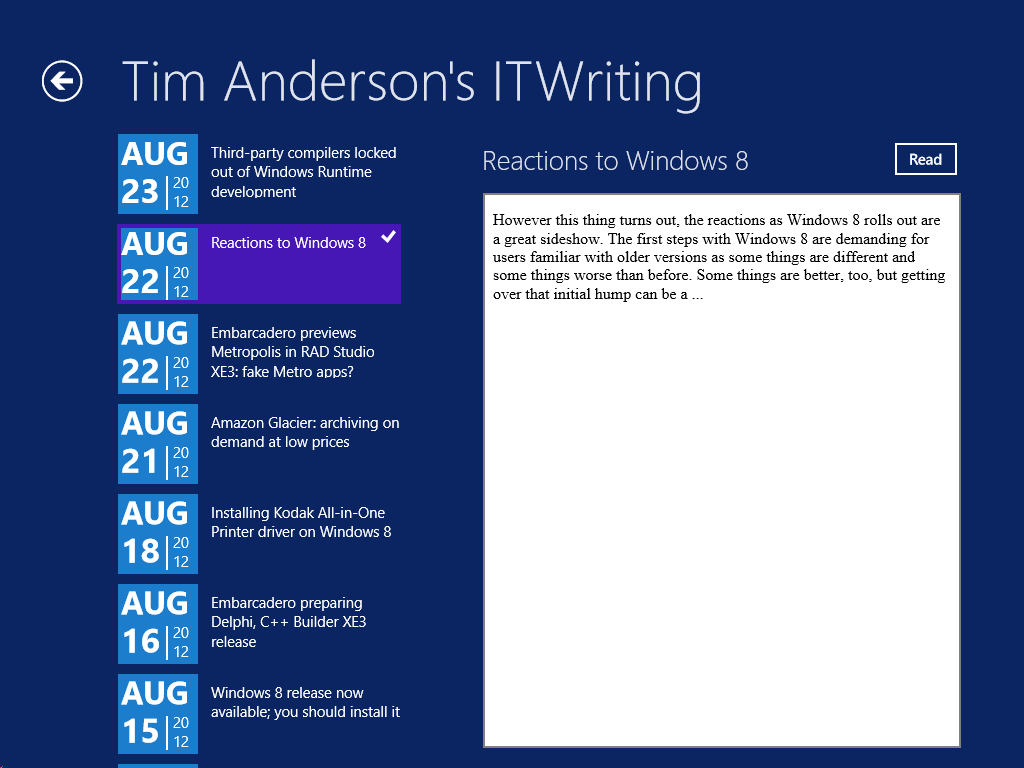
Reactions to Windows 8

However this thing turns out, the reactions as Windows 8 rolls out are a great sideshow. The first steps with Windows 8 are demanding for users familiar with older versions as some things are different and some things worse than before. Some things are better, too, but getting over that initial hump can be a problem. I am starting to collect some of the reactions that caught my interest, and will update this post with further links as I find them.

image

This distinctly non-PC blast from Igor Ljubuncic is based on the Consumer Preview but I quote it because it does a good job of presenting the “no way never” perspective:

Would you sacrifice your entire user base in a rich and profitable tier for the sake of a feeble chance that you might hold a small share of a new market segment that has significantly lower profit margins? Sounds like stupidity to me. … Windows 8 Consumer Preview is a technological, ideological and functional failure. It’s hard to see how no one lost their job over this.

Here is Tim Edwards in a piece with a number of inaccuracies – but remember, first impressions are still first impressions, even if some of the assumptions one makes turn out to be wrong:

Windows 8 is the worst computing experience I’ve ever had. As a desktop operating system, it’s annoying, frustrating, irritating, and baffling to use.

First impressions from Krishnan Subramanian

This is a great user interface and the underlying platform changes are pretty good. However, this interface is not suitable for desktop (Laptop) experience. … with all the “steep learning curve” factor and the fact that many enterprises just upgraded to Windows 7 makes me wonder if Windows 8 will be a flop show in the enterprise space even with their $40 pricing strategy

Windows 8 a Cognitive burden says a usability expert

Windows 8 is optimized for content consumption rather than content production and multitasking. Whereas content consumption can easily be done on other media (tablets and phones), production and multitasking are still best suited for PCs. Windows 8 appears to ignore that.

Mary Branscombe who knows Windows 8 as well as anyone outside Microsoft has a thorough review concluding:

Keep an open mind, spend some time getting used to the charm bar and the Start screen. Once you do, we defy you not to be impressed by Windows 8.

Another from the long-time-watcher Windows camp (but not always pro-Microsoft; he was the one who proclaimed Longhorn “a train wreck”) is Paul Thurrott who says:

For all the whining, hand-wringing, and ivory tower opining over Microsoft’s decision to wed an awesome new mobile platform with its superior desktop OS, few of these critics ever paused for a moment to consider an awesome possibility: This time, more really is more.

Balanced read but not convinced by the system: Preston Gralla on Computerworld:

With Windows 8, Microsoft is making a bet that it can please both tablet users and traditional computer users with a single OS. That bet didn’t pay off for me. On a tablet I find it an excellent operating system. On a traditional computer, it doesn’t work nearly so well.

Yes, it’s that bad says Woody Leonhard in a curious piece which exaggerates the difficulty of using Windows 8:

While Windows 8 inherits many of the advantages of Windows 7 — the manageability, the security (plus integrated antivirus), and the broad compatibility with existing hardware and software — it takes an axe to usability. The lagging, limited, often hamstrung Metro apps don’t help.

Nik Rawlinson on CNET UK says Windows 8 is worth the upgrade but …

The OS represents a serious attempt to unify computing across PCs and tablets in a cohesive way. It’s impressively quick, apps are presented in an original manner that avoids the repetitiveness of Android and iOS, and it hooks in well to your life on the Internet.

While the learning curve may be steep, there are more than enough similarities between Windows 7 and 8 to ease the transition. It’s well worth the upgrade, but it’s not yet the ultimate operating system Microsoft wants it to be.

A balanced piece from Avram Pltch at laptopmag.com:

If you’re a Windows 7 user and you don’t have a touch-screen device, you can safely skip this upgrade for now and wait to see how this new ecosystem of apps matures. However, if you’re buying a new laptop or tablet, Windows 8 provides a compelling experience that’s worth the learning curve.

PC Pro has divided its conclusions into Windows 8 for desktops and laptops, and Windows 8 for touchscreens and tablets. As you might expect, it is more favourable towards the latter. On desktops:

Windows 8 has relatively little to offer those who do their computing on a desktop or laptop PC. This isn’t a terrible thing – Windows 7 wasn’t exactly broken to begin with – but it means that upgrading to Windows 8 is far from essential.

but on tablets:

Microsoft has delivered a compelling – and in many ways, much more powerful – alternative to iOS and Android. It’s not perfect, and much depends on the quality of forthcoming apps and hardware, but if the goal of Windows 8 is to rejuvenate its appeal across the whole spectrum of touch-enabled devices, then we believe it’s succeeded.

My comment: the point of Windows 8 is to bring desktop and tablet OS together so is this the right way to appraise it?

Jon Honeyball lost patience with Windows 8 which he says is a car crash (one up from a train wreck?):

Any existing user will be tearing their hair out at this nonsense: the flipping backwards and forwards between Metro and the desktop, the lack of a Start button, the way all that history has been hidden away. Ask a user to find Control Panel and see the laptop being thrown into a nearby bin.

Embarcadero previews Metropolis in RAD Studio XE3: fake Metro apps?

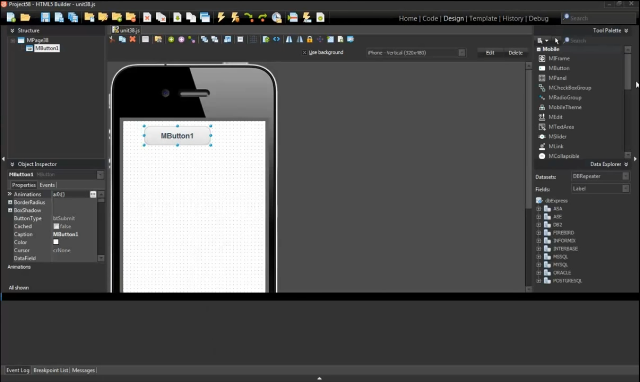
Embarcadero has released a video (embedded at the foot of this post) previewing RAD Studio XE3, the next version of the application development suite which includes Delphi and C++ Builder.

Two big new features are Metropolis applications and an new HTML5 Builder tool which looks like a next-generation PHP Builder.

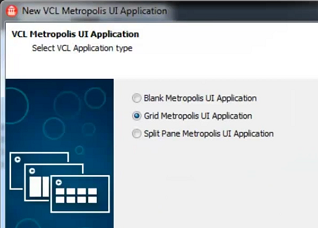
Metropolis – a neat name until Microsoft back-pedalled on the Metro designation for Windows Runtime apps – appears to be a framework for apps that look like Windows Runtime apps but in reality are not. At least, that is my presumption for “VCL Metropolis applications”. The VCL (Visual Component Library) is a Delphi framework (usable also in C++ Builder) which is tied to Windows and GDI, the old-style Windows graphics API, along with many other Win32 APIs. GDI does not work in the Windows Runtime.

image

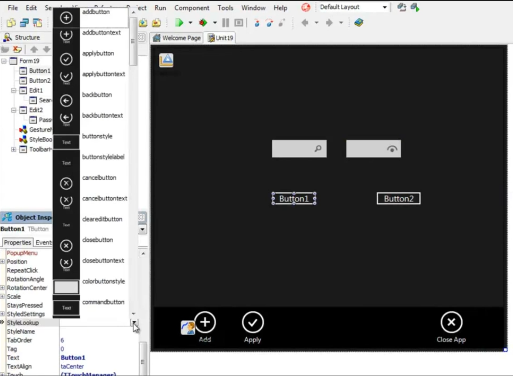
No matter, all we need is full-screen apps, touch input, and a don’t-call-it-Metro look and feel, and presto, Windows Runtime apps in all but name. They might even run on Windows 7.

image

A glimpse at the controls.

image

Except that there will be significant differences between Metropolis and Windows Runtime. No support for Contracts, for example, the Windows Runtime mechanism for inter-app communication; no delivery from the Windows Store; no support for Windows RT.

The big issue though is this: why would you want a desktop app to look like a Windows Runtime app? And will not users be mightily confused?

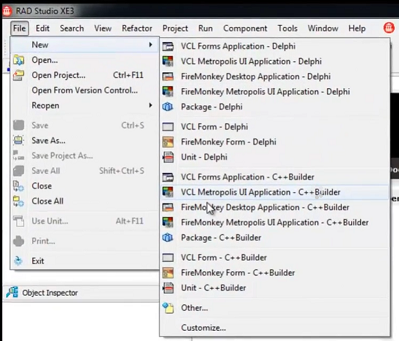
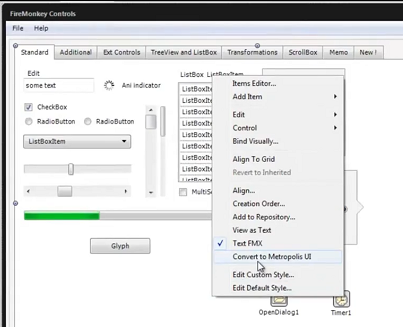
The video then goes on to talk about converting existing apps with a “Convert to Metropolis UI” menu option. It turns out though that you can also create FireMonkey Metropolis apps, and the Convert to Metropolis UI option is shown with a FireMonkey app, not a VCL app. Since the FireMonkey framework is designed for cross-platform and uses custom drawing for all its controls, potentially a FireMonkey app could be a real Windows Runtime app, though I get the impression it probably is not.

image

I do think Embarcadero needs absolute clarity here, which is notably lacking in this preview. There is no point in pretending that a Win32 app is a Windows Runtime app when it is not. I have asked for further information.

HTML5 Builder

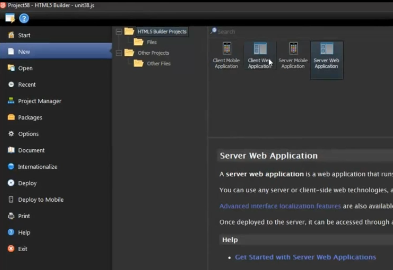
There is also a quick look at HTML5 Builder.

image

This tool targets server-side development with PHP, as well as apps for web,iOS,Android, Blackberry and Windows Phone. My guess is that there is PhoneGap/Cordova under the covers. I also saw some jQuery in the demo.

image

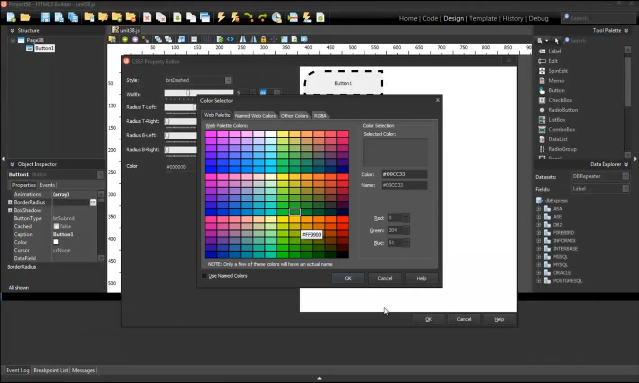
Here is a look at the CSS3 colour picker.

image

Update: looks like Embarcadero found a way to fake Live Tiles as well:

Metropolis applications are really traditional "desktop" applications styled to look like the Metro UI.
The TLiveTemplate component spawns a new process in the WinRT space which is is an actual WinRT LiveTile application. The LiveTile communicates with the Metropolis "desktop" backend via HTTP/REST to start/stop the application or update the LiveTile.

The screenshots are drawn from this video, or you can watch it on the Embarcadero site here.

For more info from attendees of the RAD Studio XE3 world tour see also:

http://members.adug.org.au/2012/08/22/highlights-of-the-sydney-xe3-event/

https://forums.embarcadero.com/thread.jspa?threadID=75773

Installing Kodak All-in-One Printer driver on Windows 8

I have been busy upgrading computers to Windows 8 now that the RTM is available. So far so good, though I ran into a problem with a printer which, oddly, worked fine in the Windows 8 Release Preview.

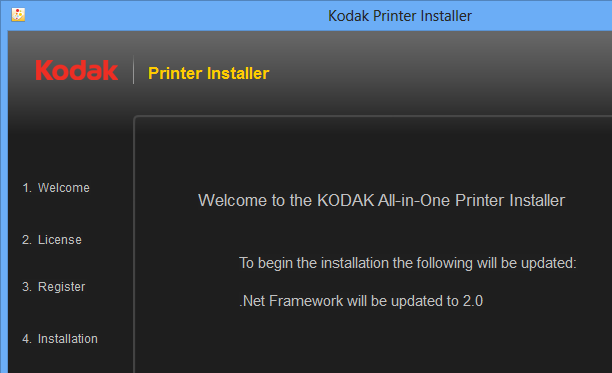
The printer is a Kodak All-on-one. Kodak has a universal installer for all its all-in-one printers. When I ran this, I got a message that .NET Framework 2.0 was needed and would be updated.

image

It would then try to install .NET 2.0, but fail.

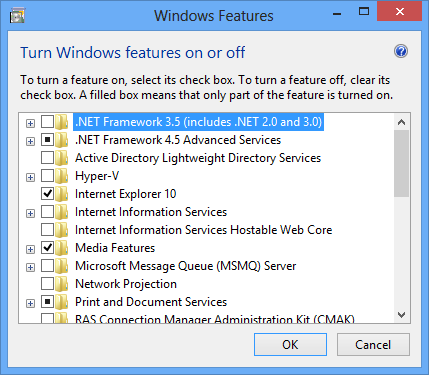
Easy, I thought, just install .NET first. In Windows 8, you do this through Control Panel – Programs – Turn Windows features on or off.

image

I installed .NET Framework 3.5, which includes 2.0, and re-tried the Kodak printer install. Same message, same error.

I also tried running the installer in compatibility mode for Windows 7 and Windows XP. No go.

Time for some serious troubleshooting. I presumed that if I could figure out what the installer was looking for when it failed to detect .NET Framework 2.0, I could fix it.

First, I checked the official instructions for detecting .NET in an installer. This was already correct.

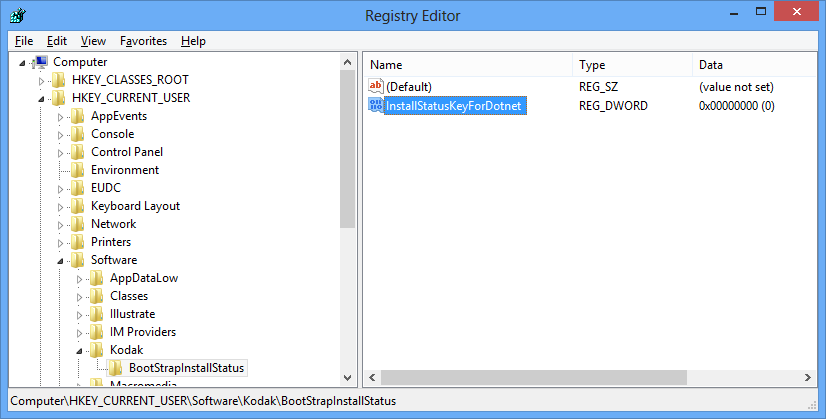
Next, I downloaded Process Monitor to see if I could spot the registry query or file search the installer was making. I noticed that aio_install.exe, the Kodak installer, unpacks a setup into a temporary location and runs from there. I copied the extracted files and ran the setup. Using Process Monitor, I discovered a registry query to HKCU\Software\Kodak\BootStrapInstallStatus and the REG_DWORD key InstallStatusKeyForDotnet. This was currently set to 1. In a spirit of experimentation I changed the 1 to a zero.

image

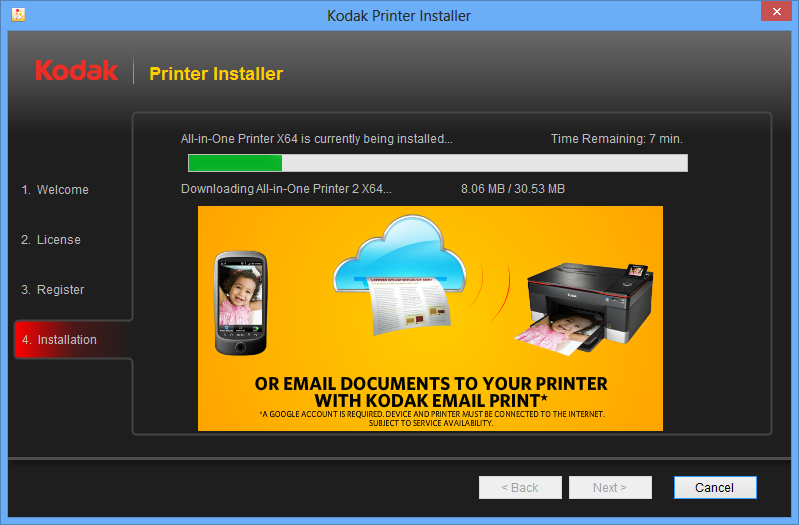
Next I re-ran setup. It worked perfectly.

image

I still do not know why that registry key was set, but I am not inclined to pursue it further. Possibly if .NET Framework 2.0 is already installed before you run the Kodak installer for the first time, the problem does not arise.

If you encounter this problem though, I suspect the following two steps will be sufficient:

1. Install .NET Framework 3.5 using Control Panel.

2. If installing the printer driver fails, check for the registry key HKCU\Software\Kodak\BootStrapInstallStatus\InstallStatusKeyForDotnet and set it to 0.

Windows 8 release now available; you should install it

Windows 8 is now available for download on MSDN and TechNet, which means the final code is in the hands of a large number of Microsoft-platform professionals. I have been trying out the release, which I installed both as an upgrade over the Release Preview (it does not really upgrade it, but does keep a few settings and documents), and as a clean install on a virtual machine.

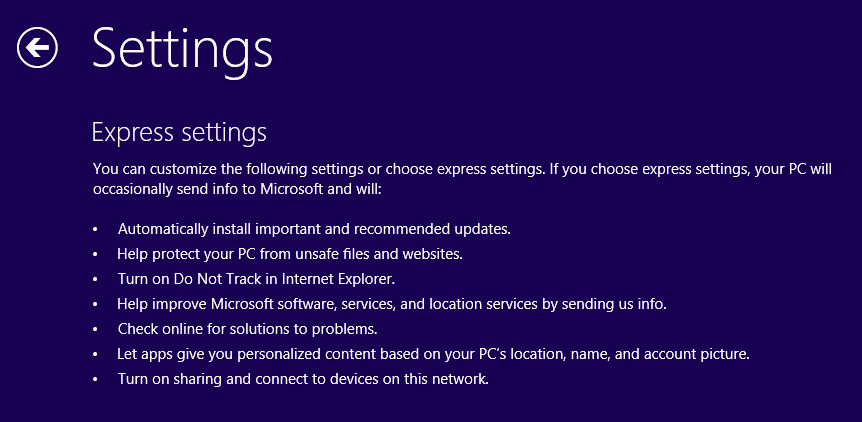
The first thing I noticed was the default settings:

image

You can click Customize to get more information and control over these settings, and I recommend that you do. The one that troubles me most is:

Let apps give you personalized content based on your PC’s location, name, and account picture.

I am not sure how the picture helps with that, but presume it is code for giving apps permission to use it and potentially to share it. The matter of sharing location is difficult; it certainly makes sense for numerous apps from Weather to TripAdvisor; but allowing third-parties to track your physical location is a big ask. Still, if you want the full experience you have to compromise your privacy; that is the choice.

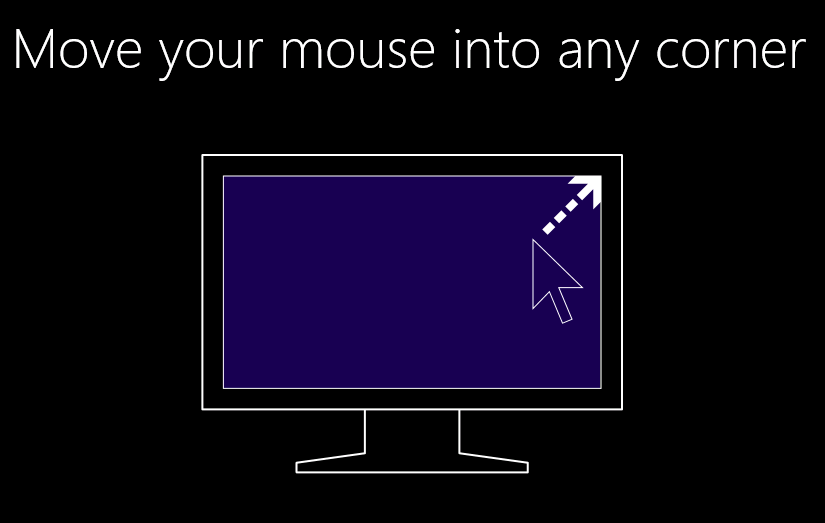
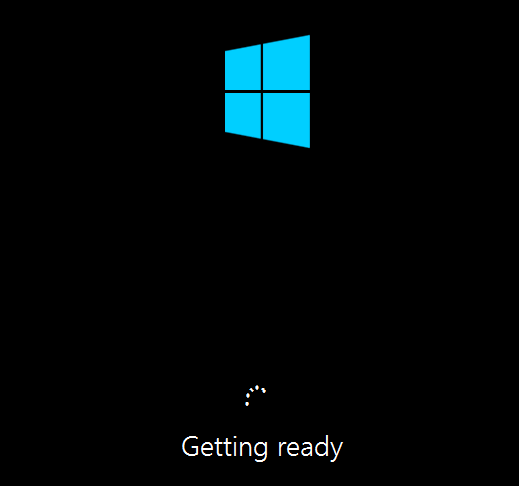
Next I was interested to see what guidance Microsoft would give to new users. This appeared just after setup and before the Start screen is shown for the first time, and takes the form of one or two short but insistent animations:

image

When I installed on a tablet, I got a second animation about swiping in from the sides.

It seems to me that Microsoft is trusting too much that users will enjoy “discovering” the Windows 8 user interface. Perhaps some will; but I was expecting to be offered something like a video and an introductory manual. I think users will click past this and still get stuck.

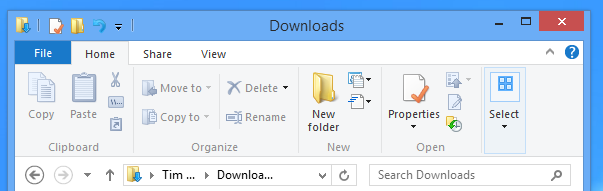
Next, I noticed the new aero-less desktop theme.

image

I do not have strong feelings about this, but admit to some puzzlement about why Aero translucency has gone. Power consumption is a possibility, but why not offer it as an option for desktop users, for example? Still, this is a small detail as far as I am concerned.

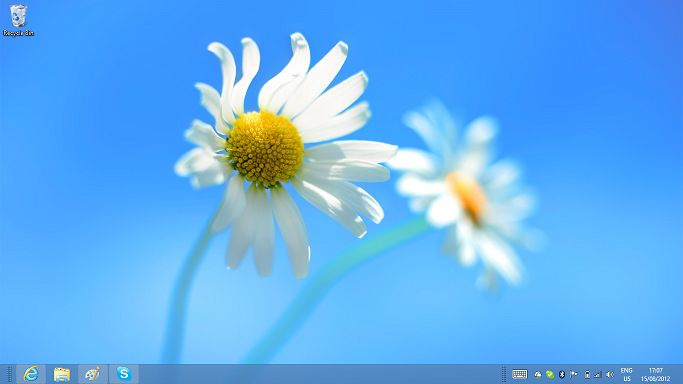
Microsoft has chosen a flower for the default desktop background, not unpleasant though a bold choice in some ways. A flower is a strong, evocative image that some will therefore react against, given that a desktop background can be a sort of personal statement.

image

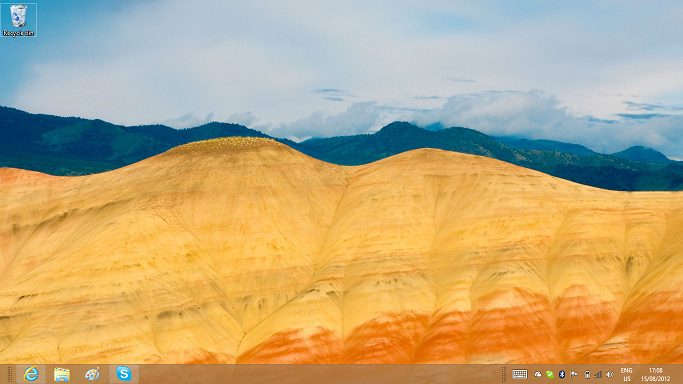
Not many desktop backgrounds are supplied on the install DVD. There is a Flowers theme and another called Earth, which I found rather bleak.

image

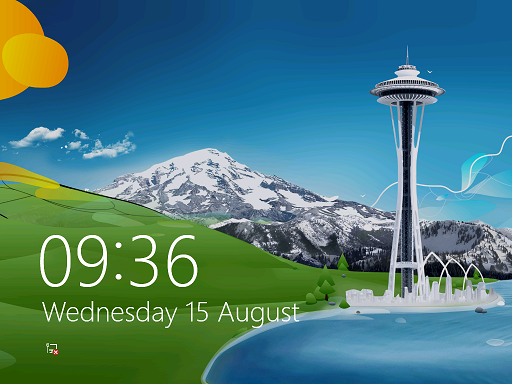
The default lock screen is a painting based, I think, on the Seattle Space Needle.

image

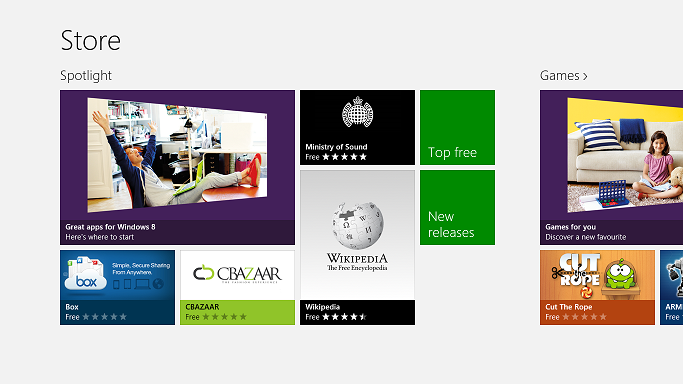
Disappointments? My biggest disappointment is with the RTM Store. I was hoping for a host of new applications, but in fact the Store, while containing a few new apps, is still sparsely populated.

image

This is a problem for Microsoft because Windows 8 badly needs a few compelling apps to persuade doubters that Metro, sorry Modern UI, is not worthless. I love Wordament, yes, but in general we still await great Windows 8 apps.

The best news, I guess, is that I have little to say about the install process. It was smooth, quick, and it worked. No unknown devices in Device Manager on the Samsung Slate; but I realise that this is the one device that everyone has been using to test Windows 8, so I guess this is not surprising. Not all PCs will fare so well.

Businesses should of course be cautious about rolling out a new version of Windows (and will be); and anyone installing this on a machine they use for real work will naturally take a backup first, in case of disaster or just some essential application not working.

If you can though, you should install this new release. Performance is good, it is a decent upgrade from Windows 7 even if you do not use a tablet, and it is only by using it for a while that you will get a feel for the strengths and weaknesses of Microsoft’s new operating system.

Windows 8 RTM: it’s better than you may have heard

Poor old Microsoft. Windows 8, the reimagining of Windows, is getting a mixed reception. There is a kind of alliance, with those who you would expect to oppose Microsoft (open source advocates, Apple enthusiasts and so on) lining up with Windows diehards who dislike too much change. Like Windows stalwart Woody Leonhard (remember those endless Office tips?) who says, under the headline Windows 8 review: Yes it’s that bad:

From the user’s standpoint, Windows 8 is a failure — an awkward mishmash that pulls the user in two directions at once. Users attracted to the new touch-friendly Metro GUI will dislike the old touch-hostile desktop underneath. By the same token, users who rely on the traditional Windows desktop will dislike having to navigate Metro to find settings and apps they intuitively locate in Windows 7.

He adds:

I can confirm after months in the trenches and talking with many hundreds of testers that anyone who defines "real work" as typing and mousing won’t like Windows 8 one little bit.

I disagree. In fact, I had the opposite experience. I installed Windows 8 Release Preview for a non-technical friend, on an old laptop with no touch capability, and was so sure that she would dislike it that I kept the backup image of her Windows 7 install ready to zap it back on.

It did not happen. She was flummoxed at first of course, but after pinning a few applications to the taskbar and learning how to navigate Start, she was fine. All her old desktop apps still work and she cannot see what the fuss is about. Now and again she pops into Modern UI land and plays a game or uses the Facebook/Twitter integration in the People app and it is not a problem.

This has made more impression on me that my own experience, which I tend to discount being used to the bleeding edge. I should mention though that I have no desire to go back to Windows 7, even on my desktop. I like the speed of Windows 8; I like having Hyper-V; I like having the taskbar on both my displays, and it works fine.

I also have Windows 8 on the Samsung Slate which I bought last year, and words cannot describe how much better it is than Windows 7 on the same device. That said, I cannot really recommend the Samsung; its battery life is too short, its design falls short in several places, and it is too expensive to be a mainstream hit. However, it has given me a feel for how well the Windows 8 UI works on a tablet.

My view is this. Windows 8 has plenty of failings, but they are the failings of transition to a better place, not the failings of something that will never work properly. Most of the problems which rile people so much can be fixed with a small amount of effort and perhaps a read of a survival guide. I did one, and there are others just as good or better.

It seems to me to be simply dishonest to portray Windows 8 as this horrible thing that is a nightmare to use. I do not have any evidence for that, beyond the initial painful moments that I have seen at first hand. I do realise that someone might be so much put off by those initial moments that they never want to touch it again, and will declare the same to anyone who will listen, but regard it as my job, as a technical communicator, to help users get past that towards a fairer judgment.

image

Windows 8 is ready, but many of its users are not.

Why I want a Windows RT (ARM) tablet

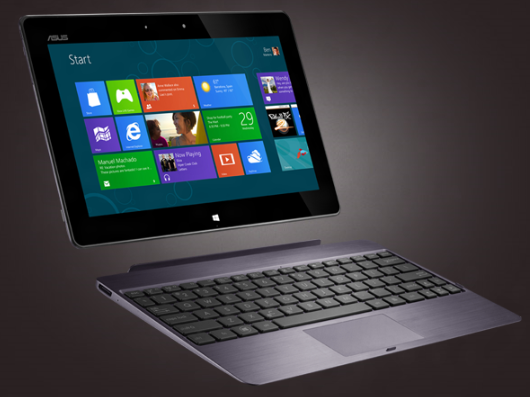
Microsoft has now announced that the first Windows RT tablets will come from Asus, Dell, Lenovo, Samsung, and from Microsoft itself with Surface.

image

Windows 8 on ARM is a different thing to Windows 8 on Intel. On Intel, most Windows applications will run. On Windows RT, the ARM version, only Windows Runtime apps (also known at Metro-style, Modern and Windows Store) will run. There is still a desktop mode, but it is reserved for a special version of Office along with a few utilities like Explorer.

On the face of it, the Intel version is a better deal, because “you get it all.” However, there are times when less is more; in fact, that phrase practically defines the success of Apple’s iOS, which does not run applications coded for Mac OS X.

The problem is this. On a tablet, the Windows desktop is a horrid experience, unless you get out not only your tablet, but also your keyboard and your mouse or stylus. Even the stylus can be a problem, and having lived with Windows 8 on a Samsung Slate tablet for some months, I find a mouse works best.

We have seen this before, with the old Windows tablets starting with Windows XP. OEMs came up with clever designs with twist screens and styluses which clip into the side. These machines certainly have their uses, but they were not mainstream and they were not cheap. Intel Windows 8 tablets will have all the same problems. The poor experience offered by the Windows desktop user interface with touch was a key reason why Microsoft came up with the radical WinRT alternative.

Windows RT on the other hand promises a better tablet experience. with the additional bonus of longer battery life and a lighter, more efficient device. You cannot install desktop apps, but if the Windows 8 ecosystem fails to come up with WinRT apps to cover the essential computing activities, then the Windows 8 project will have failed in its goals.

There is also Microsoft Office of course, which makes some effort to support touch control though it could be better. Still, I would rather have Office which at least has been designed with the knowledge that some users will be controlling it with touch, than all those other desktop applications which presume keyboard and mouse.

The importance of having Office there is that it makes the difference between having to have a laptop with you as well while on the road, and being able to get all your work done on the tablet alone.

This issue does not seem to be well understood either by Microsoft’s OEM partners nor by the general public. I do not blame the latter. On the high street or at the airport, there will be rows of Windows 8 tablets with similar Start screens, and the difference between Windows RT and Windows Intel will be hard to convey. I can imagine salespeople saying, “You should get this one, it is the full Windows,” and steering customers towards the awkward, confusing experience that is Windows 8 on an Intel tablet.

One disappointing remark buried in the announcement:

Over 90% of the RTM applications in the Windows Store support Windows RT

That means 10% of WinRT apps currently do not support ARM, presumably because there is some native x86 code in there.

Microsoft really, really wants developers to build Windows Runtime apps

Or should that be Metro-style apps? or Modern UI apps? or Windows Store apps?

I am not sure; but one thing jumps out at me as I look at the Windows 8 development platform. Microsoft is doing all it can to push developers towards Windows Runtime (WinRT) rather than desktop development.

Here is a small piece of evidence. The contentious new Start screen uses tiles for application shortcuts. These can be static images and text, or live tiles that update with current information. There is only one Start screen though, so desktop apps also have tiles which you click or tap to launch the app in question.

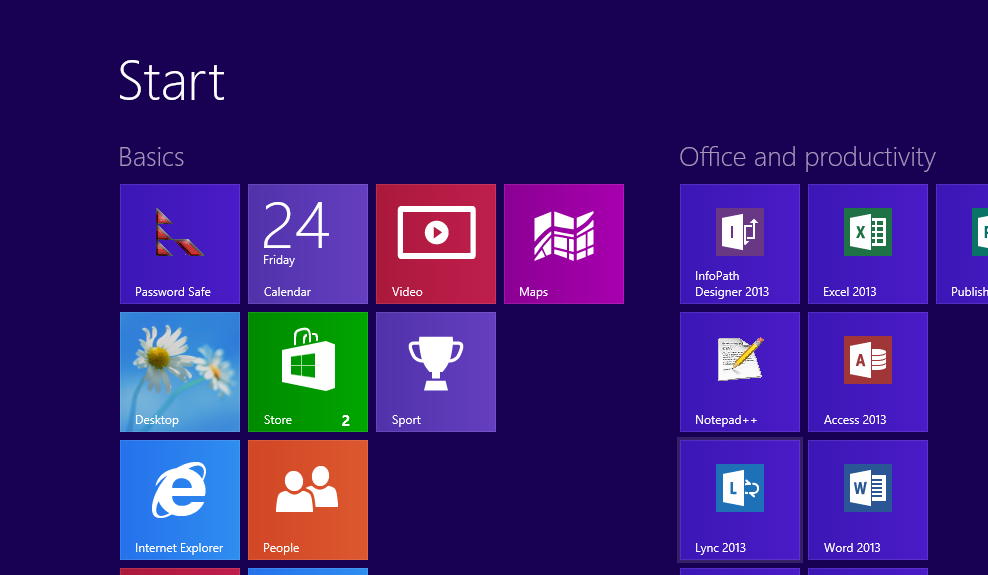
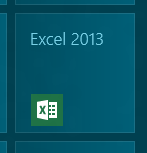
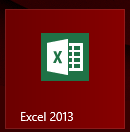
However, there is no documented way for desktop apps to have good-looking tiles. Here is the tile for Excel 2013, for example:

image

It is mostly wasted space. A WinRT app on the other hand can fill that space:

image

or display a picture

image

or take up a double space

image

The question: how difficult would it have been for Microsoft to allow desktop apps to have pretty tiles? I can understand why desktop apps cannot have live tiles, but there is no technical reason I can think of why desktop apps could not have a resource used for a decent tile.

Here is the official answer though, from Microsoft’s Rob Caplan:

Desktop apps cannot customize their tiles and will always use the icon and name from their shortcut.

I guess Microsoft can argue that it wants users to know whether they are about to launch a desktop app or a WinRT app. This could easily be done with a little overlay signifying the desktop. There was no need to ensure that all tiles for desktop apps look ugly.

Except that Microsoft wants these tiles to look ugly. Because it wants you to develop WinRT apps, not desktop apps, and is even willing to have its own Office tiles look bad for the sake of the cause.

Update

This post was picked up by Reddit and of course there are some interesting comments. First, the desktop tiles are improved in the RTM build of Windows 8 (my screenshot above is from the Release Preview):

image

Second, here is a comment apparently from a Microsoft employee:

Wow, what a flimsy argument. The funniest thing about it, though, is that the desktop tiles look MUCH better in the RTM build (though customization is still left to Modern apps). Can’t seem to find a screenshot though.

But on the other hand, of course we want people to develop Modern apps. That’s why we built the platform. But the desktop tiles aren’t a part of that at all.

If I were the author, I’d bring up Contracts as a much better example. Desktop apps can’t support the Share Contract, or Search, or whatever; only Modern apps can. Of course, there’s no telling if this is simply a v1 limitation or a longer strategy; even I have no idea (I’ve only been at the company a little over a year). If we waited to release Windows until we had implemented everything we wanted to do, it wouldn’t come out for years. We have to draw the line somewhere.

Disclaimer: these are my thoughts, not the company’s.

In defence, I presented this only as a “small piece of evidence”.

Note the use of the term “Modern apps”.

Microsoft toughens logo requirements for Windows 8, forbids startup apps

Today I came across the certification requirements for Windows 8 desktop apps. This is the successor to the Windows 7 Logo program, and represents a set of best practices required for software to display the official Windows logo.

In practice, I am not sure how many buyers check that software is certified before buying, though it might make sense for businesses to do this as a matter of policy if they want keep Windows desktops running smoothly and safely.

The requirements are also interesting as a guide to what Microsoft considers to be well-behaved applications.

The new requirements are tougher than before. Some guidelines that were in the “Beyond Windows 7” section in the previous logo program have now moved to become full requirements. Others seem to be completely new.

Here are some highlights:

  • Your app must not depend on any Windows compatibility feature, nor the VB6 runtime.
  • Apps may not start automatically on startup. You may not set the “run” registry keys nor install a shortcut into a startup folder.
  • Apps must use “strong and appropriate ACLs” to secure executables, directories and registry keys.
  • Apps must be compiled with /SafeSEH (safe exception handling), /NXCOMPAT (no data execution) and /DYNAMICBASE (random address space layout).
  • All executables must be signed with an Authenticode certificate – this was the same in Windows 7 but worth repeating.

The automatic startup prohibition is particularly intriguing. It could not be clearer:

10.2 Your app must avoid starting automatically on startup

I hate unnecessary startup applications too; but I do not object to all of them. My password manager runs on startup and sits in the notification area. Some of Microsoft’s own applications do this, for example Lync, Skype and SkyDrive. I would have thought auto-startup is acceptable if it is under the user’s control.

One factor may be that Windows 8 desktop apps do not auto-start on log-in even if you set them to do so. Instead, they start when the user clicks or taps into the Desktop. Therefore, in a sense none of the normal auto-start techniques are reliable.

There is a way round this, which is to install an autorun service.

In general, tough certification requirements are a good idea, though if they are too demanding the risk is that vendors will simply ignore them.