Category Archives: microsoft

Microsoft’s Design Language – Tiles and Chromelessness – Prospects for Windows 8

Among the most illuminating sessions at Microsoft’s BUILD conference earlier this month was Will Tschumy’s presentation on the Microsoft Design Language.

Tschumy says that Microsoft began a new focus on design back in 2003 (think Office Ribbon). Then came Windows Phone and Metro (only he did not call it that), and now:

Microsoft is the only organization with a single, consistent design language across each screen we touch

he explained., noting that Xbox as well as the phone uses this same design language.

So what is it? The core idea, he says, is “content before chrome”. This is an old idea, which Google drew attention to with its 2008 web browser called Chrome – a playful title for something which properly should have been called Chromeless. Chrome sported a minimal user interface, putting the focus on the web content, and laying the foundations for web applications where the browser disappears and you forget that you are looking at a web page.

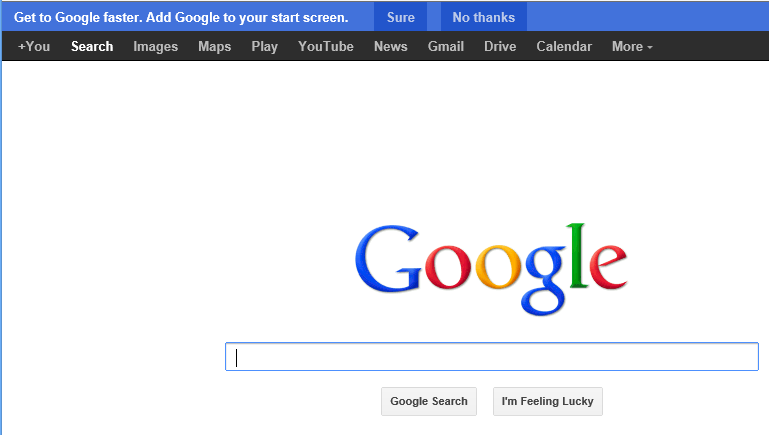
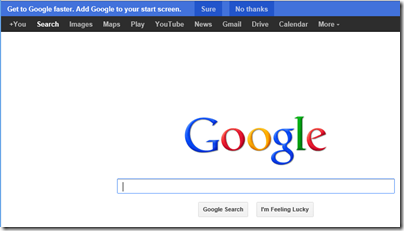
This is actually consistent with Google’s approach from its earliest days, when the Google home page was just a search box and a couple of buttons – a purity of design now spoilt by a menu bar and nagging ads, but you can still see it.
image

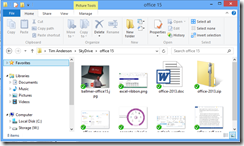
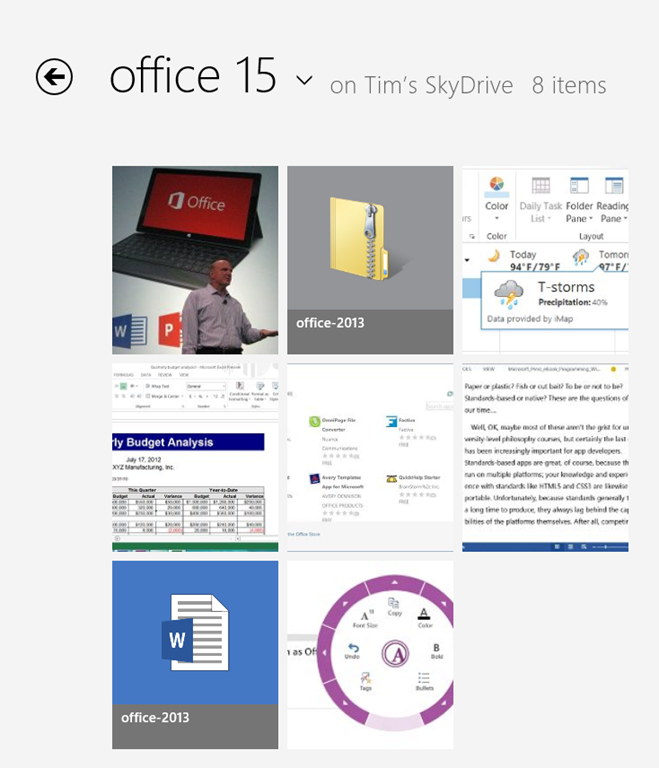
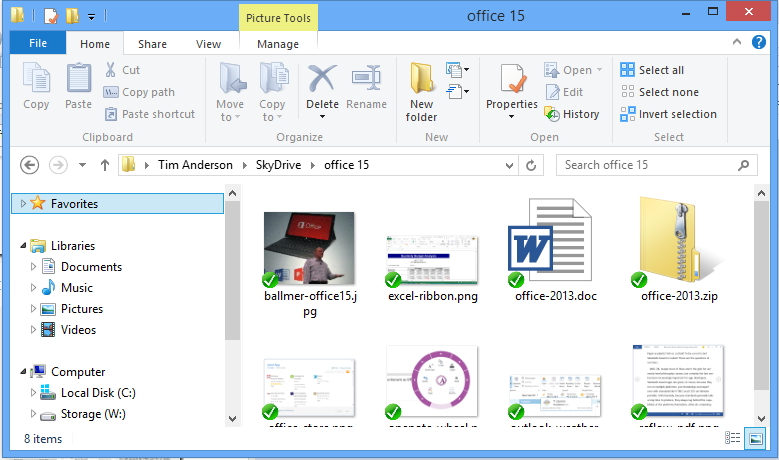
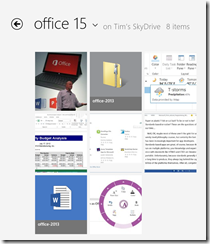
But I digress. What has Microsoft done with the concept? A good example is to compare the SkyDrive “Metro” app with the same folder in Windows File Explorer. Here is Skydrive:
image

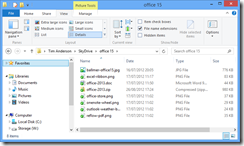
and here is Windows File Explorer:

image

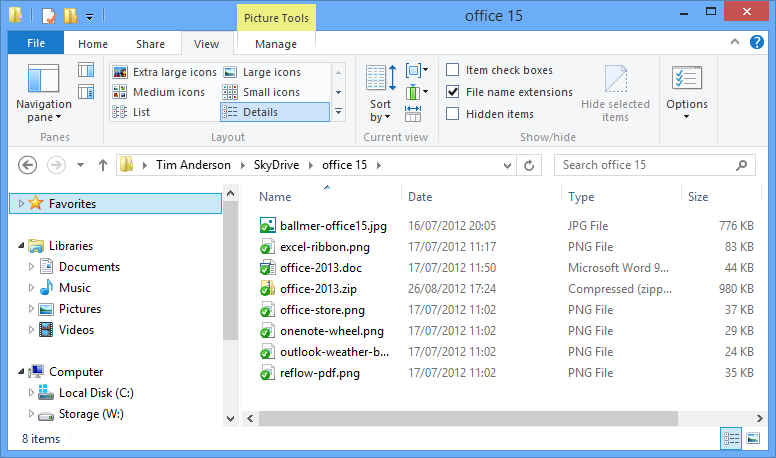
Or possibly:

image

if you are like me and prefer the “Details” view.

The point here is that the “Modern” SkyDrive app has a high ratio of content to chrome, and large icons which preview the content where possible make the content stand out, whereas in File Explorer there is more UI. Of course this is the Windows 8 File Explorer which is also influenced by the same design language. My Details view, which I like because I get higher information density, is closer to an old-style computer approach where the focus is on the number of bytes in the file above what the image happens to look like.

Mixed feelings them, but I do understand what Microsoft is driving at. Spend some time with Microsoft’s Surface RT – no, not on the desktop, on the Metro side – while using some of the better new apps and you begin to appreciate the idea.

Tschumy spelt out five design principles, though only three of these seem to be substantial:

  • Pride in Craftsmanship: fluff
  • Be fast and fluid: Performance matters
  • Authentically digital: not skeuomorphic
  • Do more with less: minimalism
  • Win as one: fluff

No mention then of the “signposting” inherent in the metro transport signs which gave Metro its now-forsaken name, and in fact discoverability is a weakness of Microsoft’s design language; it seems hard to create a UI that is both “content before chrome” and highly discoverable. The common functionality encapsulated in the Windows 8 Charms bar, where features like Search are handled by a UI that is the same in every app, is one attempt to fix this, though first you have to learn how to use the Charms bar. Note the number of users who thought the Wikipedia app had no search function.

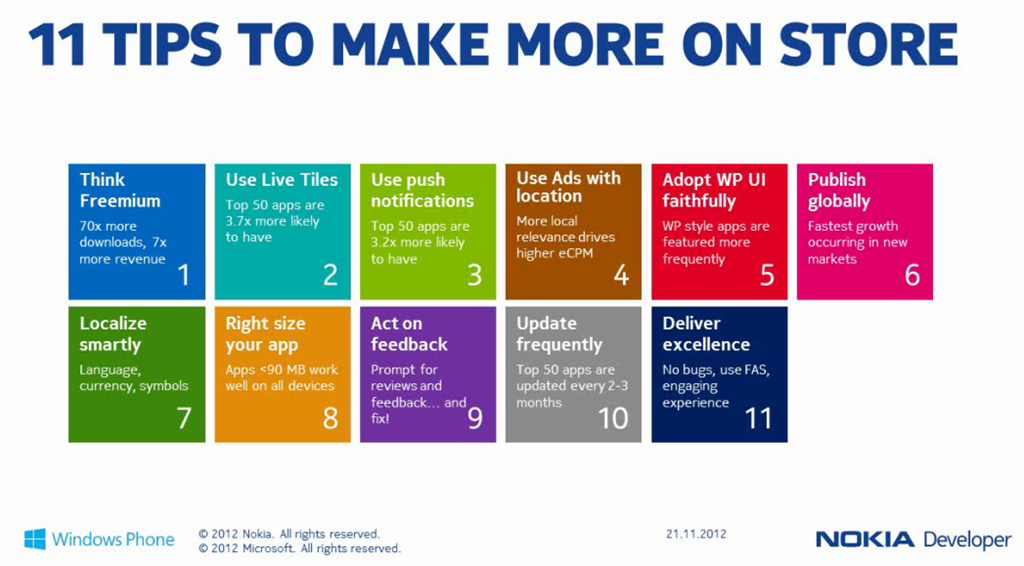
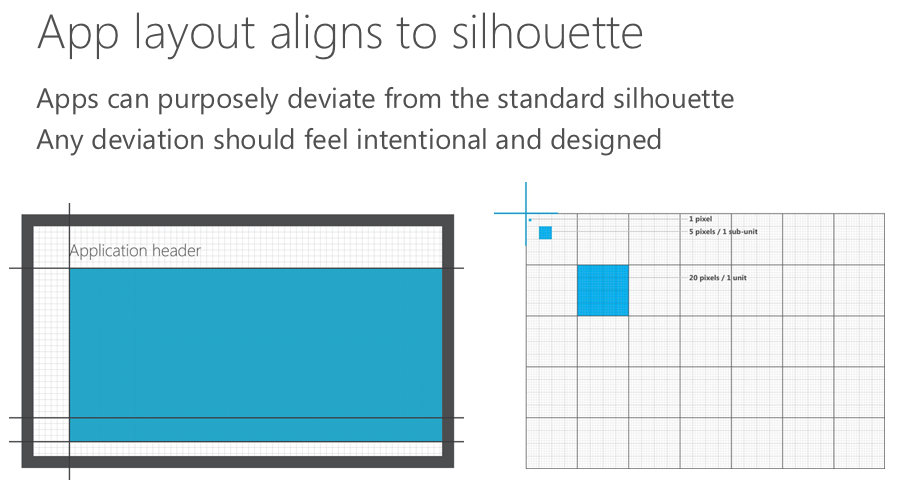
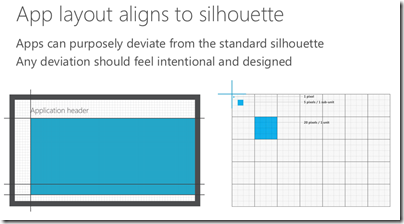
There is also a visual aspect to Microsoft’s design language, which Tschumy does a good job of explaining. Align to a standard grid, he said, unless you need to deviate from it for good reasons.
image

From here we get the tiled look which characterises Metro and which certainly has merits; it tends to be clear though not always beautiful.

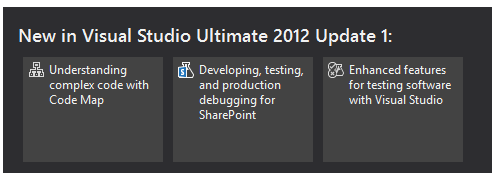
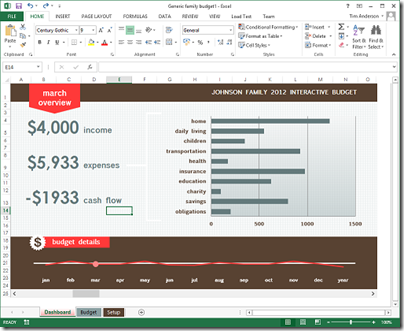
Understanding the rationale behind these design principles helps to make sense of new Microsoft products such as Office 2013 and Visual Studio 2012, both of which have been met with mixed reactions on the grounds that they look a bit washed-out, the user interface is hard to focus on. The thinking is that this helps the content, which is what you care about, to stand out more.
image 

That said, I am not convinced by this approach in the context of a productivity tool like Office or Visual Studio. You may care more about the content; but if you want to change the content, then you also care about the tools and want to find them quickly. Scroll bars that fade into the background are great, until you need to scroll the document.

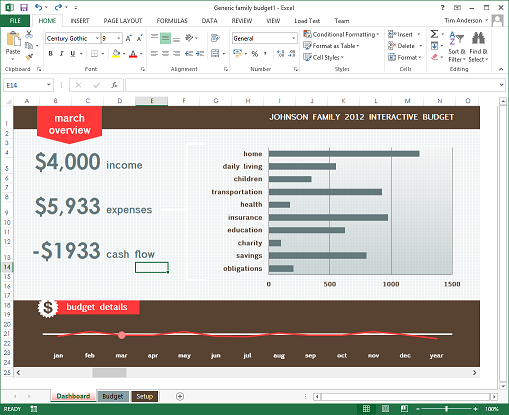
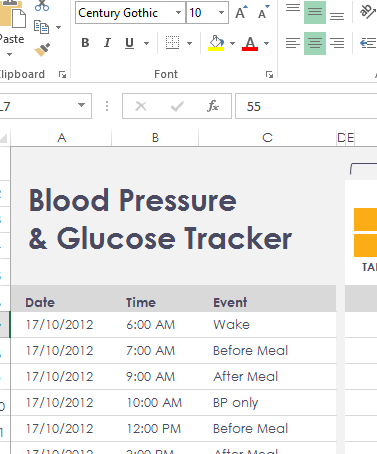
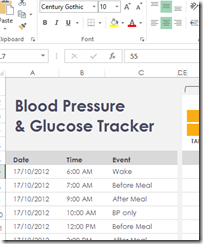
It is also interesting to browse the sample templates in Excel 2013. I grabbed the above screen from there, which seemed to illustrate the design principle of content before chrome, but in other cases I notice that the designers have gone for a washed-out look in the content as well.
image

This makes no sense to me, other than that the designer, observing the fade-into-the-background theme in the chrome, decided to match the content to it in order to get a consistent appearance. Now you cannot see the content or the chrome – uggh! This is what happens when you try to get a very large company working together on a common but somewhat counter-intuitive vision; not everybody gets it.

Which brings me neatly back to Windows 8. I mentioned the Surface RT above; I will be writing more about this, but I do find it a delightful device and one which expresses the Windows 8 and Microsoft Design Language vision better than any other aside from perhaps a Windows phone – unfortunately I have not yet got my hands on a Windows 8 phone to review but hope to do so eventually. It is also a flawed device of course, partly because the performance is less than “fast and fluid” in some cases (like Excel), but mainly because the apps are lacking.

It does seem to me though that Windows 8 has great potential and brings something new to the tablet world. Unfortunately there is uncertainty about whether either Microsoft or its OEM and retail partners have the will and the vision to get past the current hump of unfamiliarity and immaturity for that potential to be fulfilled. Microsoft has spent eye-wateringly huge amounts of money marketing Windows 8 and Surface RT; but I do not think that money has been spent strategically, it has just been thrown at the usual agencies. Many are still flummoxed by what Windows 8 is for, and that is apparent even amongst the OEMs that are manufacturing and selling it.

What will now happen post-Sinofsky, the man whose balls of steel brought Windows 8 to market? In his memo noting the appointment of Julie Larson-Green as head of Windows engineering, Ballmer says:

Her unique product and innovation perspective and proven ability to effectively collaborate and drive a cross company agenda will serve us well as she takes on this new leadership role.

The highlighting is mine. A cross company agenda is exactly what Microsoft needs; but if the new Windows leadership is less determined than the old, it could equally easily pull apart rather than together.
Skype vulnerability exposes poor security in web application. Who will trust Skype now?

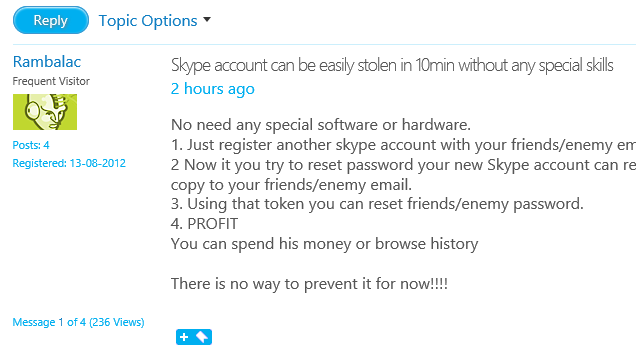
Today there are reports of a breathtakingly bad vulnerability in Skype, that allows anyone to hijack another person’s account simply by knowing the email.

image

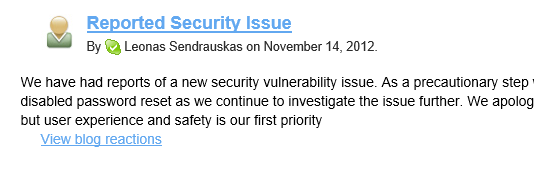
Password resets have now been disabled, fixing the problem temporarily, but it remains inexcusable.

image

It is basic security practice that ownership of an email address must be validated with a confirming email to that address and a special link. I see this on web forums that discuss trivia – why not on Skype where you can spend real money, and more seriously, see contacts and conversation history?

There must be a second weakness here, in that somehow the new account ends up getting confused (by Skype) with the existing one. It should not be possible to create an account with an email address that is in use on another account. Actually I count three weaknesses:

1. You can create an account with an email address that is not validated.

2. You can create an account with an email address that is already in use on another account.

3. You can reset the password on another account without having access to their email address, by resetting it on a second account with the same email address.

Microsoft acquired Skype in October 2011 but it is not clear when this vulnerability was introduced.

I tested this myself by setting up a new account with an email address that already has a Skype account. It worked though I did not take it to the next stage. Now I have a Skype account, incidentally, which cannot be deleted as Skype does not allow this. However I have now reset the email.

As it happens, I have suffered in the past from people opening accounts with my email address, I believe because of innocent error, such as forgetting to type the number in an account like someoneNN@yahoo.com or the like. One person set up an Apple iTunes account with my email address, complete with credit card details. I complained to Apple who disabled the account, but as with Skype, it cannot be deleted. So if I ever want to use that email address for an Apple account I will have problems.

That was a few years ago. It is astonishing that a company the size of Skype/Microsoft, handling and storing vast amounts of personal information, would have such weaknesses in its security.

Who will trust Skype now?

Update: It also appears that this flaw, or part of it, was reported to Skype back in August. This is a failure of management as well as security.

Steven Sinofsky leaves Microsoft – but why?

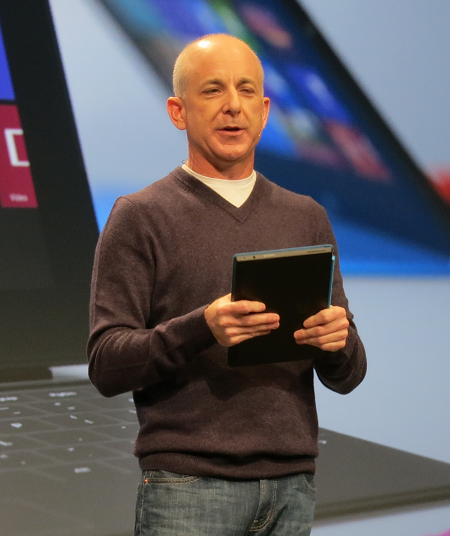
Microsoft has announced that Windows chief Steven Sinofsky is leaving the company:

Microsoft Corp. today announced that Windows and Windows Live President Steven Sinofsky will be leaving the company and that Julie Larson-Green will be promoted to lead all Windows software and hardware engineering. Tami Reller retains her roles as chief financial officer and chief marketing officer and will assume responsibility for the business of Windows. Both executives will report directly to Microsoft CEO Steve Ballmer.

image

Here are some quick thoughts.

One line of thought is that Windows 8 and Surface RT are failing because users do not like the dramatic changes, with the new tiled personality and disappeared Start menu, and therefore its architect is departing.

I do not believe this for several reasons. One is that the promoted Julie Larson-Green is a key creator and proponent of the new design (call it Metro if you like). She worked with Sinofsky on the Office Ribbon way back, a project that has some parallels with Windows 8: take a critically important product and revamp its user interface in ways that customers are not requesting or expecting.

My further guess is that Microsoft was braced for some level of storm on the release of Windows 8. There was plenty of warning that the new tablet-friendly platform would be a hard sell to longstanding Windows users.

The time to judge the success of Windows 8 is not today, but in two or three years time, when we can observe how the platform is faring in the new world of mobile and cloud.

It is my opinion that the remaking of Windows is more brilliant than blunder. Without “reimagining” it was doomed to slow decline. Microsoft now has a tablet operating system, and one that is in the hands of millions thanks to its integration with desktop Windows. The storm will die down and there is at least some chance that the outcome will be an app platform that will keep the company in the tablet game.

That said, it seems to me that Microsoft has had problems in execution. Windows 8 is fairly solid, but there are signs of haste in the building blocks of Metro, as you discover if you write an application, while Surface RT is not the fast, easy to use appliance that it should be. Key apps like Mail and Xbox Music are short of features and too hard to use, while Windows-isms such as update errors have not been expunged as they should. Such issues can be fixed, but the moment to get this right is at launch, not six months or a year later.

You might also ask: why is Microsoft allowing its brand new store to fill with rubbish apps, seemingly with the knowledge and encouragement of employees at the company?

Were these execution problems Sinofsky’s fault then? Again I doubt that. My perception is that Microsoft is a dysfunctional company to some degree, but one in which there are islands of immense talent and teams which deliver. It is huge and bureaucratic though, and getting everyone motivated and energised to deliver top quality is likely impossible without radical reform. Bureaucracy tends to result in employees who work by the letter not from the heart, which results in mediocrity, and there is evidence of that everywhere.

In this context, the fact that Sinofsky delivered twice, once with Office 2007 and again with Windows 7, with judgment on Windows 8 not yet possible, shows his ability.

If failure is not the reason then, why?

Well, another reason for staff to leave suddenly is that there was some sort of internal conflict. Sinofsky achieved by taking a firm line and sticking to it, which made him enemies. I do not have any inside information; but two moves to reflect on would be the move of ASP.NET and Silverlight guy Scott Guthrie to Windows Azure, and deep Windows internals guy Mark Russinovich also to Azure.

Sinofsky was no friend to .NET, which led to some perplexing decisions. A little sign of this I witnessed at Build was why XNA, a .NET wrapper for Direct X hardware acceleration, is not supported in Windows Phone 8. Except it is, as a member of the phone team explained to me, it is just that you have to target Windows Phone 7 in your project, but it will run fine on Phone 8. Why the workaround? Because .NET is now discouraged for games development, for no technical reason.

Still, this war has been going on for a while and Sinofsky has won every battle. Why has he now left?

I have no inside knowledge, but would conjecture that the effort of forcing through Windows 8 and native code versus .NET built up pressure against him, such that there was instability at the top. In this context, even relatively small failures or falling behind projections can be significant, as resources for opponents to use against you.

CEO Steve Ballmer of course is still in place. Did have a change of heart about Sinofsky, or a row with him over what comes next for Windows? That is the kind of thing which is plausible; and the uncertain market reaction to Windows 8, while not unexpected, would make it possible to push him out.

If I were a shareholder though, the departure of this key executive at this moment would worry me. This is the company which has transformed Windows Azure for the better and delivered the fantastic Windows Server 2012; it is also the company which is guilty of the Kin mobile phone debacle, and forgetting its agreement with the EU to offer a browser ballot to Windows 7 users at perhaps substantial financial cost. Evidence, one would judge, that deep change is needed, but not the kind of change that will be achieved by the departure of one of the most capable executives.

Postscript: Mary Jo Foley notes that Sinofsky did not present at the Build keynote right after the Windows 8 launch, raising the possibility that Sinofsky’s departure was already planned, before the Windows 8 launch. That is further evidence that this is not a reaction to poor initial sales (if indeed they are poor).

How to run Server Manager or any application as a different user in Windows 8

If you are running Windows Server 2012 you can install the Remote Administration Tools on Windows 8, which lets you administer your server from the comfort of the Windows 8 GUI, even if your servers are Server Core.

However, it is unlikely that you log onto your Windows 8 client with the same credentials you use to manage your servers.

The solution is to run the tools as a different user. The approach you use depends on which tool you are using. If you run PowerShell, for example, you can use the enter-psssession cmdlet with the Credential argument:

enter-psssession yourservername -credential yourdomain\youradmin

This will pop up a login prompt so you can start an administrative PowerShell session on the server.

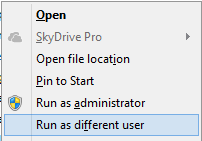
But what about Server Manager? If you go to the Start screen (after installing the remote tools) and type Server Manager, you can right-click the shortcut (or flick up) and get these options:

image

Run as administrator will not help you, since this is the local adminstrator. Instead, choose Open file location.

Next, hold down the shift key and right-click the shortcut for Server Manager:

image

From the pop-up menu choose Run as different user and enter your server admin credentials.

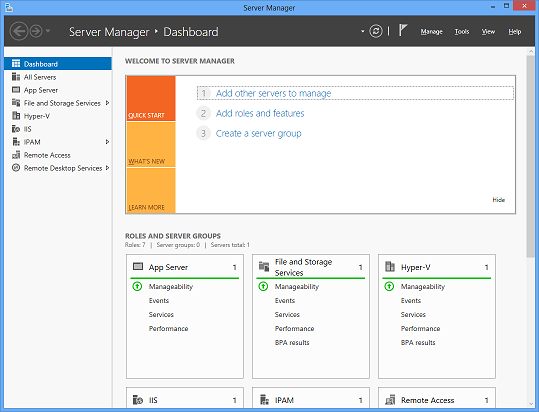
Now you have a nice Dashboard from which to manage your remote server.

image

Improving Windows Server: the really hard problem

At Microsoft’s Build conference last week I attended a Server 2012 press event led by Jeffrey Snover, the Lead Architect for the Windows Server Division.

He and others spoke about the key features of Server 2012 and how it justifies Microsoft’s claim that it is the cornerstone of the Cloud OS.

It is a strong release; but after the event I asked Snover what he thought about a problem which is at the micro-management level, far removed from the abstractions of cloud.

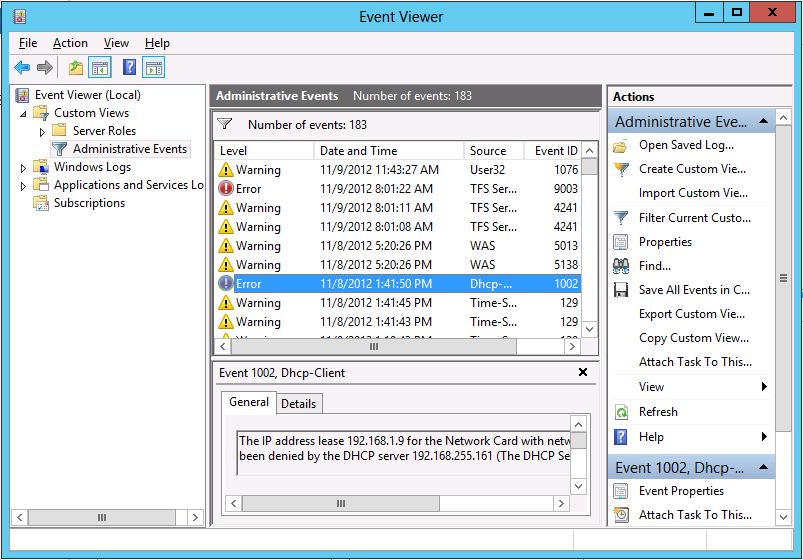
The Windows event log, I observed, invariably fills with errors and warnings. Many of these are benign; but conscientious administrators spend significant effort investigating them, chasing down knowledgebase articles, and trying to tweak Windows Server in order to fix them. It is a tough and time-consuming task.

When, I asked, will we see an edition of Windows Server that does a better job of eliminating useless and unnecessarily repetitive log entries and separating those which really matter from those which do not?

[I realise that the Event Viewer makes some effort to do this but in my experience it falls short.]

image

That’s hard he said. It will take a long time.

Which is better than saying that the problem will never be solved; but you wonder.

I also realise that this issue is not unique to Windows. Your Linux or Mac machine also has logs full of errors and warnings. There is an argument that Windows makes them too easy to find, to the extent that scammers exploit it by cold-calling users (generally not server admins) to persuade them that they have a virus infection. On the other hand, ease of access to logs is a good thing.

What is hard is discerning, with respect to any specific report, whether it matters and what action if any is required. One reason, perhaps, why we will always need system administrators.

Rubbish apps in Windows Store – encouraged by Microsoft?

Someone (and you wonder who) has taken it upon themselves to document rubbish apps in the new Windows Store. The stated reason:

Here we call out all the trash in the hopes that someone at Microsoft is listening and can remove them.

He or she has found plenty of examples – like the developer who submitted 20 trivial conversion apps and a tapping game that does not work; another who has got dozens of identical SDK samples listed as apps with different names; or the memory game listed 28 times complete with spelling errors and images suspected to be lifted from Disney.

Initially the puzzle was why apps which breach Windows Store guidelines are getting listed. But then there is more:

I feel like I’ve uncovered a conspiracy and I have no idea what to do with the information!

I emailed both Kusuma Sruthi and Pavan Kumar asking them why they had felt the need to submit their game multiple times to the Windows 8 store. I wasn’t really expecting a response. Yet both replied, pretty quickly, saying that they were told to do it but would remove the duplicates if I told them to. Was my email written with such authority?

Both claim to have been contacted by POOJA PATIL and told “to upload our apps with DIFFERENT NAMES and with SAME SOURCE CODE”. Whilst Pavan Kumar claimed not to have contact details he did say that she was from Microsoft. Kusuma Sruthi was more forthcoming with both a microsoft.com email address and an Indian mobile number. A brief Googling confirms the existence of a Pooja Patil with this phone number working for Microsoft to organise the Windows 8 Guiness World Record attempt in Bangalore.

Why would someone from Microsoft have told these two developers to submit their game multiple times? Were they really so desperate for apps that they encouraged this cloning? Were they really expecting that no one would notice?

Yesterday the blog author says two similar emails appears from these developers now denying that they were instructed by Patil to submit the apps:

at 6:05am I received 2 emails. Yes, at exactly the same moment. From Pavan and Kusuma. Both would now like to retract their previous comments about Pooja and would like it known that she’s great, and very supportive, and didn’t tell them to submit the same app over and over. It was all just a misunderstanding. Apparently.

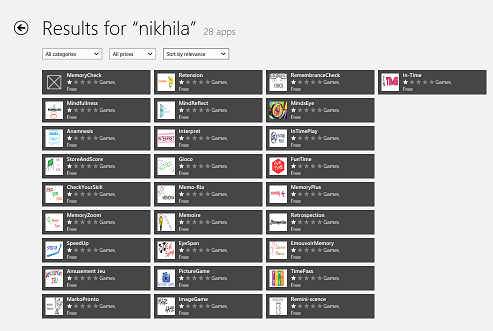
Is all this made up? Not entirely, since you can verify that the apps mentioned exist, like these 28 apps by Nikhila Grandhi:

image

though it looks to me that some of the apps from Kusuma Sruthi have been removed suggesting that someone at Microsoft has noticed the issue and is trying to clean up.

Microsoft is a large company and although I was assured by Microsoft Store VP Antoine LeBlond that the new Store is not about the numbers, I can believe that some over-enthusiastic employees went too far in obeying some corporate directive to promote Metro-style app development and Store submissions.

That does not explain though why so many guidelines appear to have been ignored.

The company should do the right thing and clean out the rubbish.

Update: see also Drunk Compliance Tester. “The Windows 8 Store will continue to be a horrible experience for everybody if the level of quality doesn’t rise”

Microsoft Build 2012 is done. Now the market gets to judge Windows 8 and Windows Phone 8

I am just back from Microsoft’s Build conference, at the company’s headquarters near Seattle. This is a company in transition and the event had that feel to it. There was not much that we did not know about before, but this is the moment of full release into the market for some key products, and in some cases – Windows 8 and Windows Phone 8 to be specific – you could sense some nervousness about how they might be received.

Attendees were handed Surface RT devices (running Windows on ARM) as well as Nokia 920 Windows Phone 8 phones.

Here are a few quick reflections.

First, Windows 8. I picked up less resistance to the new big bold tiled touch user interface than was the case last year when it was unveiled, though arguments about its merits continue. Personally I am fine with it, though my experiments with developing an app or two have shown me that it is version one and could be made better for developers. I still think there are too many expensive hybrid tablet/laptops being pushed out by Microsoft’s hardware partners, and not enough simple slates.

An encouraging sign for Microsoft was that sessions on line of business apps for the new interface (which still lacks a proper name) were packed and had to be repeated.

What about Windows RT? I am in a minority since I like the concept; most Microsoft-platform folk want their x86. Leaving that aside though, the big issue with Windows RT is performance. Visual C++ expert Herb Sutter said to me that the ARM compiler is version 1.0 and less well optimised than the one for x86, which may account for the disappointing performance of the Surface RT. I cannot help liking the device, which is beautifully made and a lot of fun, but watching an MP4 video on the flight home I had difficulty getting smooth playback. It really should not be hard to play an MP4.

Another puzzle with Surface RT is that Microsoft has not made the best of the simple appliance concept. Windows update errors and crashing apps make you wonder whether Microsoft has learned anything from Apple. There is no excuse when the company has such complete control over hardware and software. Signs of haste I think, and it will get better, but if Surface RT had the potential to show how smooth and easy Windows 8 can be, that opportunity has been missed at the launch.

An uncertain launch for Surface RT then; but Microsoft is on surer ground with Windows Phone 8. I have looked in detail at the SDK and like it better than the Windows Phone 7.x SDK which is Silverlight and XNA only. I have not tried an actual device yet, but my sense is that the platform is all there now, for business as well as consumer. The problem is that the market is contented with iOS and Android and breaking in will not be easy.

Windows Azure had a good Build. In keeping with the client focus, Azure Mobile Services got the most attention, an easy way to create a back-end for mobile clients or Windows Store apps. The new Azure management portal, first seen this summer, gets better and better; and the combination of an admin-friendly portal and a solid infrastructure underneath seems to me a strong one.

Azure specialist Mark Russinovich told us that Azure demand was growing fast, and I can believe it.

What about the organization of Build? Frankly, I am puzzled why Microsoft decided to run the event on its own campus, which is not really suitable for an event of this size. Further, the event sold out quickly which suggests that the company could easily have attracted a bigger attendance. Even as it was though, there were tedious bus journeys between two buildings where the sessions and exhibits were located. It was not helped by the near-constant rain, and as time went on the tents started to leak a little and you had to watch where you sat in case of drips. My suggestion: either go very small, as for PDC 2010, or go back to a proper conference venue as for Build 2011.

Still, there were some excellent sessions about which I have more to write. Some of my favourites:

Scott Guthrie on Windows Azure

image

Mark Russinovich again on Azure – excellent insights into what it takes to keep a cloud running (and why it failed with a leap year bug).

image

Anders Hejlsberg enthused about TypeScript, a new way to write JavaScript applications.

image

Herb Sutter talked about what is coming in C++ and the new Standard C++ Foundation.

image

Jeffrey Snover talked about Windows Server 2012 and the Cloud OS (this was a press-only session)

image

More on these coming soon.

How to test and debug an app on Surface RT in a hotel room

I wanted to test an app on Surface RT this morning, though I am out of the office with just a Samsung Slate (has Visual Studio), the Surface, and hotel wi-fi.

You can do remote debugging on Surface RT as explained here, however you need a private network.

I set up an ad-hoc network from the Samsung Slate as described here:

Open an elevated command prompt

netsh wlan show drivers

netsh wlan set hostednetwork mode=allow ssid="wireless name" key="password"

netsh wlan start hostednetwork

This allowed me to connect the Surface RT to a private network with the Slate.

Next, I needed to download and install the remote debugging tools for ARM from here.

I ran the remote debugger and was able to connect from Visual Studio on the Slate, but ran into a small issue. I needed a developer license for the Surface, but while on the private network it was not on the internet. When the remote debugger prompted to install a developer license, it could not retrieve it.

The solution was to disconnect, connect to the internet, then install the developer license using PowerShell. Run show-windowsdeveloperlicenseregistration from an elevated PowerShell window.

image

Then I returned to the private network and was able to launch my beautifully designed test app:

image

image

Note that for the actual test I did not run the app attached to Visual Studio. Rather, I deployed in release mode and then ran separately, to avoid the slowdown from the debugger. Once deployed, the test app remains in the Start screen for launching.

Investigating Surface RT performance: Counting primes in C# and JavaScript

How is the performance of Surface RT? Tolerable but rather slow would be my quick summary. Surface RT has a quad-core NVIDIA Tegra 3 chipset.

In order to investigate further, I built a simple app to count primes, using essentially the code here. I ran the code both in JavaScript and in C#. This is a single ad-hoc and naive test that only covers one aspect of performance, but I have still found it an interesting indicator. I then ran the app both on my Intel Core i5 Samsung Slate and on Surface RT (yes it was interesting figuring out how to debug on Surface RT in a hotel room).

Here are the results:

On Intel Core i5:

  • Count primes up to 1,000,000: 1.05 secs (in browser)
  • Count primes up to 1,000,000: 0.88 secs (in embedded webview)
  • Count primes up to 1,000,000: 0.32 secs (C#)
  • Count primes up to 10,000,000: 6.31 secs (C#)

On Surface RT:

  • Count primes up to 1,000,000: 3.49 secs (in browser) Slower by 332%
  • Count primes up to 1,000,000: 3.53 secs (in embedded webview) Slower by 401%
  • Count primes up to 1,000,000: 1.81 secs (C#) Slower by 565%
  • Count primes up to 10,000,000: 49.03 secs (C#) Slower by 777%

The Core i5 is running at 1.6 Ghz. Surface RT has an NVidia Tegra 3 1.3 Ghz chipset.

You could count primes more quickly in both cases by using parallel processing; this is a single-threaded test.

What is notable here?

  • First, Surface RT is slower than I would expect and I hope Microsoft improves performance with future updates.
  • Second, C# is substantially faster than JavaScript in this test, around twice as fast, which makes me question the advice I have heard from some spokespersons that HTML and JavaScript is the preferred approach for apps.
  • Third, the factor by which C# is slower is greater than the factor by which JavaScript is slower. This surprised me; I had expected the reverse for some reason.

Of course, other performance tests will yield different results. When I tried the Sunspider JavaScript test Surface RT was about 5 times slower.

One piece of good news: there was little difference between performance in the embedded or non-embedded browser.

Update: I also tried this test in C++. There was barely any difference. The Core i5 counted primes up to 10,000,000 in 6 seconds. The Surface RT performed the same feat in 46 seconds.

Update 2: A Google Nexus 7, which also has a Tegra 3 chipset, can only manage 76 seconds for the JavaScript test (primes up to 10,000,000).

A puzzle: why did Microsoft hold back Windows RT previews from developers?

Surface RT is out, along with a few other Windows RT devices such as the Asus Vivo Tab RT, and for most people (developers included) it is their first opportunity to have hands-on time with Windows 8 on ARM. What is odd here is that at the same moment that users can try (or in some cases buy) apps that those same developers have built, on Windows RT. The idea was that if you code for the Windows Runtime, which is common to both Intel and ARM versions of Windows, then the same app will just work.

Of course it is not that simple. The problem is that Windows RT has different performance characteristics than x86 Windows, such as a much slower JavaScript engine, and an app that runs fine on x86 Windows 8 may not give a good user experience on Windows RT.

Microsoft’s store process ensures that apps which do not work at all on ARM – such as those which include x86 native code – are not listed for download on Windows RT; but these other apps which work, but not well enough, have generally been made available.

The puzzle is why Microsoft did not offer developers some kind of preview hardware, such as RIM makes available for Blackberry 10, so that these issues could have been addressed, either by fixing the performance with further optimisation, or if necessary by marking apps as x86 only.

As it is, the developers of these poorly-performing apps will get the blame for a problem that is not of their making.

Post written and posted on Surface RT using the Word 2013 blog template