Category Archives: development

ITWriting.com awards 2011: ten key happenings, from Nokia’s burning platform to HP’s nightmare year

2011 felt like a pivotal year in technology. What was pivoting? Well, users are pivoting away from networks and PCs and towards cloud and devices. The obvious loser is Microsoft, which owns PCs and networks but is a distant follower in devices and has mixed prospects in the cloud. Winners include Apple, Google, Amazon, and Android vendors. These trends have been obvious for some time, but in 2011 we saw dramatic evidence of their outcome. As 2011 draws to a close, here is my take on ten happenings, presented as the first ever ITWriting.com annual awards.

1. Most dramatic moment award: Nokia’s burning platform and alliance with Microsoft

In February Nokia’s Stephen Elop announced an alliance with Microsoft and commitment to Windows Phone 7. In October we saw the first results in terms of product: the launch of the Lumia smartphone. It is a lovely phone though with some launch imperfections like too short battery life. We also saw greatly improved marketing, following the dismal original Windows Phone 7 launch a year earlier. Enough? Early indications are not too good. Simply put, most users want iOS or Android, and the app ecosystem, which Elop stated as a primary reason for adoption Windows Phone, is not there yet. Both companies will need to make some smart moves in 2012 to fix these issues, if it is possible. But how much time does Nokia have?

2. Riskiest technology bet: Microsoft unveils Windows 8

In September 2011 Microsoft showed a preview of Windows 8 to developers at its BUILD conference in California. It represents a change of direction for the company, driven by competition from Apple and Android. On the plus side, the new runtime in Windows 8 is superb and this may prove to be the best mobile platform from a developer and technical perspective, though whether it can succeed in the market as a late entrant alongside iOS and Android is an open question. On the minus side, Windows 8 will not drive upgrades in the same way as Windows 7, since the company has chosen to invest mainly in creating a new platform. I expect much debate about the wisdom of this in 2012.

Incidentally, amidst all the debate about Windows 8 and Microsoft generally, it is worth noting that the other Windows 8, the server product, looks like being Microsoft’s best release for years.

3. Best cloud launch: Office 365

June 2011 saw the launch of Office 365, Microsoft’s hosted collaboration platform based on Exchange and SharePoint. It was not altogether new, since it is essentially an upgrade of the older BPOS suite. Microsoft is more obviously committed to this approach now though, and has built a product that has both the features and the price to appeal to a wide range of businesses, who want to move to the cloud but prefer the familiarity of Office and Exchange to the browser-based world of Google Apps. Bad news though for Microsoft partners who make lots of money nursing Small Business Server and the like.

4. Most interesting new cross-platform tool: Embarcadero Delphi for Windows, Mac and iOS
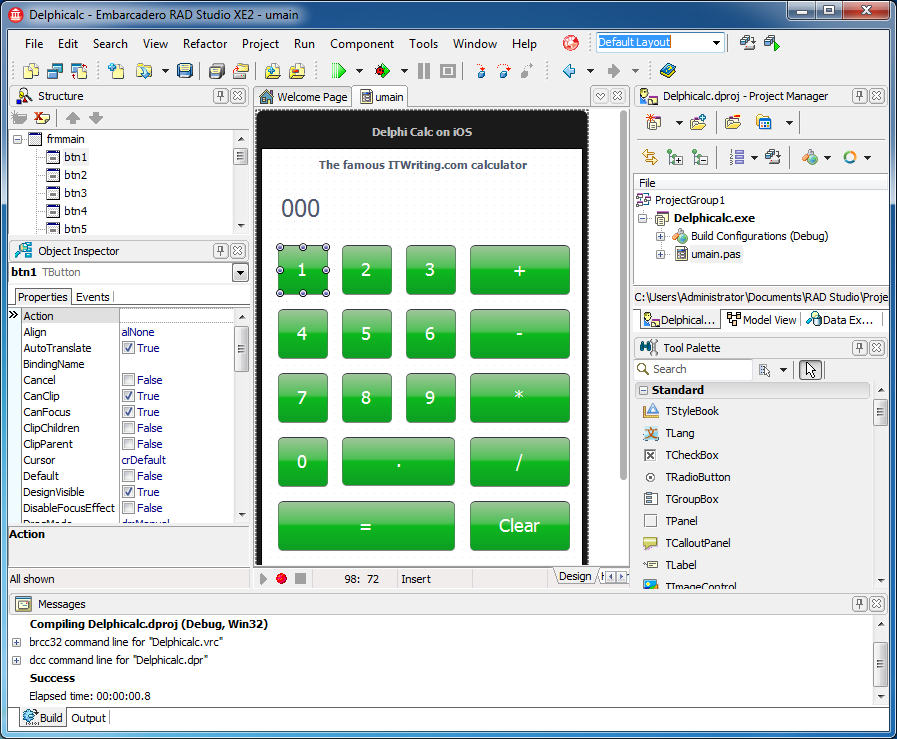
Developers, at least those who have still heard of Embarcadero’s rapid application development tool, were amazed by the new Delphi XE2 which lets you develop for Mac and Apple iOS as well as for Windows. This good news was tempered by the discovery that the tool was seemingly patched together in a bit of a hurry, and that most existing application would need extensive rewriting. Nevertheless, an interesting new entrant in the world of cross-platform mobile tools.

5. Biggest tech surprise: Adobe shifts away from its Flash Platform

image

This one caught me by surprise. In November Adobe announced a shift in its business model away from Flash and away from enterprise development, in favour of HTML5, digital media and digital marketing. It also stated that Flash for mobile would no longer be developed once existing commitments were completed. The shift is not driven by poor financial results, but rather reflects the company’s belief that this will prove a better direction in the new world of cloud and device. Too soon and too sudden? Maybe 2012 will show the impact.

6. Intriguing new battle award: NVIDIA versus Intel as GPU computing catches on

In 2011 NVIDIA announced a number of wins in the supercomputing world as many of these huge machines adopted GPU Computing, and I picked up something of a war of words with Intel over the merits of what NVIDIA calls heterogeneous computing. Intel is right to be worried, in that NVIDIA is seeing a future based on its GPUs combined with ARM CPUs. NVIDIA should worry too though, not only as Intel readies its “Knight’s Corner” MIC (Many Integrated Core) chips, but also as ARM advances its own Mali GPU; there is also strong competition in mobile GPUs from Imagination, used by Apple and others. The GPU wars will be interesting to watch in 2012.

7. Things that got worse award: Spotify. Runners up: Twitter, Google search

Sometimes internet services come along that are so good within their niche that they can only get worse. Spotify is an example, a music player that for a while let you play almost anything almost instantly with its simple, intuitive player. It is still pretty good, but Spotify got worse in 2011, with limited plays on free account, more intrusive ads, and sign-up now requires a Facebook login. Twitter is another example, with URLS now transformed to t.co shortcuts whether you like it not and annoying promoted posts and recommended follows. Both services are desperately trying to build a viable business model on their popularity, so I have some sympathy. I have less sympathy for Google. I am not sure when it started making all its search results into Google links that record your click before redirecting you, but it is both annoying and slow, and I am having another go with Bing as a result.

8. Biggest threat to innovation: Crazy litigation from Lodsys, Microsoft, Apple

There has always been plenty of litigation in the IT world. Apple vs Microsoft regarding graphical user interfaces 1994; Sun vs Microsoft regarding Java in 1997; SCO vs IBM regarding UNIX in 2003; and countless others. However many of us thought that the biggest companies exercised restraint on the grounds that all have significant patent banks and trench warfare over patent breaches helps nobody but lawyers. But what if patent litigation is your business model? The name Lodsys sends a chill though any developer’s spine, since if you have an app that supports in-app purchases you may receive a letter from them, and your best option may be to settle though others disagree. Along with Lodsys and the like, 2011 also brought Microsoft vs several OEMs over Android, Apple vs Samsung over Android, and much more.

9. Most horrible year award: HP

If any company had an Annus Horribilis it was HP. It invested big in WebOS, acquired with Palm; launched the TouchPad in July 2011; announced in August that it was ceasing WebOS development and considering selling off its Personal Systems Group; and fired its CEO Leo Apotheker in September 2011.

10. Product that deserves better award: Microsoft LightSwitch
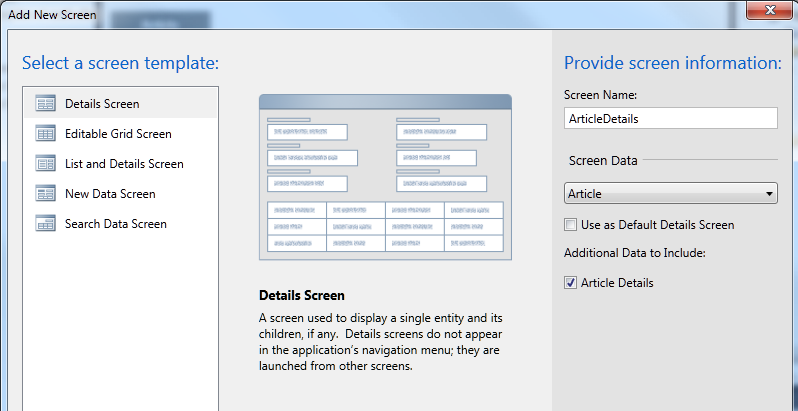
On reflection maybe this award should go to Silverlight; but it is all part of the same story. Visual Studio LightSwitch, released in July 2011, is a model-driven development tool that generates Silverlight applications. It is nearly brilliant, and does a great job of making it relatively easy to construct business database applications, locally or on Windows Azure, complete with cross-platform Mac and Windows clients, and without having to write much code. Several things are unfortunate though. First, usual version 1.0 problems like poor documentation and odd limitations. Second, it is Silverlight, when Microsoft has made it clear that its future focus is HTML 5. Third, it is Windows and (with limitations) Mac, at a time when something which addresses the growing interest in mobile devices would be a great deal more interesting. Typical Microsoft own-goal: Windows Phone 7 runs Silverlight, LightSwitch generates Silverlight, but no, your app will not run on Windows Phone 7.  Last year I observed that Microsoft’s track-record on modelling in Visual Studio is to embrace in one release and extinguish in the next. History repeats?
Adobe: why the big business shift when financial results look so good?

Adobe released its quarterly and full year results last week; I am catching up with this now after a week in China.

The company is doing well. Revenue is up by 11% year on year and it generated $1.5 billion in cash. It is buying back shares, usually a sign that a company has more money than it knows what to do with.

Here is the comparison with the equivalent quarter last year:

  Q4 2010 Q4 2011
Creative and interactive 404.8 437.2
Digital Media 165.9 186.4
Digital Enterprise 273.3 342.4
Omniture 109.0 131.1
Print and publishing 55 55.1

In other words, all business segments grew – impressive in uncertain economic times. See this earlier post for a rough breakdown of the segments.

A couple of observations. First, Adobe is benefiting from the big trend in IT towards web, cloud and device. Many companies regard apps (as in mobile apps) as vehicles for marketing, and Adobe’s tools are a natural fit, with or without Flash. We are in a more design-centric IT world than was the case a few years back, driven by Apple, SEO (Search Engine Optimisation), and just because we can: technology now performs basic computing functions with ease so design becomes the key differentiator.

Adobe is nevertheless remarkable in the way it has managed the transition from print to digital. Few companies manage that kind of fundamental shift in their market successfully.

The other point that interests me is why Adobe announced a major change in its business model in November. Digital media and marketing will be the focus, while it winds down its enterprise development platform, as well as moving away from Flash and focusing on HTML5 for delivery.

Unless the announced figures disguise future problems that are only visible on the inside, this move was driven by bad results. Digital Enterprise, which includes the middleware business, increased revenue by 25% over the same quarter last year.

In 2012 the Digital Enterprise segment is being renamed Digital Marketing Solutions, expressing the company’s intent.

Adobe’s change of direction caught me by surprise, as it was not really flagged at the MAX conference the previous month, though there was evidence of struggle with regard to Flash versus HTML5.

I would describe Adobe’s moves as bold. Taking action ahead of when it becomes inevitable is a good thing, but there are significant risks. Adobe’s platform is all about synergies, and chopping off bits that still have a significant following may have unexpected consequences.

Another curious facet of Adobe’s move is that its normally excellent PR department has done little, as far as I am aware, to brief the press. Major news concerning what will be donated to Apache, or the discontinuation of Flash Catalyst, has emerged from sporadic reports instead. Normally that is a sign of a company under stress, rather than one which is about to deliver excellent results.

I guess this time next year we will have a clearer picture.

Android: good or bad for Java? Oracle claims harm but I am sceptical

Patent blogger Florian Mueller quotes a statement filed by Oracle in its legal dispute with Google over its use of the Java language in Android:

Android’s growth in the mobile device market has been exponential, steadily diminishing Java’s share. For instance, Amazon’s newly-released Kindle Fire tablet is based on Android, while prior versions of the Kindle were Java-based. Android has been gaining in other areas as well, with Android-based set-top boxes and even televisions appearing this year. These are markets where Java has traditionally been strong but is now losing ground to Android. The longer Android is allowed to continue fragmenting the Java ecosystem, the more serious the harm to Java becomes, and the more difficult it is to try to unwind. Oracle suffers harm in the form of lost licensing opportunities for its existing Java platform products, and the enterprise-wide harm from fragmentation of Java, which reduces the ‘write once, run anywhere’ capability that has historically provided Java such great value.

The Kindle is an interesting example. I had not realised that the pre-Fire Kindle runs Java, but Oracle shows it as a case study and indeed, here are the javadocs.

Android infuriates Oracle because it uses the Java language, but has its own virtual machine called Dalvik. Dalvik bytecode is different from Java bytecode.

I have no expertise on the legal position, but while I can see Oracle’s point it is also true that Android has greatly boosted interest in Java development. Although Google has fragmented Java, the fact that the language is the same benefits Oracle insofar as it increases the pool of Java developers who may also be inclined to create Java applications on the server or in other contexts.

The interesting question to ask is where Java would be without Android. On mobile, it would likely be close to death. Apple’s iOS platform is equally as resistant to Java as to Adobe Flash. RIM Blackberry used to be a Java platform, but is moving away:

While we will continue to support our BlackBerry Java developer community as they build for BlackBerry smartphones, after further investigation we decided against supporting BlackBerry Java on BlackBerry BBX. We concluded that the BlackBerry Java experience on the BlackBerry PlayBook platform would ultimately not satisfy us, our development community, or our customers as the platform continues to evolve.

Microsoft has no interest in Java on the Windows Phone OS or in the Windows 8 OS that will likely replace it on devices.

Oracle’s claim is in the context of a legal dispute, and as Mueller observes, the company is happy to show off growing interest in Java in its press releases – though without mentioning the A word.

Of course you can understand why Oracle might want to enjoy the benefit of Java’s Android boost as well as the reward of a legal victory over Google.

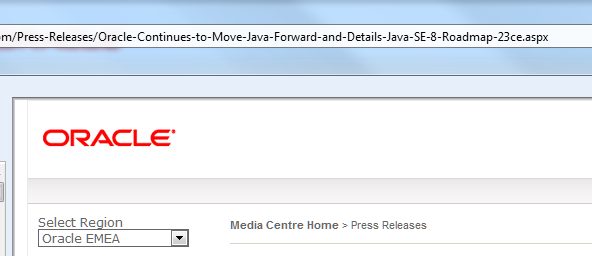
PS: interesting that Oracle’s Java press release seems to be served by Microsoft .NET:

image

Adobe discontinues Flash Catalyst, clarifies Flex and Flash Builder futures

Adobe has told a group of Flex developers, invited to San Francisco for a special reconciliatory summit following the sudden announcement that Flex is moving to the Apache Foundation, that Flash Catalyst will be discontinued. Developer Fabien Nicollet was there and posts:

CS5.5 version of Catalyst is the latest version of Flash Catalyst. It is compatible with Flex 4.5, but compatibility will not be ensured for future versions.

Flash Builder will also have features removed in future versions. Adobe’s slide talks of:

Removing unpopular and expensive to maintain features: Design View, Data Centric Development (DCD) and Flash Catalyst workflows.

The Monocle profiler, shown at the MAX conference as a sneak peek, “continues as a priority”.

The FalconJS project, to compile Flex to HTML5, will be discontinued, though possibly donated to Apache at a date to be determined.

AIR on Linux will not be given to Apache because it would mean sharing the proprietary Flash Player code. This is bad news in the Apache context.

Nicollet concludes:

Flex still has a bright future for companies who want to build fast and robust applications . Not to mention the people who will have a hard time building complex applications on HTML5, for whom Flex will always be a viable and mature alternative.

That is the optimistic view. What is clear from the summit is that Adobe is greatly reducing its investment. I guess we knew this already; but hearing about how Flash Builder will be cut-down, Catalyst discontinued, and so on, will not improve developer confidence.

A lot depends on the progress of the Apache project. My concern here is that since the Flash player, which is the Flex runtime, remains proprietary, this will dampen enthusiasm in the open source community and limit its ability to innovate around Flex.

GPU computing with NVIDIA in Beijing

I’m in Beijing for NVIDIA’s GPU Technology Conference; I attended last year’s event in San Jose and found it fascinating, partly because it has an academic and research flavour with a huge variety of projects on display.

This year the event is in Beijing, reflecting the level of HPC (High Performance Computing) activity in this region.

image

image

NVIDIA’s business is graphics processors, though it has expanded into the SoC (System on a chip) business with its ARM-based Tegra chipset. This conference though is focused at the other end of the scale: Tesla GPUs that are primarily designed not for driving a display, but for rapid processing using massively parallel computing.

The Tesla business is relatively small for NVIDIA; less than 5% of its overall revenue, I was told; and I was told that the company treats it partly as research and development. That said, GPU computing is coming into the mainstream and the business is expected to grow. NVIDIA’s desktop GPU cards also support GPU computing.

I recently reviewed a video format converter from Cyberlink; the product was unexceptional except that it can take advantage of GPU computing when available to speed processing when converting from one video format to another. Since I do have a suitable graphics card (though sadly not a Tesla) this made a substantial difference, converting several times faster than another format converted I tried.

Of course NVIDIA is not the only player; there is an open standard (OpenCL) for GPU computing and other GPU vendors such as AMD implement OpenCL. NVIDIA implements OpenCL but also has its own CUDA architecture, which tends to be the focus of its conference as you would expect.

More reports soon.

Oxygene for Java released: develop for Android and Java runtime with Delphi language in Visual Studio

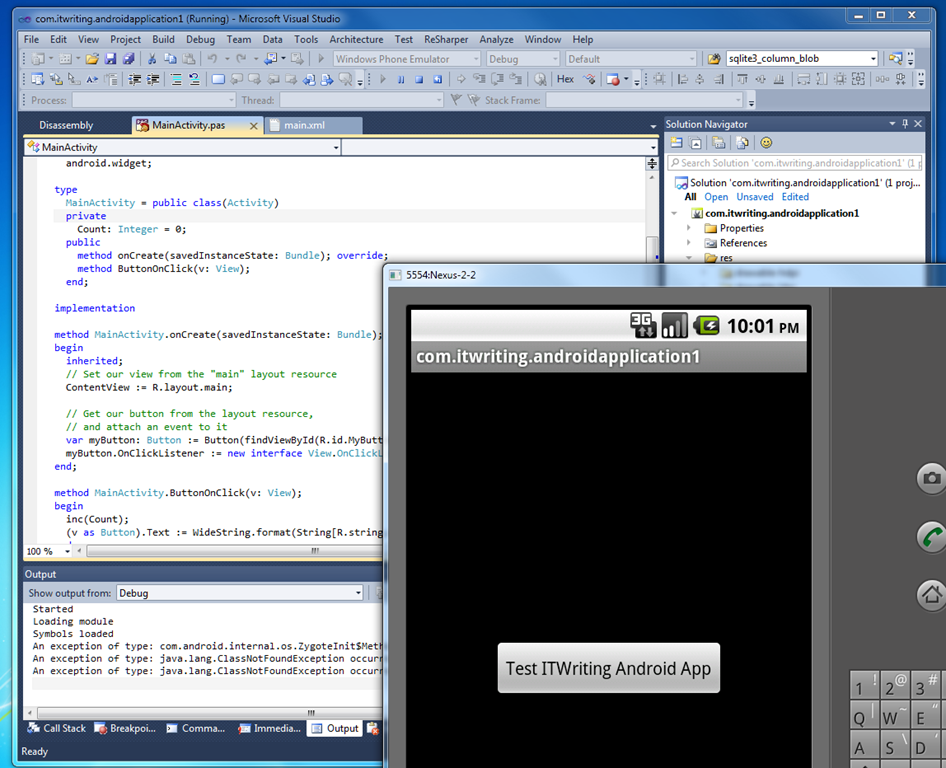
RemObjects has released Oxygene for Java, a new version of its Object Pascal compiler. Object Pascal is pretty much the Delphi language though with some additional features of its own. Previous versions target the .NET runtime, and a version of this is marketed by Embarcadero as Prism. The IDE for Oxygene is Microsoft’s Visual Studio. This new version targets both the Java Runtime and the Android Dalvik VM. The obvious target market is Delphi developers who now want to create apps for Android, or cross-platform Java applications.

I downloaded the trial and ran the supplied Hello World in the Android emulator … it works.

image

A few further notes from the RemObjects announcement. While only Visual Studio is supported initially, an Eclipse version is also in preparation. Oxygene directly consumes .JAR libraries so you can use both first and third-party libraries. There is also a tool called Oxidizer that lets you import Java language code, which will be converted to Oxygene Object Pascal.

A point to note is that Embarcadero has already announced that its cross-platform FireMonkey framework will support Android as well as Apple iOS. This means that developers who want to code for Android in the Delphi language will have two choices. It looks to me as if Oxygene will be more suitable if you want to stay close to the Android SDK, whereas FireMonkey has its own custom-drawn user interface widgets and effects and should come into its own if you want the same code to run on both iOS and Android.

Given that a skilled Delphi developer would probably learn Java fairly quickly, how much value is there in Oxygene for Java? I guess factors include how much more productive you can be in Oxygene and the value of sharing code across projects targeting different platforms, presuming that you do not want to run Java everywhere.

HTML5 scorecard: Amazon Kindle Fire weak, iOS 5 great, IE10 preview one of the best

The Sencha blog has a great series of posts on HTML5 support on various devices. This is of direct interest to Sencha because its products are JavaScript and CSS application frameworks, Sencha Touch for mobile and ExtJS for any browser. The latest post is on the Amazon Kindle Fire – and it is weak:

The Amazon Kindle Fire doesn’t seem designed to run HTML5 apps as a primary goal. It does a good job of displaying ordinary web pages and its resolution and rendering capabilities meet that need well. But there are too many sharp edges, performance issues, and missing HTML5 features for us to recommend that any developer create web apps primarily for the Kindle Fire. The iPad 2 running iOS 5 continues to be the tablet to beat, with the PlayBook a respectable runner-up in HTML5 capabilities.

Part of the problem is that the Fire runs Android 2.3.4 (Gingerbread) which has a weaker browser than later versions. That is not the only source of disappointment though. According to Sencha’s Michael Mullany, the GPU is not used for hardware acceleration of browser content, the JavaScript timer is laggy, there is no embedded HTML5 video (videos launch in a separate player), and CSS corners are not properly anti-aliased.

But what about the Kindle’s cloud-accelerated browsing that we heard so much about when it was announced? This is the biggest disappointment:

One of the main selling points of the Kindle browser is supposed to be its cloud-caching and pipelined HTTP connection that uses the SPDY protocol. This does seem to speed up normal page browsing a little, but it’s not very noticeable and we didn’t test this rigorously. But for HTML5 web apps, where code is downloaded and executed, there doesn’t seem to be any performance difference when we tested with acceleration on and off. It doesn’t appear as if client JavaScript is executed on the server-side at all, so the Kindle does not seem to have Opera Mini-style server-side execution. And SunSpider scores were essentially the same when accelerated browsing was turned on or off.

Moving on from Kindle, it is interesting but not surprising to see a great report for HTML5 in Apple’s iOS 5. Less expected though is a big thumbs-up for HTML5 in Microsoft’s IE10 preview on Windows 8:

Simply put, (and with the caveat that we were running on the notably overpowered developer preview hardware) the IE10 HTML5 experience is one of the best we’ve seen on any platform to date. After a decade of web neglect, Microsoft is back with a vengeance.

image

The main caveat is the absence of WebGL. Microsoft is supporting its own 3D graphics library.

Another worry for Microsoft is simply the level of hostility towards the company and IE in particular, among the developer and designer community it so much wants to reach. You can get a flavour of this from some of the comments to Mullany’s post, for example:

I never really like Windows and I absolutely despise Internet Explorer. There are so many exceptions in code to be made for Internet Explorer that i stopped trying so hard to make it look the same as other browsers. Hopefully, IE 10 will stop all of these exceptions and weird additions that are made to websites that make everything instantly awful so I can actually go back to trying to make things look nice in IE. It’s really sad though that so many people use Windows and IE that we cannot ditch it for a better system and better browser.

What about Android? The most recent offering covered in the Sencha series is Motorola Xoom which is a disaster:

We were excited about the first true Android operating system for tablets and had high hopes for a mobile browser that was as powerful as the platform. Sadly, the Xoom and Honeycomb are a real disappointment. We found consistent and reproducible issues in CSS3 Animations and CSS3 Transitions among other things. We had issues where the browser either hung or crashed. Regular scrolling was slow or below full framerate. We had issues where media playback failed or performed incorrectly. At times it felt like we were using a preproduction device, but we bought our test device from a Verizon Wireless store.

I have a hunch that the latest Galaxy Tab might fare better. Sencha did like the HTML5 support in the BlackBerry PlayBook though.

With Adobe Flash now in decline on mobile devices (Adobe is no longer working on the mobile Flash player) HTML5 support is all-important for rich browser-hosted apps; I will be watching with interest for future Sencha reports.

What is the best programming language for a child progressing from Scratch?

Someone asked me what is the best programming language for a child to learn after starting (and having success) with Scratch.

Scratch is a visual programming language which actually runs on Smalltalk, though its users do not need to know this. Scratch 2.0 seems to be written in Adobe Flash so you can create and program projects in a web browser. As far as I can tell though, there is no obvious and natural progression from Scratch to a code-centric programming language.

I guess the first answer is not to move away from Scratch until you need to. You can do a lot with Scratch, as the many shared projects demonstrate.

Still, I agree that it makes sense to learn text-based programming before too long. What is the best one for a child to learn, not necessarily with computer science or a professional career in mind, but just to take the next step and create some cool games and applications?

I find myself leaning towards Microsoft’s C#. The reason is that there is a capable free version and  you can add XNA Game Studio for game development. C# is an excellent language and has some family resemblance to other languages including C, C++, Java and JavaScript, and Visual Studio is a strong IDE that is perhaps more approachable than say Eclipse or Netbeans.

Snags with C# are that Visual Studio only runs on Windows, the language is proprietary to Microsoft (though Mono is free and open source) and it is not ideal if you want to run on the Mac, or Google Android or Apple iPad.

That said, I could also make a case for Java, or JavaScript, or Python.

I would value suggestions though: what would you recommend to a teenager?

Adobe’s Falcon JS: Compile Flex code to HTML and Javascript

Adobe has issued further information about its intention to donate the Flex SDK, which builds Flash applications from XML and ActionScript, to the Apache Software Foundation. Specifically, the donation will include:

  • BlazeDS, the free version of LiveCycle Data Services
  • Falcon, the new Flex compiler due to be completed in 2012
  • Falcon JS, a previously unannounced project

Of these, Falcon JS is the most eye-catching. This is an “experimental cross-compiler from MXML and ActionScript to HTML and JavaScript.” In other words, Falcon JS has the potential to give developers a migration path from Flash to HTML clients. Note that it is described as a cross-compiler rather than a porting tool, so it may well be that the output is not easily edited. The Google Web Toolkit works like this, converting Java to JavaScript but not in a form that anyone is expected to edit. Adobe also adds:

We have undertaken some experimental work in this area, but remain unsure as to the viability of fully translating Flex-based content to HTML. The Falcon JS cross-compiler, referenced above, represents this early work.

What about the most sensitive of Adobe’s statements, that HTML is the long-term solution for enterprise applications? Adobe says:

In time (and depending upon your application, it could be 3-5 years from now), we believe HTML5 could support the majority of use cases where Flex is used today.

and adds:

We intend to make investments in HTML-related technologies, so that we can help advance HTML5 to make it suitable for enterprise applications.

I am not sure to what extent the new statement will ease the worries of Flex developers; but at least Adobe is clear about its intentions. While there are benefits in the Flex SDK moving to Apache, overall the message is that Adobe is hastening towards HTML 5. I am surprised, considering the progress the company has made in creating a strong cross-platform toolkit for mobile and desktop applications. Although no-one should doubt that Adobe will continue to support and evolve Flex as a development platform, it has in effect declared it to be a legacy technology, and I would guess that the effect will be to depress the level of activity there.

Adobe favours HTML over Flex, retreats from its enterprise app platform

Adobe has stated that Flex, the xml-based language for developing applications that run on the Flash runtime (also known as AIR) will gradually give way to HTML 5:

In the long-term, we believe HTML5 will be the best technology for enterprise application development. We also know that, currently, Flex has clear benefits for large-scale client projects typically associated with desktop application profiles.

The company is also giving the Flex SDK to an open source foundation:

we are planning to contribute the Flex SDK to an open source foundation in the same way we contributed PhoneGap to the Apache Foundation when we acquired Nitobi.

though Adobe will continue to contribute to its development. Adobe also states that it will continue to develop the Flash Builder IDE for Flex.

I am surprised by this announcement. I understand Adobe’s reasons for abandoning Flash for mobile devices, but since you can use Flex with the packager for iOS or the captive runtime for other mobile devices, it is not necessary to abandon Flex as well.

But is Adobe abandoning Flex? Not as such; in fact the statement linked above says that Adobe is still “committed to Flex” and “committed to Flash Builder”. The problem though is that there are several clues showing that Flex is in decline and no longer strategic.

First there is the statement about HTML5 versus Flex in the long-term.

Second, Adobe says it is not sure what is happening to the Flex roadmap as discussed recently at the MAX conference in Los Angeles:

The Flex roadmap will be determined by the governing board once it’s been established. We plan to contribute framework features previously highlighted as part of Adobe’s Flex roadmap, into this new project.

Third, the delivery of a project to an open source foundation can be interpreted as a signal that a company wants  to distance itself and lacks commitment to its long-term success. I would not make that argument with respect to PhoneGap, but for Flex I am not so sure.

It may already be too late. Imagine you are an Adobe partner trying to sell a Flex project to your customer. What answer do you have when your customer says, “but isn’t Adobe moving to HTML 5?”

When Adobe made its first announcement about the change in its business model I came up with the phrase more publishing, less programming. That view was further strengthened by CEO Shantanu Narayen’s recent post:

The future of the Internet comes down to content – creating it and monetizing it. This is where our customers rely on Adobe, and it’s what is shaping our strategy moving forward.

I take this then as not only a retreat from Flex, but a retreat from enterprise application development in favour of content creation tools.

Charles Humble at InfoQ has an informative post on this issue here.