Category Archives: windows

Can Microsoft repeat history and come from behind with Windows Phone 7?

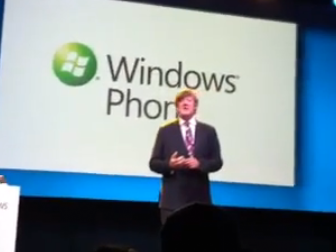
This week is Windows Phone 7 week. Microsoft is announcing details of the launch devices and operators, and I shall be watching and reporting with interest on the joint press conference with CEO Steve Ballmer and AT&T’s Ralph de la Vega.

But how significant is this launch? I think it is of considerable significance. Mobile devices are changing the way we do computing. It is not only that more powerful SmartPhones and tablets are encroaching on territory that used to belong to laptop and desktop computers. We are also seeing new business models based on locked-down devices and over-the-air app stores, and new operating systems, or old ones re-purposed. It is a power shift.

Despite its long years of presence in mobile, it feels like a standing start for Microsoft. A recent, and excellent, free day of training on developing for Windows Phone 7 was only one-third full. Verizon will not be offering the phone, and its president Lowell McAdam suggests that the market belongs RIM, Google and Apple, and that Microsoft’s phones are not innovative or leading edge.

I disagree with McAdam’s assessment. Although I’ve not yet had a chance to try a device for myself, what I have seen so far suggests that it is innovative. While the touch UI does borrow ideas with which we have become familiar thanks to iPhone and Android, the dynamically updating tiles and the hub concept both strike me as distinctive. What McAdam really means is that the phone might not succeed in the market, and such views from someone in his position may be self-fulfilling.

The application development platform is distinctive too, being based on .NET, Silverlight and XNA. I have followed Microsoft’s .NET platform since its earliest days – which as it happens were on Windows Mobile, in the form of the Common Executable Format – and Silverlight seems to me the best incarnation yet of the .NET client. It is lightweight; it performs well; it has a powerful layout language that scales nicely, and it has all sorts of multimedia tricks and effects. Visual Studio and the C# language form a familiar and capable set of tools, supplemented by the admittedly challenging Expression Blend for design.

Still, having a decent product is not always enough. Palm’s webOS devices were widely admired on launch, but that was not enough to rescue the company, or to win more than a tiny market share.

Microsoft has resources that Palm lacked, and a reach that extends from cloud to desktop to device. It may be that Windows Phone 7 has better chances. The problem is that the company’s recent history does not demonstrate the success in coming from behind that characterised its earlier days:

  • Microsoft came from behind with a GUI operating system, even though Windows was inferior to the Mac’s GUI.
  • Microsoft came from behind with Excel versus Lotus 1-2-3.
  • Microsoft came from behind in desktop database managers with Access versus dBase.
  • Microsoft came from behind in networking and then directory services versus Novell and others.
  • Microsoft came from behind with .NET versus Java, which I judge a success even though Java has also prospered.

I am sure there are other examples. Recent efforts though have been less successful. Examples that come to mind include:

  • Internet Explorer – still the most popular web browser, but continues to lose market share, even though Microsoft has been working to regain its momentum since the release of IE7 in 2006.
  • Zune – now a well-liked portable music player, but never came close to catching Apple’s iPod.
  • Silverlight – despite energetic development and strong technology, has done little to disturb the momentum behind Adobe Flash.
  • Tablets – Microsoft was an innovator and evangelist for the slate format, but Apple’s iPad is the first device in this category that has caught on.
  • Numerous examples from Windows Live versus Google and others.

Now here comes Windows Phone 7, with attention to design and usability that is uncharacteristic of Microsoft other than perhaps in Xbox consoles (red light of death aside). In one sense Microsoft can afford for it to fail; it has strong businesses elsewhere. In another sense, if it cannot establish this new product in such a strategic market, it will confirm its declining influence. The upside for the company is that a success with Windows Phone 7 will do a lot to mend its tarnished image.

Windows Phone 7 development hits the big screen

I spent yesterday in the dim light of a Manchester cinema, attending the Windows Phone 7 developer day.

The event was organised by DeveloperDeveloperDeveloper, which is a .NET community group run, as far as I can tell, by a group of Microsoft MVPs. The sponsors were Microsoft, Appa Mundi, and NxtGenUG. Towards the end of the day, Andy Wigley (from Appa Mundi) made a statement that this was a community event and not an official Microsoft event. It was true up to a point, though as far as I can tell Microsoft paid for most of it -“Microsoft UK very kindly provided the venue and logistic support.” says the event description. Microsoft was present showing real Windows Phone 7 devices, and the presenters included Andy Wigley (from Appa Mundi) and Rob Miles, who have also presented the official Jump Start training for Windows Phone 7, and regular TechEd speaker Maarten Struys who is a Windows embedded and Windows Phone evangelist working for Alten PTS in the Netherlands. Community, or Microsoft PR?

Regardless, they were excellent speakers and well informed on all things Windows Phone 7. The community aspect did come to the fore when it came to the catering – there was none – and the venue itself which felt as you would expect a cinema out of hours to feel. I’m guessing Microsoft the community was disappointed with the attendance, around 100 in a venue that seats 330.

image

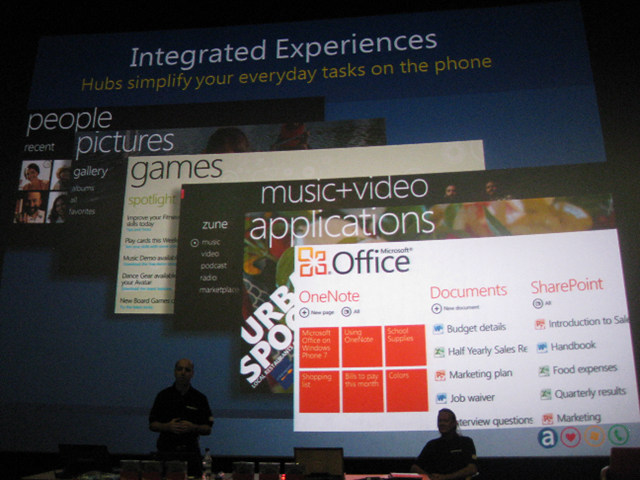
There is one significant benefit to presenting in a cinema. The screen and projection was first-rate.

image

The sessions themselves were introductory but struck me as useful for anyone getting started with Windows Phone 7 development – which given the devices are not yet available, is probably most of us. Andrej Radinger’s session on creating apps that work offline was particularly interesting to me. I had previously seen the Jump Start course so some of the material was already familiar, though the refresher did no harm.

Much of the challenge of Windows Phone 7 development is coping with the fact that your app will frequently get killed and have to resume later as if nothing happened. We got a lot of input on this topic.

Another challenge is coping with Expression Blend. Designer Tricky Bassett gave a short but insightful view of the design process for a Windows Phone 7 app, with some intriguing asides along the way. He is a design professional, and said that his team had been excited about SketchFlow, the prototyping tool in Blend, but in practice found it little use because they only need sketches, rather then the working controls which SketchFlow gives you. He also commented on Blend, saying that Blend with Windows Phone 7 projects was more stable than it had been before, in his experience with other projects. In previous work with Blend, solutions that did not load have been a recurring problem – I take it that either they loaded in Visual Studio but not in Blend, or vice versa.

Bassett also said that Blend takes some effort to learn, and this was confirmed by the way some of the presenters struggled to do basic operations with the tool. The Blend UI is perplexing and at events like this one I’d suggest that a Blend Basics piece would go down well.

The Silverlight and XNA platforms strike me as pretty good, though I think that lack of native code development will be a problem among the best developers – there are interesting rumours about certain developers getting special privileges.

image

My overriding impression though is that the phone is good, the tools are good, but the demand is lacking. One developer told me that he has been trying to sell an idea for a custom Windows Mobile application to a small business client with 12 employees. They are keen but their employees want either Apple iPhone or Google Android phones. Windows Phone 7 may help by being a better and more attractive device, but getting past the perception that Windows phones are not much good is going to be a problem.

But what can Microsoft do? It is going to take devices that deliver on the promise, a stunning marketing campaign, and aggressive pricing, for this thing to flourish.

Steve Ballmer ducks questions at the London School of Economics

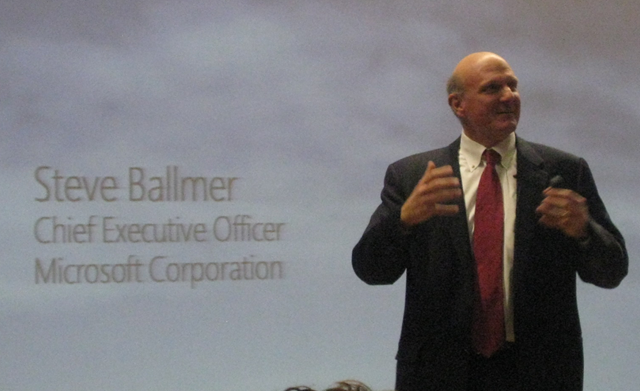
This morning Microsoft CEO Steve Ballmer spoke at the London School of Economics on the subject of Seizing the opportunity of the Cloud: the next wave of business growth. Well, that was supposed to be the topic; but as it happened the focus was vague – maybe that is fitting given the subject. Ballmer acknowledged that nobody was sure how to define the cloud and did not want to waste time attempting to do so, “cloud blah blah blah”, he said.

image

It was a session of two halves. Part one was a talk with some generalisations about the value of the cloud, the benefits of shared resources, and that the cloud needs rather than replaces intelligent client devices. “That the cloud needs smart devices was controversial but is now 100% obvious,” he said. He then took the opportunity to show a video about Xbox Kinect, the controller-free innovation for Microsoft’s games console, despite its rather loose connection with the subject of the talk.

Ballmer also experienced a Windows moment as he clicked and clicked on the Windows Media Player button to start the video; fortunately for all of us it started on the third or so attempt.

Just when we were expecting some weighty concluding remarks, Ballmer abruptly finished and asked for questions. These were conducted in an unusual manner, with several questions from the audience being taken together, supposedly to save time. I do not recommend this format unless the goal is to leave many of the questions unanswered, which is what happened.

Some of the questions were excellent. How will Microsoft compete against Apple iOS and Google Android? Since it loses money in cloud computing, how will it retain its revenues as Windows declines? What are the implications of Stuxnet, a Windows worm that appears to be in use as a weapon?

Ballmer does such a poor job with such questions, when he does engage with them, that I honestly do not think he is the right person to answer them in front of the public and the press. He is inclined to retreat into saying, well, we could have done better but we are working hard to compete. He actually undersells the Microsoft story. On Stuxnet, he gave a convoluted answer that left me wondering whether he was up-to-date on what it actually is. The revenue question he did not answer at all.

There were a few matters to which he gave more considered responses. One was about patents. “We’re better off with today’s patent system than with no patent system”, he said, before acknowledging that patent law as it stands is ill-equipped to cope with the IT or pharmaceutical industries, which hardly existed when the laws were formed.

Another was about software piracy in China. Piracy is rampant there, said Ballmer, twenty times worse than it is the UK. “Enforcement of the law in China needs to be stepped up,” he said, though without giving any indication of how this goal might be achieved.

He spoke in passing about Windows Phone 7, telling us that it is a great device, and added that we will see slates with Windows on the market before Christmas. He said that he is happy with Microsoft’s Azure cloud offering in relation to the Enterprise, especially the way it includes both private and public cloud offerings, but admits that its consumer cloud is weaker.

Considering the widespread perception that Microsoft is in decline – its stock was recently downgraded to neutral by Goldman Sachs – this event struck me as a missed opportunity to present cogent reasons why Microsoft’s prospects are stronger than they appear, or to clarify the company’s strategy from cloud to device, in front of some of the UK’s most influential technical press.

I must add though that a couple of students I spoke to afterwards were more impressed, and saw his ducking of questions as diplomatic. Perhaps those of us who have followed the company’s activities for many years are harder to please.

Update: Charles Arthur has some more extensive quotes from the session in his report here.

Setup error raises obscure Outlook error message

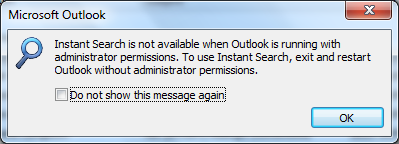
I was intrigued by the following Outlook 2010 error message which I had not seen before:

image

Instant Search is not available when Outlook is running with administrator permissions. However, it was not. A Microsoft support note suggested another possible reason: Windows Search not running. However, it was running. It was clear though that Outlook searches were not being indexed, making them unusable on my low-powered netbook.

Eventually I figured it out. I’d just run an update for the excellent Battery Bar, which installs an batter monitor in the Windows 7 taskbar. In order to shut down the running instance, the Battery Bar setup restarted Explorer. Since the installer was running with elevated rights, Explorer had presumably restarted with elevated rights, and this somehow triggered the error in Outlook.

I recall that it it is tricky (but possible) for an elevated process to start a non-elevated process, so I guess Osiris needs to tweak its setup application.

The solution from my point of view was to restart Windows.

If Microsoft is serious about Silverlight, it needs to do Linux

Today was a significant event for the UK broadcasting industry: the announcement of YouView, formerly called Project Canvas, which is backed by partners including the BBC, ITV, Channel 4, Channel 5, and BT. It will provide broadcasts over IP, received by a set top box, include a catch-up service, and be capable of interactive features that hook into internet services.

Interesting stuff, though it may end up battling with Google TV. But what are the implications for media streaming services and media players? One is that they will have to run on Linux, which is the official operating system for Project Canvas. Google TV, for that matter, will run Android.

If you look at the YouView specifications, you’ll find that although the operating system is specified, the application player area is more open:

Application Player executables and libraries will be provided by 3rd party software vendors.

What is an application player?

Runtime environment for the execution of applications. Examples are Flash player, MHEG engine, W3C browser

I’d suggest that Adobe will do well out of YouView. Microsoft, on the other hand, will not be able to play in this space unless it delivers Silverlight for Linux, Android, and other open platforms.

Microsoft has a curious history of cross-platform Silverlight announcements. Early on it announced that Moonlight was the official Linux player, though in practice support for Moonlight has been half-hearted. Then when Intel announced the Atom Developer Program  (now AppUp) in September 2009, Microsoft stated that it would provide its own build of Silverlight for Linux, or rather, than Intel would build it with Microsoft’s code. Microsoft’s Brian Goldfarb told me that Microsoft and Intel would work together on bringing Silverlight to devices, while Moonlight would be the choice for desktop Linux.

Since then, the silence has been deafening. I’ve enquired about progress with both Intel and Microsoft, but vague rumours aside, no news. Silverlight is still listed as a future runtime for AppUp:

Microsoft® Silverlight™(future)

Silverlight is a cross-browser, cross-platform and cross-device browser plug-in that helps companies design, develop and deliver applications and experiences on the Web.

In the meantime, Adobe has gone ahead with its AIR runtime, and even if Silverlight eventually appears, has established an early presence on Intel’s netbook platform.

There have been recent rumours about internal battles between the Windows and Developer divisions at Microsoft, and I cannot help wondering if this is another symptom, with the Windows folk fighting against cross-platform Silverlight on the grounds that it could damage the Windows lock-in, while the Developer team tries to make Silverlight the ubiquitous runtime that it needs to be in order to succeed.

From my perspective, the answer is simple. Suppressing Silverlight will do nothing to safeguard Windows, whereas making it truly cross-platform could drive adoption of Microsoft’s server and cloud platform. When Silverlight was launched, just doing Windows and Mac was almost enough, but today the world looks different. If Microsoft is serious about WPF Everywhere, Linux and Android (which is Linux based) support is a necessity.

Silverlight versus HTML, Flash – Microsoft defends its role

Microsoft’s Brad Becker, Director of Product Management for Developer Platforms, has defended the role of Silverlight in the HTML 5 era. Arguing that it is natural for HTML to acquire some of the features previously provided by plug-ins – “because some of these features are so pervasive on the web that they are seen by users as fundamentally expected capabilities” – he goes on to identify three areas where Silverlight remains necessary. These are “premium” multimedia which merges video with application elements such as conferencing, picture in picture, DRM, analytics; consumers apps and games; and finally business/enterprise apps.

It is the last of these which interests me most. Becker’s statements come soon after the preview of Visual Studio LightSwitch, which is solely designed for data-driven business applications. Taking the two together, and bearing in mind that apps may run on the desktop as well as in browser, Silverlight is now encroaching on the territory which used to belong to Windows applications. With LightSwitch in particular, Microsoft is encouraging developers who might previously have built an app in Access or Visual Basic to consider Silverlight instead.

Why? Isn’t Microsoft better off if developers stick to Windows-only applications?

In one sense it is, as it gets the Windows lock-in – and yes, this is effective. I’m aware of businesses who are tied to Windows because of apps that they use, who might otherwise consider Macs for all or some of their business desktops. On the other hand, even Microsoft can see the direction in which we are travelling – cloud, mobile, diverse clients – and that Silverlight fits better with this model than Windows-only desktop clients.

Another consideration is that setup and deployment issues remain a pain-point for Windows apps. One issue is when it goes wrong, and Windows requires skilled surgery to get some app installed and working. Another issue is the constant energy drain of getting new computers and having to provision them with the apps you need. Microsoft has improved this no end for larger organisations, with standard system images and centralised application deployment, but Silverlight is still a welcome simplification; provided that the runtime is installed, it is pretty much the web model – just navigate to the URL and the app is there, right-click if you want to run on the desktop.

If Microsoft can also establish Windows Phone 7, which uses Silverlight as the runtime for custom apps, the platform then extends to mobile as well as desktop and browser.

The downside is that Silverlight apps have fewer capabilities than native Windows apps. Printing is tricky, for example, though Becker refers to “Virtualized printing” and I am not sure what exactly he means. He also highlights COM automation and group policy management, features that only work on Windows and which undermine Silverlight’s cross-platform promise. That said, via COM automation Silverlight has full access to the local machine giving developers a way of overcoming any limitations if they are willing to abandon cross-platform and browser-hosted deployment.

A winning strategy? Well, at least it is one that makes sense in the cloud era. On the other hand, Microsoft faces substantial difficulties in establishing Silverlight as a mainstream development platform. One is that Adobe was there first with Flash, which has a more widely deployed runtime, works on Android and soon other mobile devices, and is supported by the advanced design tools in Creative Suite. Another is the Apple factor, the popular iPhone and iPad devices which are a spear through the heart of cross-platform runtimes like Silverlight and Flash.

Finally, even within the Microsoft development community Silverlight is a hard sell for many developers. Some us recall how hard the company had to work to persuade Visual Basic 6 developers to move to .NET. The reason was not just stubborn individuals who dislike change – though there was certainly some of that – but also existing investment in code that could not easily be migrated. Both factors also apply to Silverlight. Further, it is a constrained platform, which means developers have to live with certain limitations. It is also managed code only, whereas some of the best developers for both desktop and mobile apps work in C/C++.

I suspect there is division even within Microsoft with regard to Silverlight. Clearly it has wide support and is considered a strategic area of development. At the same time, it is not helpful to the Windows team who will want to see apps that take advantage of new features in Windows 7 and beyond.

Yesterday Windows Phone 7 was released to manufacturing, which means the software is done. Another piece of the Silverlight platform is in place; and I guess over the next year or two we will see the extent to which Microsoft can make it a success.

Open season for patent litigation makes case for reform

It seems to be open season for software patent litigation. Oracle is suing Google over its use of Java in Android. Paul Allen’s Interval Licensing is suing AOL, Apple, eBay, Facebook, Google, Netflix, Yahoo and others – the Wall Street Journal has an illustrated discussion of the patents involved here. Let’s not forget that Apple is suing HTC and that Nokia is suing Apple (and being counter-sued).

What’s next? I was reminded of this post by former Sun CEO Jonathan Schwartz. He confirms the supposition that large tech companies refrain from litigation – or at least, litigate less than they might, refrain is too strong a word right now – because they recognize that while they may have valid claims against others, they also most likely infringe on patents held by others.

The gist of Schwartz’s post is that Microsoft approached Sun with the claim that OpenOffice, owned by Sun, infringes on patents held by Microsoft thanks to its work on MIcrosoft Office:

Bill skipped the small talk, and went straight to the point, “Microsoft owns the office productivity market, and our patents read all over OpenOffice.”

Sun’s retort was in relation to Java and .NET:

“We’ve looked at .NET, and you’re trampling all over a huge number of Java patents. So what will you pay us for every copy of Windows?”

following which everything went quiet. The value of .NET to Microsoft is greater than the value of OpenOffice to Sun or Oracle.

Oracle, however, seems more willing to litigate than Sun; and I doubt it cares much about OpenOffice. Might we see this issue reappear?

That said, Microsoft also has a large bank of patents; and who knows, some of them might be brought to bear against Java in the event of legislative war.

The risk though is that if everyone litigates, the industry descends into a kind of nuclear winter which paralyses everyone. Companies like Interval Licensing, which seemingly exist solely to profit from patents, have no incentive to hold back.

Can any good come of this? Well, increasing software patent chaos might bring some benefit, if it forces countries like the USA to legislate in order to fix the broken patent system.

Protecting intellectual property is good; but against that you have to weigh the potential damage to competition and innovation from these energy-sapping lawsuits.

We need patent reform now.

Font does not support style regular – a fix for this annoying error

This is one of those strange Windows things. You’ll be working away, try to perform some action that would normally open a dialog or window, when you see a message like this:

image

In this case it is Font ‘Lucida Sans’ does not support style ‘Regular’; but the font varies and other common ones are Courier New, Arial, Times New Roman.

So what does this mean? In my experience, it means the font is present on your system but incorrectly registered. The fix is simple: remove the font and then reinstall it. I can’t promise that this will always work, but it has always worked for me, and I’ve encountered the problem a few times.

For example, this is what I did in this particular case. In Explorer, I navigated to c:\windows\fonts. I noticed that Lucida Sans was installed, but the only styles showing were Demibold Italic, Italic, and Demibold Roman. Not Regular.

Next, I opened an administrative command prompt. I navigated to c:\windows\fonts. I copied the file LSANS.TTF to a temporary location – anywhere that is NOT in the fonts folder – I used my Documents folder. Then I deleted the copy in the fonts folder.

Finally, I went back to Windows Explorer, found my copy of LSANS.TTF, selected it and chose Copy. Then I navigated to c:\windows\fonts and chose Edit – Paste. Presto! Lucida Sans Regular appeared in the font list and the error message in the application disappeared.

One thing that might not be obvious is what file name represents the font you need. You can normally figure it out though; if in doubt, try all the likely candidates until you find it.

Measuring start-up time for .NET, Java, C++

A comment here points me to this comparison by Decebal Mihailescu of start-up times for processes on Windows using different runtimes: .NET in several versions, Java 1.6, Mono 2.6.4, and Visual C++ 2010 (native code).

image

It is notable that native code is much faster than the runtimes, and that .NET is ahead of Java – to be expected, perhaps, since Windows is its native environment.

The test application is tiny and when we are talking about a time of less than a tenth of a second, users are unlikely to care much. I would like to see tests based on a larger application; on the other hand it becomes increasingly difficult to make a fair comparison.

It’s a shame Embarcadero Delphi was not included, though I’d expect similar figures to those for Visual C++.

Start-up time is critical to perceived performance. One reason I use an ancient version of Paint Shop Pro for simple image manipulation is that I can double-click an image and be editing it instantly, whereas alternatives like Adobe PhotoShop or the free paint.net make me wait. Unless I need the extra features these provide, I stick with fast and simple.

What users want in Windows 8

A number of blogs are running a coordinated poll on what users would most like to see in the next version of Windows. The results so far are unsurprising but still worth repeating, since there is a good chance that they differ from Microsoft’s priorities.

image

Note that users are less concerned about new features, more concerned about an OS that works better and faster.

Less bloat, currently number five in the list, will be hard to achieve while PC vendors still insist in bundling poor quality add-ons with their systems.

If you want to vote you can do so at any of various blogs including 4sysops – which has some notes expanding on what each category might mean – markwilson.it and Within Windows.