Tag Archives: microsoft

Brief reflections on 50 years of BASIC

Beginner’s All-Purpose Symbolic Code (BASIC) has turned fifty, as reported on The Reg and by Jack Schofield on ZDNet. A great moment in computer history, or would we have been better off without it?

My first computer (a Commodore PET) ran Basic from ROM, and without it you could do nothing, though developers bypassed it by using the POKE command to write low-level instructions into memory. The language is meant to be forgiving (as far as a computer language can be) and English-like, at the expense of being a little more verbose. It is case-insensitive and does not require braces or semi-colons to indicate blocks or lines of code, which makes programming look less intimidating for beginners.

I graduated onto an Atari ST, for which there was an excellent Basic implementation called GFA Basic, fast and capable. This was great for writing utilities, though, though serious programming tended to use one of several strong C compilers: Lattice C, Mark Williams C, HiSoft C come to mind.

Basic also had a role, even on the ST, as a macro language for applications. For example, the Superbase database manager used a version of Basic.

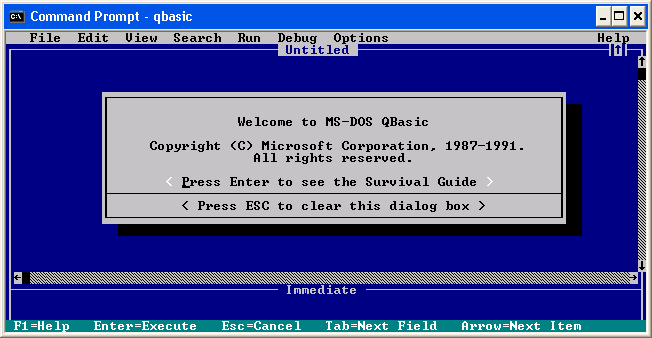
The company most strongly associated with Basic though is Microsoft. A version of Basic came with MS-DOS.

image

Microsoft also supported Basic for professional development. Microsoft Basic Professional Development System 7.x was a well-regarded development tool for business applications, though commercial shrink-wrap software tended to be written in C or C++.

That trend followed through to the Windows graphical environment. Visual Basic (VB), which made it easy to code Windows applications, was perhaps the most significant Basic release in terms of its impact, especially when it reached version 3.0 with full database support. Its popularity was such that many developers felt wounded when Microsoft discontinued Visual Basic 6.0, a direct successor, in favour of Visual Basic .NET which is something incompatible and different.

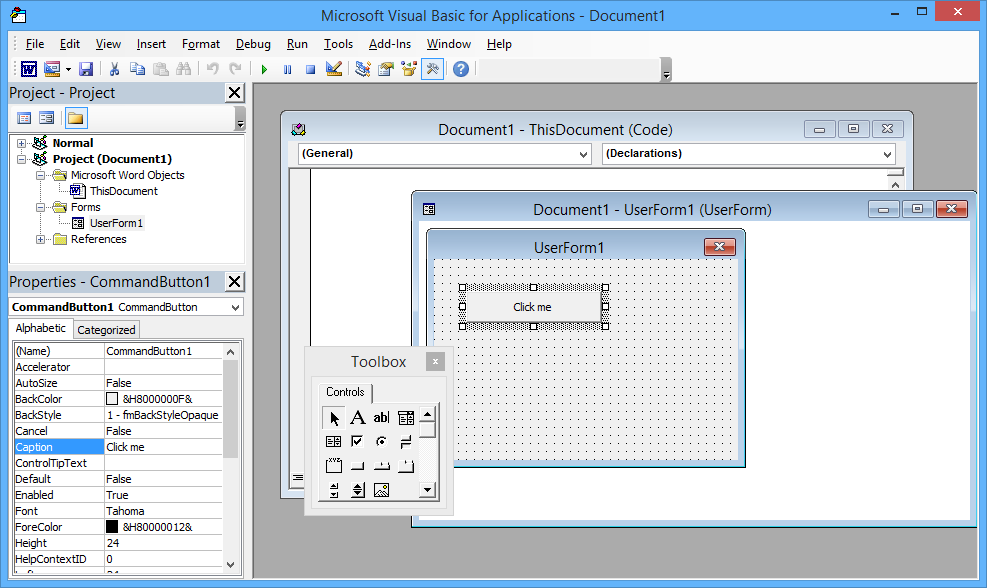
Further, VB 6.0 or something very like it lives on today, in the form of Visual Basic for Applications as found in all recent versions of Microsoft Office.

image

Despite this, Basic is in decline. Most of the professional developers I meet at events like Build use C# in preference to Visual Basic, there being little reason not to. C# is the premier language of .NET, and Visual Basic gets in the way if you want to keep up with latest .NET developments. Xamarin, which lets you code in .NET for iOS and Android, supports C# but not Visual Basic. Once you come to terms with semi-colons, braces and case-sensitivity, there is no real advantage to Visual Basic and C# is no more difficult.

I do see Visual Basic still used in education though, as well as by some developers who either prefer the language or are so used to it that they see no need to change; and to be fair, Xamarin aside, there is little if anything you can do in C# that you cannot also do in VB and the output is more or less the same.

The Roslyn project, which will be part of the next version of C# and probably in the next release of Visual Studio, lets you paste C# code as VB and vice versa.

Nevertheless, I believe we will see further decline in Basic usage, especially as it is little used outside Microsoft’s platform.

Would it have been better if Microsoft has not adopted Basic so wholeheartedly? There are some problems with Basic, though it is possible to write excellent code in Basic just as you can write poor code in C#, Python, C, or other more fashionable languages. Some issues:

  • Early versions of Basic encouraged badly structured programming with keywords like GOTO and GOSUB resulting in intricate loops that were hard to follow or debug.
  • Basic abstracts how software works to such an extent that you do not learn some important programming concepts such as pointers, addresses, memory allocation.
  • There is no natural progression from Basic to the C-like languages which dominate computing (C,C++,JavaScript,C#).
  • Visual Basic encourages developers to mix GUI code and business logic in the same files, as well as building user interfaces that tend not to scale well.
  • Small and declining professional use means that Basic is less useful than many other languages in the job market.

That said, Basic powers many excellent business applications as well as introducing many to the wonders of programming, and deserves our respect.

Microsoft completes Nokia acquisition: what now for Windows Phone?

Microsoft has completed its acquisition of Nokia today, a milestone in the turbulent story both of Nokia and of Windows Phone, which Nokia adopted in the hope of establishing a “third ecosystem” to challenge Apple iOS and Google Android.

Rumour has it that the Nokia acquisition was controversial within Microsoft and a large factor in the departure of Steve Ballmer as CEO. However, even if Microsoft took the view that an independent Nokia was better for Windows Phone, it faced the risk that market pressure would drive Nokia to Android and weaken the platform. The beginnings of that process may have been under way, with the launch of the Nokia X Android-but-not-Google range of phones, but we will never know, since Microsoft decided on acquisition.

image

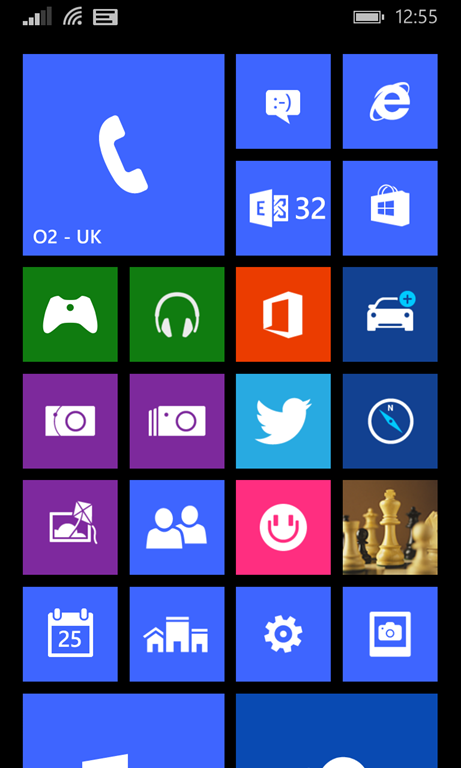
How important has Nokia been for Windows Phone? In my view, life-saving. Before Nokia, there was no manufacturer nor operator which really cared about the platform, and it showed in lacklustre hardware and half-hearted marketing efforts. Nokia came up with the distinctive Lumia brand and style, added a decent mapping service, and with its focus on the PureView camera technology, gave enthusiasts a reason to take a close look at its devices. It also saw an opportunity at the low end, and created some great value devices that opened up a new market for the operating system.

There were some blunders (the original Lumia 800 suffered many faults and terrible battery life on launch) and Lumia did not grow fast enough to restore Nokia to health, but to my mind it was a good effort.

Today, the general opinion of Windows Phone is that it is a strong smartphone operating system but suffers from a lack of high-quality apps. Users have to put up with the fact that most app vendors feel they are done if they support iOS and Android; and if there is a Windows Phone version of their app, it is often poor. That is not a great position for Microsoft/Nokia to be in, but it could be worse. Blackberry 10, which is also a decent mobile operating system, has been all-but written off as a viable contender.

Microsoft is fortunate in that, unlike Blackberry, it can to some extent create its own ecosystem. Office 365, Bing, OneDrive, Nokia’s maps, Azure for developers needing a cloud back-end: taken together they form a viable alternative. In this respect, Microsoft actually has an advantage over Apple, which lacks this breadth of services.

I have been reading the latest Developer Economics report from Vision Mobile. It is a good example of the neutral perspective on Windows Phone, though you will find it somewhat inconsistent:

Windows Phone sales picked up significantly in Q3 2013, showing a 140% increase year-on-year, fuelled primarily by low-end device sales. According to Kantar, Windows Phone sales in the three months running to Oct 2013, reached double-digit figures in some Western European markets. While this is certainly a positive sign for Microsoft they will continue facing an uphill struggle, in an increasingly unfavourable race against the two runaway leaders, iOS and Android.

The report emphasises that iOS and Android have won the mobile OS wars, but says that there are signs of hope for Microsoft:

Windows Phone Developer Mindshare has finally moved upwards, following positive market signals in the last two quarters. As we have frequently highlighted in past reports, the developer intent has always been there, with Windows Phone figuring at the top of our Developer Intentshare chart, but needed positive market signs in order to convert this interest into Mindshare. While the 26% Developer Mindshare is still less than half of that for iOS, Microsoft can now claim that over a quarter of developers that target mobile platforms are now actively developing for Windows Phone. […]

As a latecomer to a mobile market dominated by strong network effects, establishing a credible footprint in mobile remains a formidable challenge
for Microsoft. We believe that Microsoft may be better served in the long-run by leveraging the Android ecosystem as the deployment platform for Office
and Server businesses which are still growing.

Microsoft is in fact supporting iOS and Android as clients for its cloud services, as noted again at yesterday’s financial webcast, where CEO Satya Nadella talked about a strategy that goes across “devices some ours, some not ours.” It is a bit of both though, and the company is not showing any signs of weakening its own mobile efforts.

In my view reports like that from Vision Mobile miss a couple of factors. One is that Windows and Windows Phone are converging. They already use the same OS kernel, and at the Build conference earlier this month Microsoft announced Universal Apps that will run on both, and the ability for developers to sell an app once and have users install on both phone and full Windows.

This means that the future of Windows Phone and that of Windows itself are closely bound together. Longer term, they will either both fade away, or both succeed.

Windows remains a huge business for Microsoft, despite the decline of the PC, especially in business. Microsoft’s problem though is that adoption of Windows 8 has been relatively weak, and that those who do use it, largely live in the desktop environment rather than running Store apps (of which Universal Apps are a variant).

Despite the dismal progress so far for the Store apps platform and ecosystem, I believe it should be taken seriously. On paper it has many advantages, not only for touch control, but also in deployment, security, roaming data driven by the cloud, and discoverability through the store. Isolation from the core operating system protects users against the things that destroy desktop Windows, like unwanted extras foisted on users who simply need to update Java or Flash.

At Build we saw not only Universal Apps, but also a preview of Office in the Windows Runtime (Store app) environment. We also saw a preview of Store apps running within a window in the desktop environment, solving the jarring transition between desktop and Store app environments that unsettles users. If Microsoft gets this right, both Windows Phone and Windows tablets will be substantially more attractive.

Microsoft also has the ability to bind Windows Phone into its enterprise device management environment, System Center and InTune. In Windows Phone 8.1 the device management and security features businesses need are much improved. More is still needed; but the company should be able to build integration points that make it attractive to business customers already using products such as Active Directory, Microsoft Office, Office 365, System Center or InTune.

Another factor is the strength of Visual Studio for developers, especially as Microsoft improves its integration with cloud services like Azure and Office 365. You can use C# everywhere from cloud or server to mobile client.

image

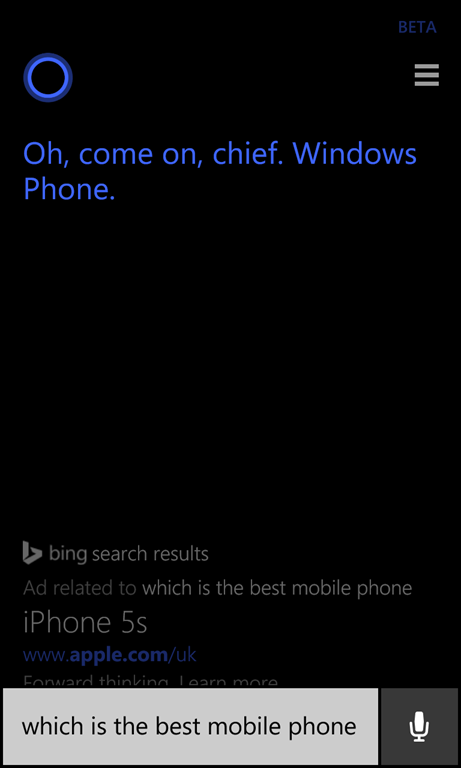
Cortana is sure that Windows Phone is the best; but check out the Bing ad.

What then is the future of Windows Phone? Uncertain, as ever; but if Microsoft pulls off a smooth Nokia acquisition – leaving in place the things that enabled the company to build the Lumia brand – and if it delivers on the promise we saw at Build, of a strong unified platform, then I expect market share to continue to grow. If it can climb to 10% or 15%, it will be on the map for vendors and the app problems will ease.

On the other hand, if Microsoft/Nokia means a return to the ineffective marketing and strategy we saw before Nokia adopted Windows Phone, then I expect Windows Phone to follow Blackberry into oblivion.

I am positive, but Microsoft needs to execute carefully and quickly to win market share for its mobile platform.

Microsoft financials: strong quarter especially in cloud services. We have a very different way to think about Windows says Nadella

Microsoft has released its financial results for the first quarter of 2014. The year on year segment figures look like this:

Quarter ending March 31st 2014 vs quarter ending March 31st 2013, $millions

Segment Revenue Change Gross margin Change
Devices and Consumer Licensing 4382 +30 3906 -23
Devices and Consumer Hardware 1973 +571 258 -135
Devices and Consumer Other 1950 +294 541 +111
Commercial Licensing 10323 +344 9430 +345
Commercial Other 1902 +453 475 +211

The “Gross margin” figures above do not tell us much other than for hardware, since Microsoft no longer allocates its research and development costs against specific segments.

Overall revenue is slightly down year on year but only because of a $1778 million decline in the “corporate and other” segment. This means it was a better quarter than the overall revenue suggests.

So what is notable? Windows OEM revenue is up, but only thanks to the business market, and partly thanks to upgrades driven by the end of support for Windows XP. Consumer OEM Windows is down by 15%.

Xbox revenue is up 45% thanks to the launch of Xbox One (and I have a hunch we will see less positive figures in future since Sony’s PS4 seems to be winning the console wars).

Surface (Microsoft’s own-brand tablet) revenue is up by over 50% year on year, to $494 million. It is a significant business, though apparently not a profitable one. Cost of sales was $539 million, says Microsoft in its notes.

Windows volume licensing, which accounts for most enterprise usage, is up 11%, also no doubt influenced by the end of XP support. SQL Server revenue is up by 15%, though in relation to server products Microsoft notes the impact of “the transition of customers to Cloud Services.”

The big winner is cloud services. Microsoft says:

  • Office 365 revenue grew more than 100%
  • Microsoft Azure revenue grew more than 150%
  • Cloud services revenue grew $367 million or 101%

These sums are a little puzzling. If growth was 101% overall, and Office 365 grew by more than 100%, where is the Microsoft Azure growth hiding, or was it from a very small base?

Note that consumer Office 365 is accounted for separately, it seems, as part of “Devices and Consumer other”. There are now 4.4 million Office 365 Home subscribers, growing by around 1 million in this quarter.

Questioned in the earnings call, CEO Satya Nadella talked about mobile-first and cloud-first, adding that the strategy goes across “devices some ours, some not ours.” He also mentioned how the advent of Universal Apps means that “we have a very different way to think about [Windows].” That is partly wishful thinking of course: the Universal App framework is still in preview and targets a still unreleased update to Windows Phone (8.1). Still, that is the strategy, even if it means giving Windows away on smaller devices – we have “monetization on the back end,” said Nadella, presumably thinking of Office 365 subscriptions and the like.

On the business and enterprise side (where Microsoft can be more confident) Nadella also spoke of the synergy between Office 365 and Azure; every Office 365 sign-up enables Azure as a business cloud platform, thanks to Azure Active Directory and other integration points.

Microsoft’s segments summarised

Devices and Consumer Licensing: non-volume and non-subscription licensing of Windows, Office, Windows Phone, and “ related patent licensing; and certain other patent licensing revenue” – all those Android royalties?

Devices and Consumer Hardware: the Xbox 360, Xbox Live subscriptions, Surface, and Microsoft PC accessories.

Devices and Consumer Other: Resale, including Windows Store, Xbox Live transactions (other than subscriptions), Windows Phone Marketplace; search advertising; display advertising; Office 365 Home Premium subscriptions; Microsoft Studios (games), retail stores.

Commercial Licensing: server products, including Windows Server, Microsoft SQL Server, Visual Studio, System Center, and Windows Embedded; volume licensing of Windows, Office, Exchange, SharePoint, and Lync; Microsoft Dynamics business solutions, excluding Dynamics CRM Online; Skype.

Commercial Other: Enterprise Services, including support and consulting; Office 365 (excluding Office 365 Home Premium), other Microsoft Office online offerings, and Dynamics CRM Online; Windows Azure.

Hands on: SQL Server 2014 with data files in Azure Blob Storage

One intriguing new feature in Micrsosoft’s SQL Server 2014 is the ability to create or attach databases whose files are in Azure blog storage. This sounds like something that would not work at all well: why would you want a database engine to mount files located hundreds or thousands of miles away? However, the feature is apparently baked deeply into SQL Server, according to this white paper (which is essential reading if you want to know more):

SQL Server 2014 integration with Windows Azure blob storage occurs at a deep level, directly into the SQL Server Storage Engine; SQL Server Data Files in Windows Azure is more than a simple adapter mechanism built on top of an existing software layer.

· The Manager Layer includes a new component called XFCB Credential Manager, which manages the security credentials necessary to access the Windows Azure blob containers and provides the necessary security interface; secrets are maintained encrypted and secured in the SQL Server built-in security repository in the master system database.

· The File Control Layer contains a new object called XFCB, which is the Windows Azure extension to the file control block (FCB) used to manage I/O against each single SQL Server data or log file on the NTFS file system; it implements all the APIs that are required for I/O against Windows Azure blob storage.

· At the Storage Layer, the SQL Server I/O Manager is now able to natively generate REST API calls to Windows Azure blob storage with minimal overhead and great efficiency; in addition, this component can generate information about performance counters and extended events (xEvents).

It also seems that the main target usage is SQL Server running on Azure VMs in the same region as the blog storage, removing latency concerns, though the wording of the explanation is curious, implying almost that on-premise connection is supported but should not be:

Although it is theoretically possible and officially supported, using an on-premises SQL Server 2014 installation and database files in Windows Azure blob storage is not recommended due to high network latency, which would hurt performance; for this reason, the main target scenario for this white paper is SQL Server 2014 installed in Windows Azure Virtual Machines (IaaS). This scenario provides immediate benefits for performance, data movement and portability, data virtualization, high availability and disaster recovery, and scalability limits.

If you use blob storage in this way on an Azure VM, then I/O goes through the Virtual Network Driver, whereas an Azure data disk uses the Virtual Disk Driver. This nicety may be the main reason to consider the feature.

I tried both scenarios: on-premise and from an Azure VM. I had some difficulty getting started, despite this seemingly exhaustive tutorial. I followed it, I thought, to the letter, but got either the error:

Unable to open the physical file "https://myaccount.blob.core.windows.net/sqldata/azuredb.mdf". Operating system error 86: "86(The specified network password is not correct.)".

or else

CREATE FILE encountered operating system error 1117(The request could not be performed because of an I/O device error.) while attempting to open or create the physical file https://myaccount.blob.core.windows.net/sqldata/azuredb.mdf

The problem turned out to relate to the Shared Access Signature required. The supposedly exhaustive tutorial merely refers you to the CloudBlobContainer.GetSharedAccessSignature method in the Azure SDK and offers an incomplete code snippet. I wrote C# code for this and was able to generate a Shared Access Signature but it did not work (see above). I found myself in the depths of the Azure SDK, wondering if I should use version 2.1 or 3.0, and whether I should use Microsoft.WindowsAzure.StorageClient.CloudBlobClient or Microsoft.WindowsAzure.Storage.Blob.CloudBlobClient. The tutorial is also not clear about exactly which part of the Shared Access Signature you should store in the SQL Server Credential Manager; it is a multipart string separated by ampersands.

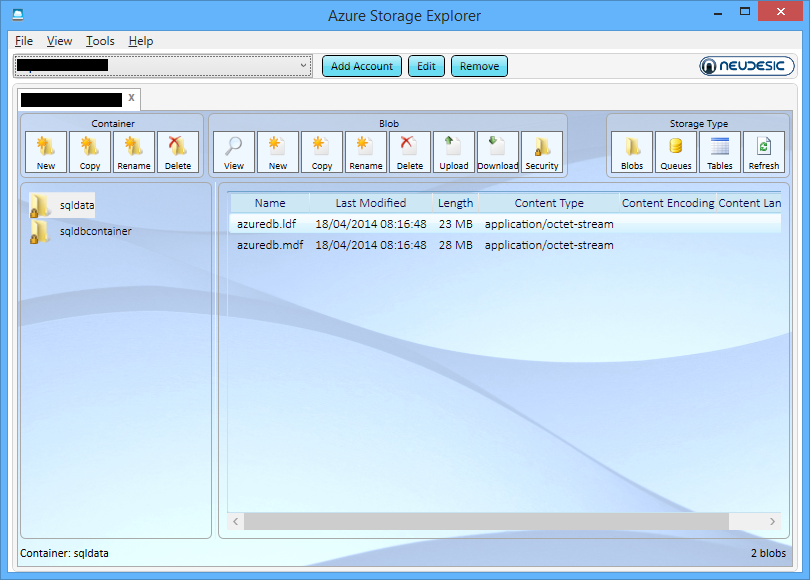
I have still not fully worked it out, but discovered the very helpful Azure Storage Explorer on CodePlex. If you follow the instructions in the white paper referenced above, and use the Azure Storage Explorer to generate the Shared Access Signature, then it works. The project is open source, so with a little effort it should be possible to find and document the exact requirements.

image

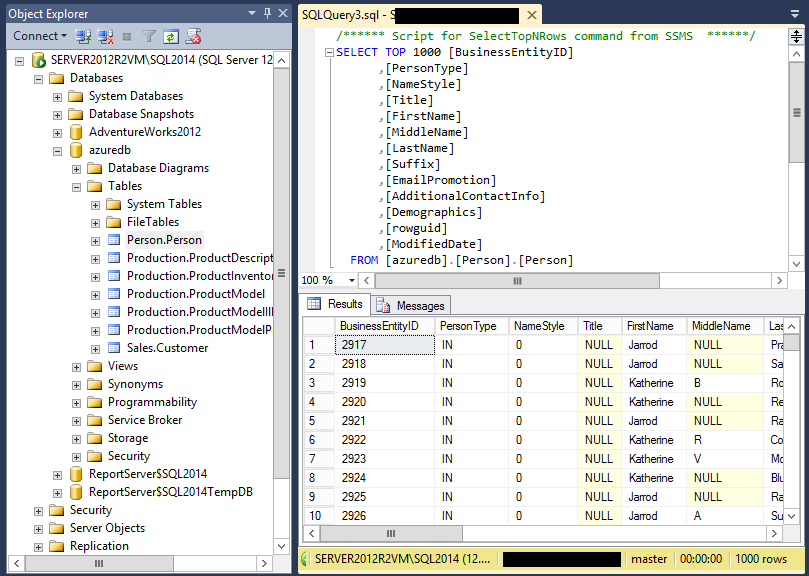
I tried creating and using a database from my on-premise SQL Server 2014 and I find the performance remarkably good, considering. There is no doubt some smart caching going on under the covers. Selecting 1000 rows from a table took 11 seconds the first time, and was instant the second time. It seems to me viable, on my brief look, though I am not sure why you would want to do this. However it is a good demonstration of how cloud and on-premise are coming ever-closer.

image

Running from an Azure VM in the same region is a different case, though I would suggest detailed and intensive testing before going into production.

A quick hands-on with native code compilation for .NET

I had a quick look at the .NET Native Preview. I am interested to see what the benefits might be. Note that currently the preview only supports 64-bit Windows Store apps.

Here is what is promised:

For users of your apps, .NET Native offers these advantages:

  • Fast execution times
  • Consistently speedy startup times
  • Low deployment and update costs
  • Optimized app memory usage

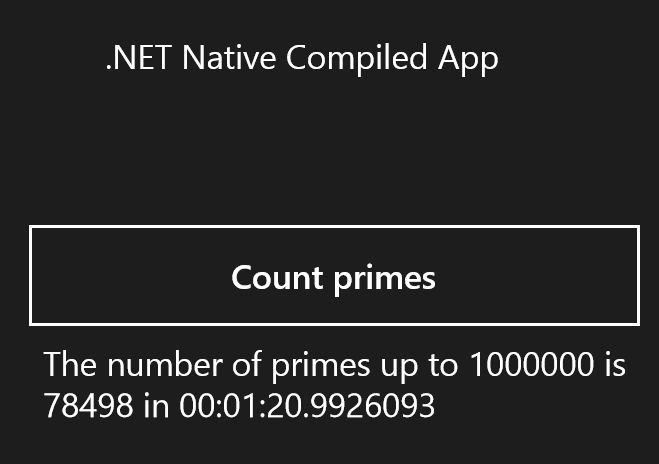
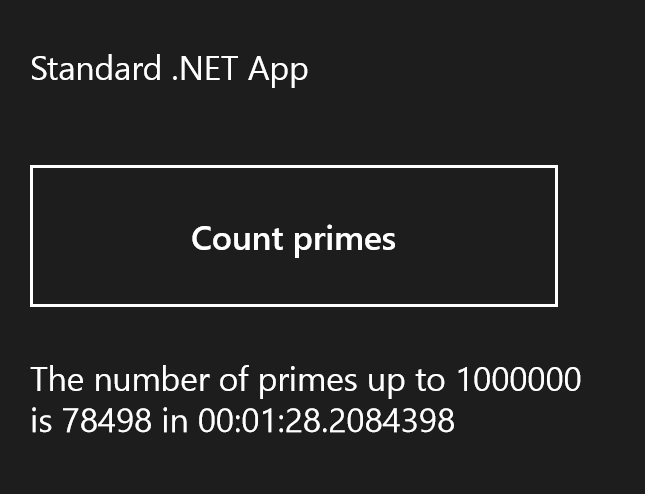
I created a small C# app that counts prime numbers using a simple approach. I created it first as a Universal App that does not use .NET Native, and then as a second app that does use .NET Native.

image

My initial results are disappointing. The time taken to count prime numbers is similar in both apps.

image

As a further test, I added code that adds the prime numbers found to a ListView control using an async task. The idea was to see if GUI interaction and multi-threading would be more revealing than simply crunching numbers in a tight loop. The apps takes much longer with this enabled, but again, there is nothing to choose between the two.

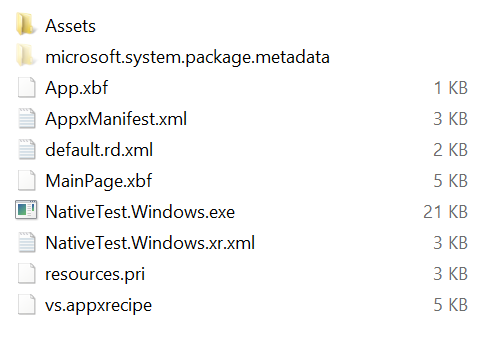
Did I really succeed in compiling the app to native code? I think so. Here are the contents of the AppX folder for the standard .NET executable:

image

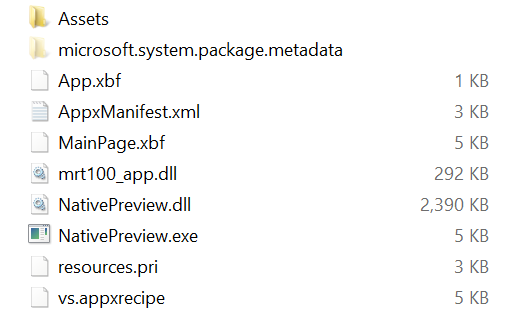
and here for the native compiled executable – note the additional DLLs:

image

I am not actually surprised that there is no performance benefit in my example. JIT (just-in-time) compilation means that any .NET application is native code at runtime, though optimization might be different.

I have ended up with a much larger app to deploy, though the relative difference would be less, I imagine, with an app that contains more code.

I can also readily believe that start-up time will be better for a native compiled app, since there is no need for the JIT compiler. However my app is so small that this is not significant.

My question though is what kind of app will benefit most from native compilation? I would be interested to see guidance on this.

Of course it is also possible that later iterations of the technology will yield different results.

Microsoft Build 2014: what happened

It’s curious. Microsoft’s new CEO Satya Nadella has been in place for only a month which means that almost everything announced at Build, Microsoft’s developer conference which took place last week in San Francisco, must have been set before he was appointed; yet there was a sense of “all things new” at the event, as if he had overseen a wave of changes.

The wave began the previous week, with the simultaneous announcement and delivery of Office for iPad. The significance of this is threefold:

  • It demonstrated Microsoft’s decision to give first-class support to mobile platforms other than Windows
  • It demonstrated that Office can be redesigned to work nicely on a tablet
  • The quality of the product exceeded expectations, showing that in the right circumstances Microsoft can do excellent non-Windows software

image

Next came Build itself. It was a tale of two keynotes. The first was all about Windows client – both Phone and PC. The core news is the arrival of the Windows Runtime  (WinRT, the engine behind Metro/Store Apps) on Windows Phone 8.1. This means that WinRT is now the runtime that developers should target for apps that run across phone and desktop – and even, we were shown, Xbox One, which will support WinRT apps written in HTML and WinJS (Microsoft’s JavaScript library for Windows apps).

In support of this, Microsoft announced a new Universal App project for Visual Studio, which lets you share both visual and non-visual code across multiple targets. How much is shared is a developer choice.

There is more. A Universal App is now (kind-of) a desktop app as well as a Store app, since in a future free update to Windows 8, it will run on the desktop within a window, as well as appearing in the Start menu on the desktop. We were even shown this; apparently it is a mock-up. This was the biggest surprise at Build.

image

What did Executive VP Terry Myerson say about this? Here is the exact quote:

We are going all in with this desktop experience, to make sure your applications can be accessed and loved by people that love the Windows desktop. We’re going to enable your Universal Windows applications to run in a window. We’re going to enable your users to find, discover and run your Windows applications with the new Start menu. We have Live Tiles coming together with the familiar experience customers are looking for to start and run their applications and we’ll be making this available to all Windows 8.1 users as an update. I think there will be a lot of happy people out there.

This is significant. When Myerson says, “we are going all in with this desktop experience”, he does not mean backtracking on Windows Store apps, to return to desktop windows apps (Win32 or WPF) as the future of Windows development. Rather, he means Windows Store apps integrated into the desktop.

There is a further twist to this. Windows Store apps are sandboxed and cannot communicate with each other or with the operating system other than via carefully designed and secured paths. This is in general a good thing, but restrictive for businesses designing line of business apps. It also means that legacy code cannot be carried over into a Store app, other than by full porting.

In the just-released Windows 8.1 Update this has changed. Side-loaded apps (in other words, not deployed from the Windows Store) can now escape the sandbox thanks to Brokered Windows Runtime Components. There are some limitations (32-bit only on the desktop side, for example) but this will make it possible to implement business applications as Store apps even if they need to interact with existing desktop applications or services.

There is still a huge blocker to Store apps from a business perspective, which is that you need Windows 8. Still, my guess is that once the update with the restored Start menu appears, most of the objections to Windows 8 will melt away.

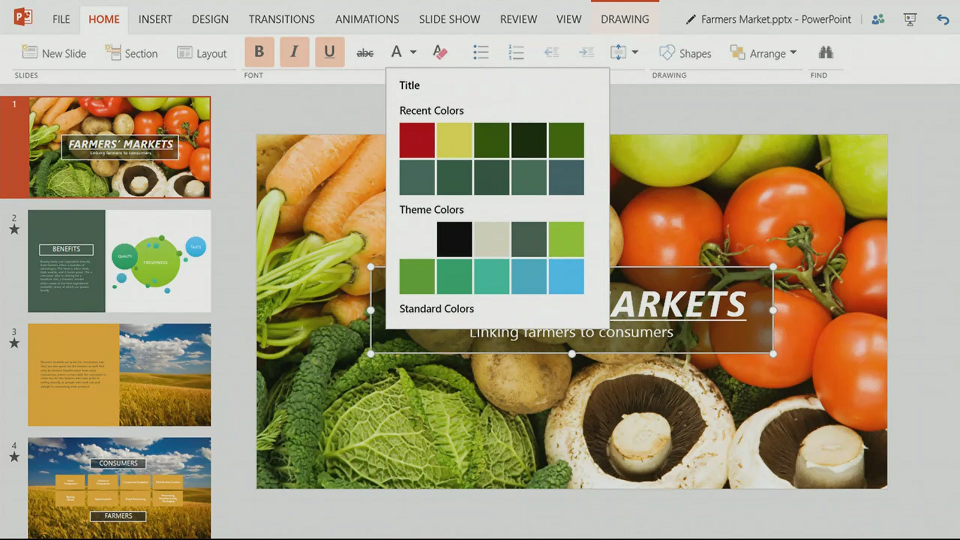
We also saw Office for the Windows Runtime, which will run on both Phone and PC. It is written, I discovered later, in XAML, DirectX and C++ (“Blazingly fast”, we were told). Corporate VP Kirk Koenigsbauer introduced a preview of this, or at least PowerPoint.

image

No detail yet, and several references to “early code” suggest to me that this is a year or more away from full release (giving Office on iPad a big head start); but it will come. Koenigsbauer did not call it cut-down; in fact, it was instanced as proof that WinRT is suitable for large-scale apps, so I would expect something more complete than Office on iPad; yet it is hard to imagine things like the VBA macro language appearing here in its current form (VBA is based on the ancient Visual Basic 6.0 runtime), so there will be some major differences.

We also saw Windows Phone 8.1, including the Cortana virtual personal assistant who responds to voice input. For me other things in Windows Phone 8.1 are more significant, including new swipe-style keyboard for fast text input, VPN, S/MIME secure email, and a new notification centre. Unlike touch Office, Windows Phone 8.1 is coming soon; Nokia’s Stephen Elop (soon to be in charge of Windows Phone at Microsoft) said that the first 8.1 Lumia devices could be out from May, depending on territory, and that all Lumia Windows Phone 8 devices will get the update in the summer.

On to day two, which was Cloud day, though we also got significant .NET developer news.

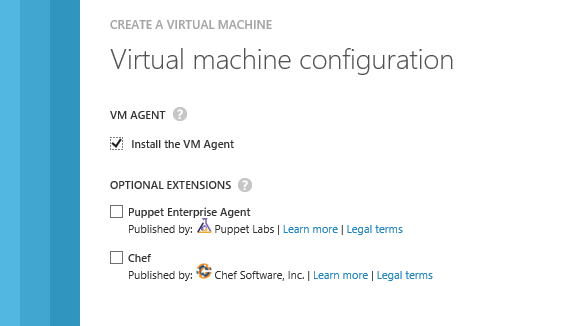
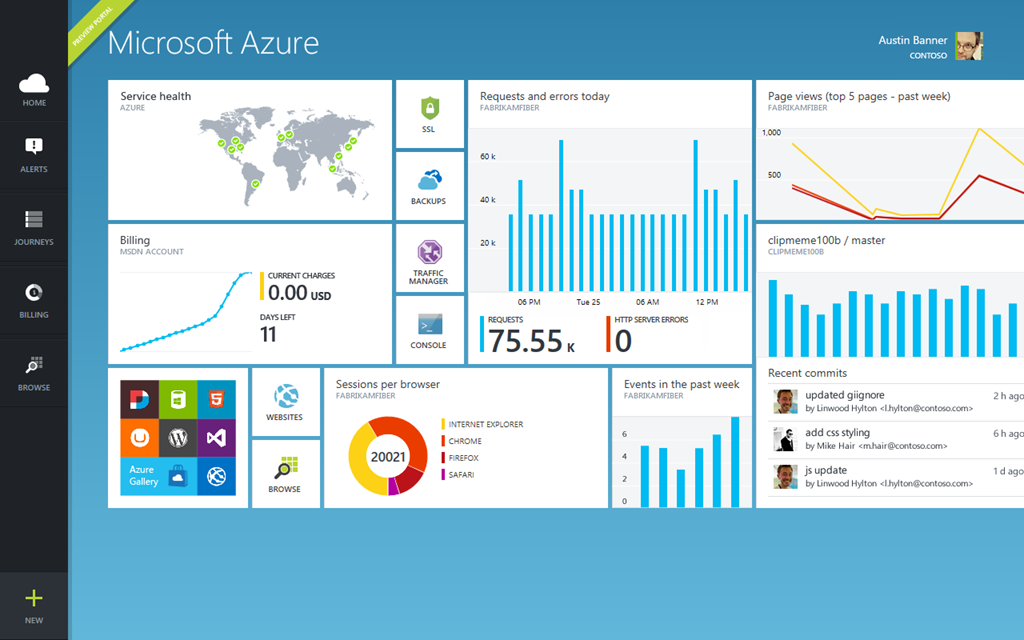
Executive VP Scott Guthrie introduced a new portal for Microsoft Azure, the cloud platform. This is not just a new look, but integrates with Visual Studio online so you can easily view and edit the code and track team projects. There are also new monitoring and analytics features so you can check page views, page load time, browser usage and more. Guthrie also announced integration with Puppet and Chef for deployment automation.

image

Language designer Anders Hejsberg also came on stage. He announced the release version of TypeScript, a “typed superset of JavaScript” which is suitable for large applications. He also announced a new preview release of the compiler project code-named Roslyn, and on stage pushed the button that published it as open source. What is Roslyn? It is the next generation compiler for C# and VB, and is itself written in C#. This enables compiler and workspace APIs, which in turn enable rich editor features:

The transition to compilers as platforms dramatically lowers the barrier to entry for creating code focused tools and applications. It creates many opportunities for innovation in areas such as meta-programming, code generation and transformation, interactive use of the C# and VB languages, and embedding of C# and VB in domain specific languages.

Roslyn will be fully released in the next version of Visual Studio, for which we do not yet have a date. Roslyn will be delivered alongside C# 6.0.

There is also a new .NET Foundation which will oversee open source projects for .NET, with backing from folk including Xamarin’s Miguel de Icaza and Umbraco’s Niels Hartvig. It is all a bit vague at the moment:

In the upcoming months, the .NET Foundation will be inviting many companies and community leaders to join the foundation, including its Board of Directors and will then finalize its operational details, including governance models for its open source initiatives, membership structure and industry and community engagement.

Another significant event in the .NET story is the arrival of true native code compilation for .NET, although currently only for 64-bit Store apps. More on this soon.

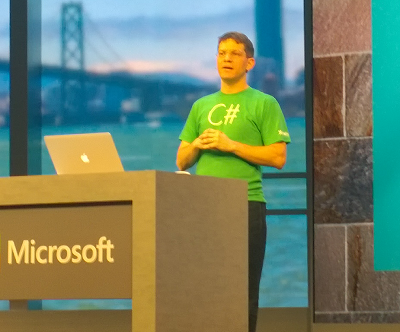
A couple of events during Build caught my eye. One was de Icaza’s session on using C# to build for iOS and Android, not so much for the content itself (though there was nothing wrong with it), but rather for the huge attendance it drew.

image

The session was moved to the Build keynote room, and while there were spare seats, the room felt well filled. This speaks loudly about the importance of those platforms even to Microsoft platform developers, as well as of Microsoft’s support of Xamarin’s work.

Another was the appearance of John Gruber, author of the Daring Fireball blog and an Apple enthusiast. He appeared in a video during the keynote, explaining how a project in which he is involved uses Azure for back-end services, and then in person at another session, interviewing journalist Ed Bott about what is changing at Microsoft.

image

Gruber seems to me representative of a group of smart observers who have not in general been impressed with Microsoft’s endeavours over the past few years; but he for one is now more positive on the subject. Windows Phone is much better than its market share suggests, he said. This alongside Azure and a new openness to supporting third-party clients has made him look more favourably on the company.

My summary is this. On the Windows client side, Microsoft is taking its unpopular Windows release and its minority Phone platform and making them better and more compatible with each other, making sense of the client platform in a way that should result in growth of the app ecosystem both on Phone and PC/Tablet. On the cloud side, the company is building Azure and Office 365 (two platforms united by Azure Active Directory) into a one-stop platform that is increasingly compelling. The result was a conference and a direction that was largely welcomed by those in attendance, as far as I could tell.

That does not mean that the PC will stop declining, or that iOS and Android will become less dominant in mobile. There is progress though, and more clarity about the direction of Microsoft’s platform than we have seen for some years.

For the official news from Build, see the Build Newsroom.

Microsoft Build goes nuts over Xamarin’s C# and .NET for iOS and Android

Xamarin’s Miguel de Icaza was booked for a standard session room at Build, Microsoft’s developer conference in San Francisco, but the session was moved to the keynote room because of demand. I am not sure how the likely demand was calculated, but it was possibly something to do with the event app that lets attendees plan their agenda.

It was just as well that the session got moved.

image

The attendance at the session mirrored my observation that Xamarin’s stand in the third-party partner exhibition was drawing more attention than any other. Xamarin’s tools let developers port applications to iOS and Android while still using C# and the .NET Framework.

image

I am not sure what to conclude from the obvious high level of interest in compiling apps for iOS and Android. You can interpret this as good news for Microsoft, in that it keeps developers working in .NET and with easy access to the libraries that support Microsoft services; or as bad news, in that it shows how many developers are moving towards non-Microsoft platforms in their app deployments.

It was the second time today that de Icaza appeared on the keynote stage. Earlier he stood there with Anders Hejlsberg, the author of C#.

image

It has been a long journey, from the time when Mono (the open source implementation of .NET founded by de Icaza) was viewed with distrust by Microsoft (as far as I could tell), as an open source competitor to the official version.

Now there is talk of whether Microsoft might acquire Xamarin – of which there is no news here at Build, I should emphasise.

What is a Universal Windows App?

At its Build developer conference in San Francisco, Microsoft has announced a new kind of Windows app: a Universal App. In fact, you can download the latest Visual Studio 2013 update (Update 2 RC) and

image

A Universal App runs on both Windows Phone 8.1 and Windows 8.1. But what is it really?

The place to start is with the runtime. In Windows Phone 8, Microsoft migrated the kernel in Windows Phone from the cut-down CE version of Windows, to the same kernel used by desktop Windows. However the app runtime in Windows Phone 8 remained Silverlight, Microsoft’s Flash competitor which was originally designed as a browser plug-in.

In Windows Phone 8.1 Microsoft has taken the next logical step, and ported the Windows Runtime (WinRT) to the phone. WinRT is the runtime behind the Metro/Modern/Store App environment introduced in Windows 8.

A Universal App runs on WinRT. This means that Windows Phone 8.1 supports the same variety of development options as Windows 8: XAML and C#, XAML and C++, HTML and the WinJS Javascript library (now open source), and DirectX for games.

The port is not 100%; there are some platform-specific APIs. Apparently compatibility is about 90% in terms of APIs available.

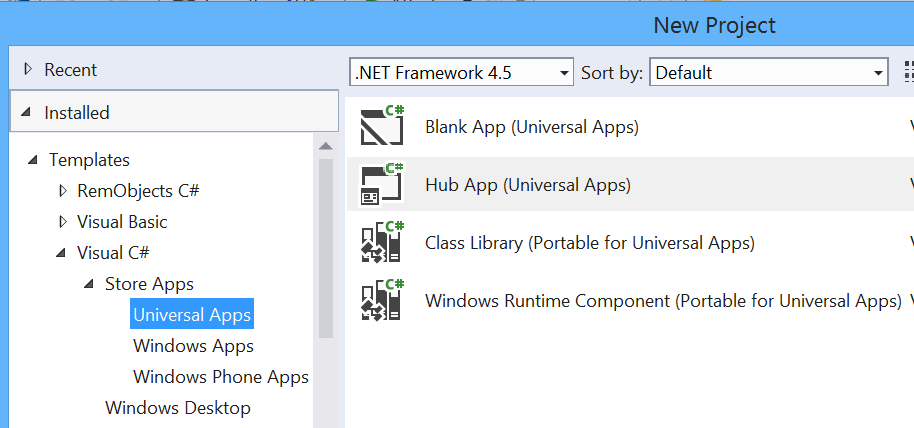
That said, a Universal App is not a universal binary. Apparently you can have a universal binary, but it is not the approach Microsoft is taking. A Universal App is a project type in Visual Studio.

image

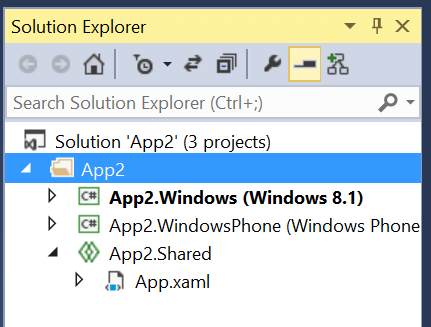
When you create a Universal App you get a project with multiple targets.

image

By default you get two targets, but we have also seen Xbox One as a target, and conceptually we could see more: maybe Xamarin might extend it to support iOS and Android, for example.

The way this works is that at compile-time any code (which can include XAML and project assets such as images as well as C# code) that is in the Shared project gets merged into the target-specific project.

This means that a Universal App could contain very little shared code, or be almost entirely shared code. This is a developer choice.

Separately, Microsoft has now enabled an app identity to run across multiple Windows platforms in the Store. This means a user can purchase an app once for multiple platforms. However, this is more a business than a technical feature. It would be possible for the developer to offer a multi-platform app in the Store, but keep the development for each platform entirely separate.

That said, the shared WinRT aspect means that code sharing in a Universal App is very feasible. Most if not all non-visual code should work fine, and XAML experts will be able to share most of the UI code as well, thanks to the flexibility built into the XAML UI language.

That is the good bit. There is a problem though. Neither the Windows Phone app platform, nor the Windows 8 app platform have been hugely successful to date, but of the two, Windows Phone has fared better. There are now 500 new apps per day for Windows Phone, we were told here at Build.

Unfortunately, porting those Windows Phone apps to become Universal apps is not easy. Developers have to port their app from Silverlight to WinRT, before they can add a target for Windows 8. They will also need to maintain the old Silverlight app for users with versions of Windows Phone earlier than 8.1. Nokia has promised to offer upgrades for all Windows Phone 8 Lumia models, but that will not the base for all Windows 8 phones out there, and as ever operators have a role here.

Life is easier for Windows 8 app developers who now want to support Windows Phone 8.1; but there are not so many great Windows 8 apps for which Windows Phone users are anxiously awaiting.

Still, the Universal App approach makes perfect sense for the future, once Windows Phone 8.1 is established in the market. It also makes sense for enterprises with internal apps to deploy for mobile and tablet users.  

Saving Windows the sequel: the Return of the Start

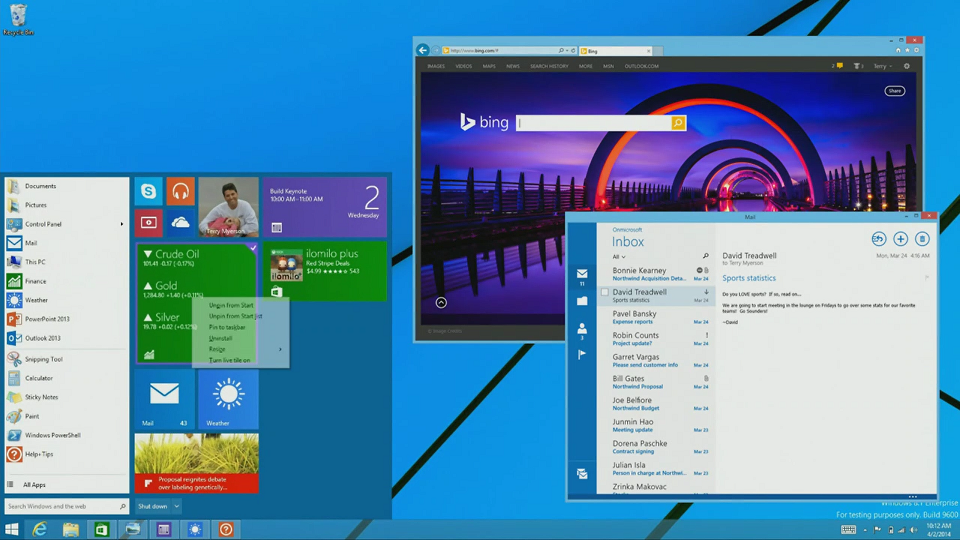
Day one at Microsoft’s Build conference in San Francisco was Windows client day – including Windows Phone as well as full Windows. Two slides made the biggest impression on me. One was this one, the return of the Start menu to the desktop, and a Store app (the Mail client) running in a desktop window:

image

The other was this: Office redone for the Metro, sorry Modern user interface:

image

Note that Touch Office will run on Windows Phone as well as on full Windows. Microsoft has ported most of the Windows Runtime (WinRT), the software engine that runs the Modern UI, to Windows Phone. The new Office is written in XAML and C++ so will run on both platforms.

Has Microsoft backtracked on the Windows 8 concept championed by former Windows VP Steven Sinofsky?

To some extent it has. Sinofsky’s Windows 8 was a purer conception, in which the whole focus is on the Modern environment and the desktop is presented like a legacy component, an app within the environment that happens to run all your old stuff.

Users rebelled, businesses swore to stick with Windows 7, and Microsoft has been gradually unpicking bits of it to make it more palatable to existing users. In Windows 8.1 we saw the return of the Start button and an option to boot directly to the desktop. In Windows 8.1 Update 1 we see a window bar appear across the top of Store apps, when the mouse is at the top of the screen, Store apps on the desktop taskbar, and the taskbar running at times across the Modern UI.

The security boundaries are getting slightly eroded, with an option for side-loaded apps (mostly the realm of enterprise deployments) now able to escape the sandbox and run legacy code.

Windows 8 vNext goes further. Store apps in windows: is there anything left of Microsoft’s tablet platform?

Well yes, there is. Store apps will still run primarily full-screen, and more important, will still use the new controls – menus, buttons, lists – that can be operated easily with touch. They still use the blocky “Metro” design concept, which for all its faults (it is not the most beautiful of UI concepts) is easy to operate without mouse or keyboard.

The other perspective on Microsoft’s shifting approach to the Windows client is that it is putting all its energy into promoting these modern apps.

Sinofsky’s idea was to push users into the Modern environment by making it the heart of Windows 8 – the Start screen. That did not work, so now Microsoft is taking a gentler approach but with the same goal in mind. If users are working mainly on the desktop, the argument goes, we will bring the apps to them there.

Windows 8.1 Update 1 discreetly plants a link to the Windows Store on the desktop taskbar, making this point perfectly.

For users who work on the desktop, Store apps will now be more visible, and more appealing again once they run in a desktop window.

For developers, there is another big change. They  can now target both Windows and Phone with a single app project, called a Universal App, so the effective size of the target market, though still small compared to Android and iOS, has significantly increased. Users can buy an app once in the Store and run it on both platforms.

The Universal App can be further extended to Xbox One, which also includes WinRT.

It is all about the apps – as it always was. If developers support Microsoft’s app ecosystem with renewed vigour following these changes, the future of Windows in the new mobile world does look brighter.

The forthcoming Office, you will recall, is also a Store app. You will finally be able to get real work done in the tablet environment.

Microsoft has not backtracked, in the sense that we are not hearing at Build about a renewed focus on the desktop. Rather, we are hearing about a more integrated approach to supporting both desktop and Store apps in Windows, but with the same goal as before, to make Windows an operating system fit for purpose on tablets.

It is worth recalling that Windows 8 was not only about supporting touch. The WinRT environment is also about security, where apps are sandboxed, and easy deployment via the Windows Store. This way Microsoft can prevent Windows from being wrecked by malware and other unwanted software.

What of Windows RT, the ARM version? With Office coming to the phone, I am more or less convinced that the next tablet-only Windows devices will be based on Windows Phone rather than Windows RT. You will have Office, but not the desktop, for better or worse. But no such announcement has yet been made.