Category Archives: mobile

Microsoft still paying the price for botched Vista with muddled development strategy

Professional Developers Conference 2003. Windows Longhorn is revealed, with three “pillars”:

  • Avalon, later named Windows Presentation Foundation (WPF)
  • Indigo, later named Windows Communication Foundation (WCF)
  • WinFS, the relational file system that was later abandoned

With the benefit of hindsight, Microsoft got many things right with the vision it set out at PDC 2003. The company saw that a revolution in user interface technology was under way, driven by the powerful graphics capabilities of modern hardware, and that the old Win32 graphics API would have to be replaced, much as Windows itself replaced DOS and the command-line. XAML and WPF was its answer, bringing together .NET, DirectX, vector graphics, XML and declarative programming to form a new, rich, presentation framework that was both designer-friendly and programmer-friendly.

Microsoft also had plans to take a cut-down version of WPF cross-platform as a browser plugin. WPF/Everywhere, which became Silverlight, was to take WPF to the Mac and to mobile devices.

I still recall the early demos of Avalon, which greatly impressed me: beautiful, rich designs which made traditional Windows applications look dated.

Unfortunately Microsoft largely failed to execute its vision. The preview of Longhorn handed out at PDC, which used Avalon for its GUI, was desperately slow.

Fast forward to April 2005, and Windows geek Paul Thurrott reports on Longhorn progress:

I’m reflecting a bit on Longhorn 5048. My thoughts are not positive, not positive at all. This is a painful build to have to deal with after a year of waiting, a step back in some ways. I hope Microsoft has surprises up their sleeves. This has the makings of a train wreck.

Thurrott was right. But why did Longhorn go backwards? Well, at some point – and I am not sure of the date, but I think sometime in 2004 – Microsoft decided that the .NET API for Longhorn was not working, performance was too bad, defects too many. The Windows build was rebased on the code for Server 2003 and most of .NET was removed, as documented by Richard Grimes.

Vista as we now know was not a success for Microsoft, though it was by no means all bad and laid the foundation for the well-received Windows 7. My point though is how this impacted Microsoft’s strategy for the client API. WPF was shipped in Longhorn, and also back-ported to Windows XP, but it was there as a runtime for custom applications, not as part of the core operating system.

One way of seeing this is that when Longhorn ran into the ground and had to be reset, the Windows team within Microsoft vowed never again to depend on .NET. While I do not know if this is correct, as a model it makes sense of what has subsequently happened with Silverlight, IE and HTML5, and Windows Phone:

  • Windows team talks up IE9 at PDC 2010 and does not mention Silverlight
  • Microsoft refuses to deliver a tablet version of Windows Phone OS with its .NET application API, favouring some future version of full Windows instead

Note that in 2008 Microsoft advertised for a job vacancy including this in the description:

We will be determining the new Windows user interface guidelines and building a platform that supports it. We’ll eliminate much of the drudgery of Win32 UI development and enable rich, graphical, animated user interface by using markup based UI and a small, high performance, native code runtime.

In other words, the Windows team has possibly been working on its own native code equivalent to XAML and WPF, or perhaps a native code runtime for XAML presentation markup. Maybe this could appear in Windows 8 and support a new touch-oriented user interface.

In the meantime though, Microsoft’s developer division has continued a strong push for .NET, Silverlight and most recently Windows Phone. Look at Visual Studio or talk to the development folk, and you still get the impression that this is the future of Windows client applications.

All this adds up to a muddled development story, which is costly when it comes to evangelising the platform.

In particular, eight years after PDC 2003 there is no clarity about Microsoft’s rich client or RIA (Rich Internet Application) designer and developer story. Is it really WPF, Silverlight and .NET, or is it some new API yet to be revealed, or will IE9 as a runtime play a key role?

There is now a little bit more evidence for this confusion and its cost; but this post is long enough and I have covered it separately.
Appcelerator releases Titanium Mobile 1.6

Appcelerator has released Titanium Mobile 1.6, an update to its cross-platform app framework for Apple iOS and Google Android.

The update adds 26 features for Android and 9 features for iOS. The Facebook API has been completely redone, keeping up-to-date with the latest Facebook API. There is beta support for the Android NDK – native code development.

Android 1.6 is now deprecated and will not be supported in future releases.

While not a big release in itself, Titanium Mobile 1.6 is require for using forthcoming Titanium+Plus modules, libraries which add support for features such as barcode reading and PayPal payments.

There is no sign yet of Aptana integration, following the acquisition of this JavaScript IDE in January.

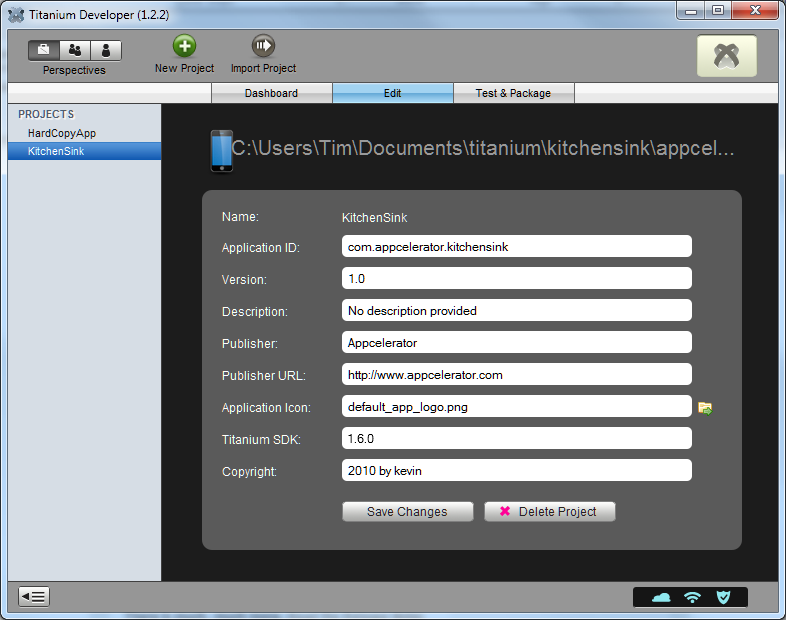
Updating to the 1.6 SDK was delightfully easy on Windows. Just open Titanium Developer and click the prompt.

image

RunRev releases LiveCode for Android preview alongside iOS, Mac, Windows, Linux

RunRev has announced a preview version of its LiveCode for Google Android, which will join existing versions for Windows, Mac, Linux, Web and iOS.

image

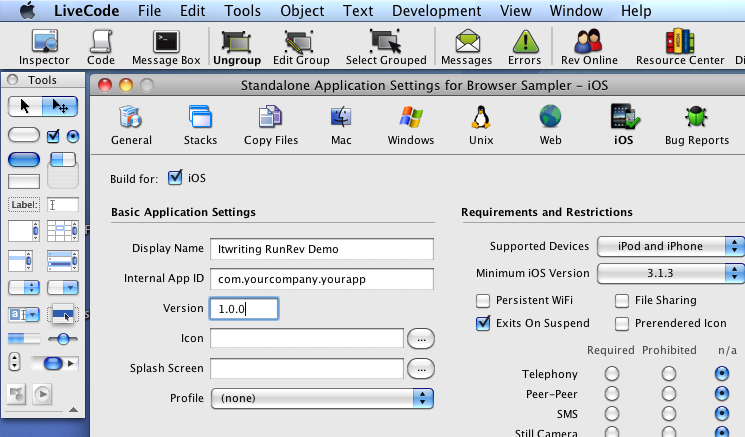
LiveCode is like a modern-day HyperCard, an early database and simple application builder for the Mac. It includes a graphical development environment with scripting using the LiveCode language, described by RunRev as “A very high level language”. Here is a sample:

put “The fox jumped over the lazy dog.” into theText

put “ quick brown” after word 2 of theText

The advantage is fast development, once you have become familiar with the platform.

On a quick look I noticed that LiveCode looks great for building a business-oriented client, but looks more challenging when it comes to interacting with a remote server application, though it does have support for basic http and https requests as well as socket support.

Now that Android is supported LiveCode looks interesting as a quick and easy route to cross-platform mobile apps.

Mobile app developers can register to receive the Android pre-release version today at www.runrev.com.

Computer book stats show resilience of Java as Android booms

Mike Hendrickson at O’Reilly has posted four articles analysing the state of the computer book market in more detail than most of us care about.  The overall picture is not too good – sales are down – and there are some interesting trends.

Here is a good one for anyone who thinks Java is dying. The programming languages post shows that unit sales of books on Java increased by 17.2% in 2010 vs 2009, whereas the next most popular language, C#, declined by 1.7%. Objective C, in third place, also declined slightly. JavaScript unit sales were up by 14.5%.

Why is Java booming? There is a clue in one of the two bestselling Java titles mentioned by Hendrickson: Professional Android 2 Application Development

Another trend that caught my eye is in the first post. Some of the Down categories surprised me:

Adobe Flash –84.43%

Mac OS –32.12%

Web Design Tools –53.2%

Adobe’s Creative Suite 5 has sold well as far as I’m aware so although books on Flash and Dreamweaver have not been selling well, it is dangerous to draw obvious conclusions.

The influence of Android is unmistakeable though. Something for Oracle to consider as it pursues Google for breach of intellectual property.

First look at HP’s TouchPad WebOS tablet

I took a close look at HP’s WebOS TouchPad tablet during Mobile World Congress in Barcelona.

This 9.7” machine looks delightful. One of its features is wireless charging using the optional Touchstone accessory. The same technology can also transmit data, as mentioned in this post on wireless charging, and the TouchPad makes use of this in conjunction with new WebOS smartphones such as the Pre3 and the Veer. Put one of these devices next to a TouchPad and the smartphone automatically navigates to the same URL that is displayed on the TouchPad. A gimmick, but a clever one.

image

From what I saw though, these WebOS devices are fast and smooth, with strong multitasking and a pleasant user interface. Wireless charging is excellent, and a feature you would expect Apple to adopt before long since it reduces clutter.

I still would not bet on HP winning big market share with WebOS. The original Palm Pre was released to rave reviews but disappointing sales, and HP will have to work a miracle to avoid the same fate.

Wireless power at Mobile World Congress: no more chargers?

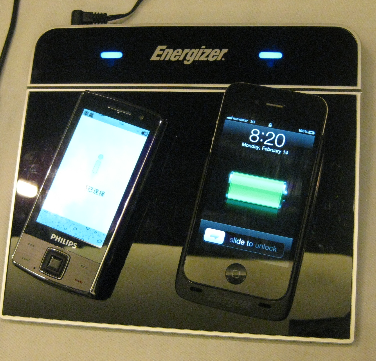
At Mobile World Congress Fulton Innovation was showing off its wireless power technology called eCoupled. We are accustomed to the idea of transmitting data wirelessly, but less familiar with wireless power. It is possible though, and I saw several examples. One of the most striking but least useful is this cereal box, printed with conductive ink, which lights up when placed on a special shelf – the inset image shows the same packet before the title lit up.

image

The technology has plenty of potential though. I travelled to Barcelona with a case full of chargers, and the idea of simply placing them on a charging shelf instead is compelling; this is already possible and I saw several examples. The Wireless Power Consortium has created a wireless power standard called Qi:

It will be no surprise to see Qi stations in the office, hotels, airports, railway stations as part of the normal infrastructure that offers wireless power charging service

image

On the eCoupled site you can see some other ideas, like kitchen appliances that work simply by being placed on a powered surface:

eCoupled will one day integrate into the walls and surfaces of your home. If you’re watching the big game, the TV won’t need to be plugged in. Power will be delivered wirelessly via the eCoupled-enabled wall. In the kitchen, a multipurpose countertop will allow you to mix, chop, blend and boil all on the same powered surface. There will be no cords to plug in, or outlets to worry about.

The technology allows data transmission as well, so the glowing cereal box can also report when it has passed its sell-by date. Now that might actually serve a purpose.

Motorola Atrix – the future of the laptop?

I took a closer look at the Motorola Atrix on display here at Mobile World Congress. This is a smartphone built on NVidia’s Tegra 2 dual-core chipset. I’m interested in the concept as much as the device. Instead of carrying a laptop and a smartphone, you use the smartphone alone when out and about, or dock to a laptop-like screen and keyboard when at a desk. The dock has its own 36Wh battery so you are not tied to mains power.

image

image

image

The Atrix has a few extra tricks as well. HDMI out enables HD video. An audio dock converts it to a decent portable music player.

image

The smartphone also morphs into a controller if you use Motorola’s alternative dock, designed for fully external keyboard and screen.

image

It is a compelling concept, though there is a little awkwardness in the way Motorola has implemented it. The Atrix has two graphical shells installed. One is Android. The other is a an alternative Linux shell which Motorola calls Webtop. While you can freely download apps to Android, the Webtop has just a few applications pre-installed by Motorola, and with no official way to add further applications. One of them is Firefox, so you can browse the web using a full-size browser.

The disconnect between Android and Webtop is mitigated by the ability to run Android within Webtop, either in its own smartphone-sized window, or full screen.

Personally I prefer the idea of running Android full screen, even though it is not designed for a laptop-sized screen, as I do not like the idea of having two separate sets of apps. That seems to miss the point of having a single device. On the other hand, Webtop does enable non-Android apps to run on Atrix, so I can see the value it adds.

Leaving that aside, I do think this is a great idea and one that I expect to become important. After all, if you do not think  Tegra 2 is quite powerful enough, you could wait for some future version built on the quad-core Tegra 3 (name not yet confirmed), which NVidia says is five times faster, and which may turn up in Smartphones late in 2011.

Qualcomm: optimising for Windows Phone took years not months

I had a chat with Qualcomm’s Raj Talluri here at Mobile World Congress in Barcelona. Of course I asked about the Nokia-Microsoft deal and the implications for Qualcomm. Currently Microsoft specify Qualcomm’s Snapdragon as the required chipset for Windows Phone 7 devices: good for Qualcomm, not so good for Microsoft since it means competing system-on-a-chip vendors like TI and NVidia are putting all their efforts into Android or other mobile operating systems.

“We are extremely pleased and we are very optimistic that it will bring us additional business.” said Talluri about the Nokia-Microsoft alliance. That said, might Nokia in fact choose a competing chipset for its Windows Phone devices?

It might; but the issue here is the work involved in optimising the hardware and drivers for the OS:

If you look at Windows Phone, there’s a lot of custom work we did with Microsoft that makes Windows Phone 7 really shine on Snapdragon … the amount of time we spent in getting those things optimized, it’s been a multi-year effort for us.

If you put this together with Nokia’s announced intention to ship Windows Phone devices this year, it is hard to see how it could use a chipset other than Snapdragon.

That said, those other vendors might not agree that it would take years. When I asked about this, NVidia gave me the impression that it could do the work in a few months, if there was a business case for it.

Still, it is not a trivial matter, and adds potential for delay. I think we should expect Nokia’s first Windows phones to run Qualcomm chipsets.

If the Windows Phone ecosystem builds as Nokia hopes, other chipset vendors may get involved. Then again, what are Microsoft’s plans for the Windows Phone OS long-term? Might the underlying Windows CE OS get scrapped in favour of something coming out of the Windows on Arm project? Silverlight and XNA apps should port across easily.

That is a matter for speculation, but the possibility may deter other mobile chipset manufacturers from heavy investment in Windows Phone support.

NVidia: first mobile quad-core devices will be this year

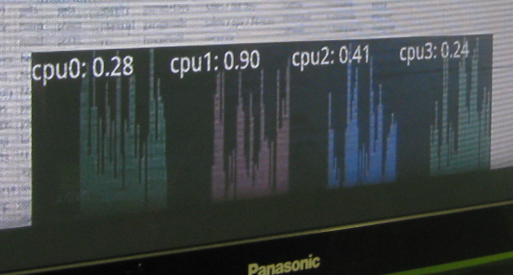
Qualcomm was first to announce a quad-core mobile chipset here at Mobile World Congress in Barcelona – the Snapdragon APQ8064 – but NVidia says it will be first to market, with its quad-core successor to Tegra 2, code-named Kal-El. NVidia expects a Kal-El Android tablet to ship in August 2011, with smartphones to follow in the autumn. Qualcomm on the other hand says that samples of the APQ8064 are anticipated to be available in early 2012, implying that products will come later next year.

Kal-El is the successor to Tegra 2, and said to be 5 times faster. It also includes a 12-core GPU and supports HD video up to 12560×1600 – amazing for a low-power mobile chipset.

image

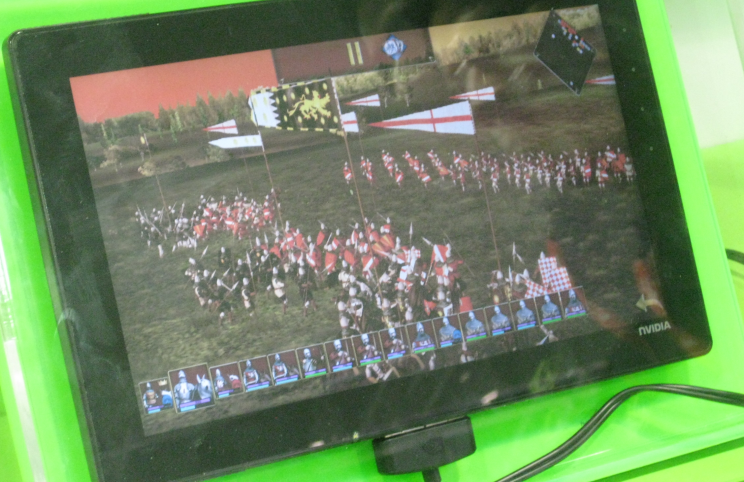
A prototype is running on NVidia’s stand here and while my snap does not show the quality, you will have to take my word that the graphics looked excellent.

image