Category Archives: google

Windows Phone 8 will run Windows 8, with Silverlight centre stage?

More information on Windows 8 is leaking out now; and it gives some clues about how Microsoft intends to make sense of its two device platforms, Windows tablets and Windows Phone.

Microsoft held back from making its Windows Phone 7 OS available on tablets, which is why most of the numerous tablets being pushed out to compete with Apple run Google Android, and a few of them Windows 7 with its excessive power requirements and a user interface poorly designed for touch control.

Now the strong rumour is that Windows 8 supports two user interfaces, one that is tile-based like Windows Phone 7, and another that is designed for PCs.

In other words, rather than continuing with the Windows Phone 7 OS which is built on Windows CE, Microsoft will build a new version of the Windows Phone 7 UI on top of full Windows.

My further assumption is that Silverlight apps will still run on the new OS, providing continuity with Windows Phone 7 which uses Silverlight or XNA, both based on .NET, for its application platform.

Silverlight might also be used as the platform for apps delivered by the new Windows app store. This is Paul Thurrott, though reported as rumour:

Windows 8 will also include a new app model codenamed Jupiter that will target a new Windows Marketplace app store. The app store will provide access to new, Silverlight based "immersive" applications that are deployed as AppX packages (.appx). The Windows and Office teams are betting very heavily on this new app type, according to my source, and development has already begun using a beta version of Visual Studio 2012. These apps can be written in C#, Visual Basic, and even C++.

We do know that Silverlight 5 supports full platform invoke of native code, a feature which tends to support the idea that it is becoming a key runtime for Windows.

Let me speculate a little further. Imagine you are Adobe, for example, which has said it will deliver the Flash runtime for Windows Phone. Although it competes with Silverlight to some extent, Microsoft needs to tick the Flash box for Windows Phone. But why would Adobe want to invest in Flash for Windows CE, when this OS is not going to be used for Windows Phone 8 and it will have to write new code? I will not be surprised if we hear that Flash is now not coming until Windows Phone 8.

Even within Microsoft itself, I would guess that investment is focused on the next generation rather than the one that is destined to be short-lived.

One partner that is no doubt close to Microsoft’s plans is Nokia. If the above is correct, then Nokia is buying into the Windows OS, not the Windows Phone OS. Will Nokia wait for Windows Phone 8 before launching devices on the platform? I have no idea – and delay will be costly – but I imagine its main plans will be focused on Windows Phone 8 and the possibility of tablet as well as smartphone devices.

The immediate conclusions would be:

  • Silverlight is safe as a development platform, but only for Windows. See also Silverlight the new Windows runtime, HTML 5 the new Silverlight?
  • The Windows Phone 7 OS will be short-lived but the new UI should be a natural progression from what we have now, and apps should still run, so Microsoft can position Windows Phone 8 to users as a new version of Windows Phone rather than a change of direction.
  • Microsoft will not have a coherent mobile and tablet platform until Windows 8 ships sometime in 2012. Google, Apple, RIM, HP, all have plenty of time to establish their competing platforms.
Appcelerator CEO on Titanium, Aptana and the future of mobile development

I met with Aptana CEO and co-founder Jeff Haynie at the Mobile World Congress in Barcelona last month.

Appcelerator’s main product is Titanium, an SDK which takes HTML and JavaScript source files and compiles them to native apps for several platforms, including Windows Mac and Linux on the desktop, and Google Android or Apple iOS for mobile. RIM Blackberry support is in preview. Appcelerator has recently acquired the Aptana IDE for HTML, JavaScript, CSS, Ruby on Rails, Python and Adobe AIR. The company has also partnered with Engine Yard for cloud-hosted Ruby on Rails applications to deliver web services to clients built with Titanium.

Haynie says that mobile is currently a three-horse race between Apple iOS, Google Android, and RIM Blackberry; but he expects further diversification. Microsoft Windows Phone is under consideration, and he says that cross-compiling to Silverlight would be possible for Titanium:

It’s a .NET SDK, we would have to build a translation into Silverlight. That’s how we do it for iOS, we translate code into Objective C. We don’t think it’s technically insurmountable.

I asked about the Appcelerator Freemium business model. Titanium is open source and you can download and use the SDK commercially for free. Haynie says it works well because companies can do a full evaluation and get to understand the value of the software fully before deciding whether to purchase. However he emphasised that larger companies, other than non-profits, are expected to take out a paid subscription.

This point could do with clarification. Indeed, the Appcelerator Plans and Pricing page shows Titanium Indie which is free but for companies of less then 25 employees, and other editions which are paid-for. But as far as I can tell there are no restrictions on the SDK. See the FAQ which says:

Can I use Titanium for a commercial application?

Yes. You can use Titanium in both a personal and commercial application regardless of what your license or price is.

What is your License?

The Titanium SDK is licensed under the Apache Public License (version 2).

I also took the opportunity to ask about Adobe AIR support in Aptana. It strikes me that this is under threat following the acquisition, since AIR competes with Titanium. Haynie was just a little evasive, but at the same time impressed me with his attitude:

Obviously we have a competitive platform from Adobe AIR. But we want developers to have the best choice, the best tools possible. So competitively we need to build the best product. If AIR is a better product and people want to use Aptana to build AIR apps, then fine. That means we need to continue to work to make a better runtime for the desktop.

Nevertheless, Haynie implied that AIR support will only continue if Adobe supports it; I am not sure what support means in this context but I think it includes a financial contribution:

We’re with Adobe on trying to figure out where we go from here … we have to spend a lot of money to support that, so we’re making sure that we’ve got Adobe’s support behind that.

I am not sure what Adobe gains from Aptana support, given that it has its own Eclipse-based IDE called Flash Builder, so I would not bet on there being significant updates to the current AIR 1.5 plug-in.

Finally, Haynie emphasised what to me are familiar themes in talking about the direction for Titanium and Aptana. Cross-platform visual design tools; designer and developer workflow; and integration in a single IDE of rich client and cloud back-end. This integration has long struck me as one of the best things about Microsoft’s Visual Studio, so it is interesting to see the theme reappear in a cross-platform context.

What I enjoyed about the interview is the way Haynie communicates the huge change and volatility that has arrived within the software development world, thanks to the impact of cloud and mobile. Times of change mean new opportunities and new products. Titanium has plenty of competition, but if Appcelerator is able to deliver a robust, cloud to device, cross-platform toolkit, then it will have a bright future.

I have posted a transcript of most of the interview.

Browser wars heat up as Firefox 4 arrives

Just one week after the final release of Microsoft’s Internet Explorer 9, and here comes another major browser, Mozilla Firefox 4.

What’s new in Firefox? Performance, for one thing. There is a new JavaScript engine called JägerMonkey which is more effective than the old TraceMonkey – though TraceMonkey is still there – and there is hardware-accelerated graphics on Windows Vista and Windows 7 using Direct2D, and on Windows and Mac Direct3D or OpenGL are used to speed page composition.

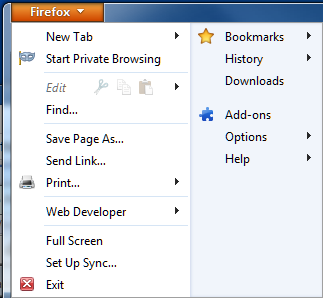
On the appearance side, Mozilla has streamlined the user interface with tabs above the address bar, sorry Awesome Bar, and reduced the number of buttons. By default there are no menus visible, and you are meant to use the Firefox button at top left:

image

I was disconcerted not to find the Tools menu here and one of the first things I did was to show the menu bar, though it does spoil the new UI design.

Firefox is also coming to Android and Maemo devices, and a great feature called Sync will synchronize bookmarks, tabs, passwords and history across all the devices you use.

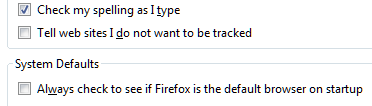
There is also a new privacy feature called Do not track. This is a way of telling websites that you do not wish to be tracked. Tracking is used by web advertisers to send ads based on your browsing history as seen by that advertiser. Since many websites have scripts served by the same ad agency, this can be considerable. The feature does not block tracking, but only requests not to be tracked. It is off by default and buried in Advanced options, so will probably not be very effective.

image

Firefox is an excellent browser, with many more features than I have mentioned above. A few observations though.

The new features in Firefox 4 echo many of the few features in Internet Explorer 9, which in turn echoes some of the themes in Chrome. However on my system IE9 seems to be a little faster than Firefox 4, the user interface is more polished in my opinion, and the tracking protection in IE9 is more effective since it does actually block tracking.

Then again, there are Firefox add-ons that also block tracking; and in general Firefox seems to have the best range of available add-ons, which could well be the deciding factor for many users.

Firefox 4 still has a separate search box, and in principle I like this. I find it annoying that IE9 and Chrome intermingle searches and URLs in one box. I suspect though that I am in a minority of users. If you switch between browsers, you can find yourself typing searches in the Awesome Bar anyway, though habit, so I am guessing Mozilla will cave in and combine them eventually.

Mozilla is a non-profit organisation with a strong open source and community ethos and that also may be enough reason to use Firefox.

It does face intense competition now though, and it must be a concern that its income comes largely from:

search functionality included in our Firefox product through all major search partners including Google, Yahoo, Yandex, Amazon, Ebay and others.

which in practice is mostly from Google, which has a competing browser.

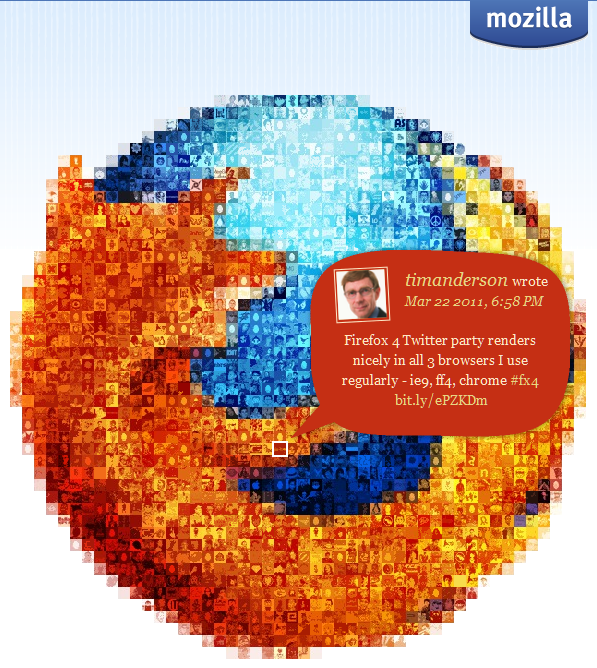
Personally I think Mozilla will struggle to maintain market share for Firefox; though version 4 is having a good launch complete with a delightful Twitter party

image

and a pretty download stats counter which is currently on 2.75 million and climbing fast.

image

Adobe AIR 2.6, MonoMac 1.0, cross-platform is not dead yet

It is a busy time for cross-platform toolkits. Adobe has released AIR 2.6, and reading the list of what’s new you would think it was mainly for mobile, since the notes focus on new features for Apple iOS, though AIR is also a runtime for Windows, Linux and desktop Mac. New features for iOS include GPU rendering – a form of hardware accelerated graphics – access to the camera, microphone, and camera roll, and embedded Webkit for apps that use web content. On Google Android, you can now debug on devices connected via USB.

There is also a new feature called “owned native windows” which lets you have a group of windows that remain together in the Z order – this lets you have things like floating toolbars without odd results where toolbars get hidden underneath other applications.

Asynchronous decoding of bitmaps is another new feature, allowing images to be processed in the background. This seems like a stopgap solution to overcome the lack of mullti-threading in AIR, but useful nonetheless.

Since the Flash runtime does not run on iOS, Adobe has a packager that compiles an AIR application into a native app. This is now called the AIR Developer Tool or ADT. You can use the ADT to target Windows, Linux or Android as well; however platforms other than iOS still need the AIR runtime installed.

Adobe is dropping support for the original iPhone and the iPhone 3G. iPhone 3GS or higher is needed.

If you want to build a cross-platform app but prefer .NET to Adobe’s Flash and ActionScript, the Mono folk have what you need. I’d guess that the Mono team has a small fraction of the resources of Adobe; but nevertheless it has delivered MonoTouch for iOS and is working on MonoDroid for Android. Just completed in its 1.0 version is MonoMac, for building Cocoa applications on Apple OSX. Mono is not fully cross-platform, since the GUI framework is different on the various platforms, but you do get to use C# throughout.

I am happy to agree that true native code is usually a better solution for any one platform; but at a time when the number of viable platforms is increasing the attraction of cross-platform has never been greater.

The future of Google Apps: social features, high performance spreadsheets, working offline

Yesterday I spoke to Google’s Global Product Management Director for Google Enterprise (whew!) Matthew Glotzbach, at a press briefing for Google Apps which included the announcement of Google Docs Discussions, as covered here.

image_thumb

One of the issues discussed in the briefing was Cloud Connect, which I reported on here. Cloud Connect automatically copies and synchronises Microsoft Office documents with Google’s cloud storage. There are some performance and usability issues, but the biggest problem is that you cannot edit the documents in the browser; or rather, if you do, Google makes a second copy leading to versioning issues.

Google says this is a file format issue. The online Google Docs applications cannot edit documents in Microsoft Office formats – “the document models are completely different” says Glotzbach – though it can import and export those formats. Could Google develop the ability to edit Office documents online? “It is a technical challenge, something we haven’t built yet,” he added.

It is an interesting point. Microsoft’s Office Web Apps have flaws, but they do let you maintain the same document whether edited in the browser or in the Office desktop applications. It is an example of friction if you try to live partly in Microsoft Office, and partly in Google’s cloud. It may be better to stick with one or the other.

What about offline capability, something I hear a lot as counting against Google Docs. Google had a solution for this based on its Gears add-on, but then withdrew it.

We are actively working on offline. It is extremely important. Gears was a precursor. A lot of the ideas embedded in Gears have become part of HTML5.

says Glotzbach. I asked whether this will extend to the Chrome OS netbook operating system, and he said that it will:

Chrome, as the most modern browser based on HTML 5, has the capabilities built into its core. Chrome OS as a derivative of that has those offline capabilities baked into it, so it is a matter of having applications take advantage of that.

We also talked about the new discussions feature. I observed that it seems to be just one part of a bigger story. What about discussions spanning multiple documents? What about discussions without documents? Is there any way of doing that?

“Yes, email,” he said, chuckling. Clearly Google has taken to heart that email remains the de facto mechanism for most corporate collaboration. “We’ve also got Google groups. Obviously the manifestation of a group for many users is email, that’s how they interact with it, but there is also a destination site or page for that group.”

Might Google develop its own equivalent to Salesforce.com Chatter, for Twitter-like enterprise messaging?

The idea of eventually being able to pull in other streams, the idea of social media inside the enterprise Is a powerful idea. I think Chatter is a good example of that, and others such as Yammer. I think those ideas will likely find their way into businesses. It is not clear to me that social will be a destination within an Enterprise. Rather I see it as, features will emerge in various products that leverage those social capabilities. Discussions is influenced heavily by a lot of those social media ideas, and so you can see that evolving into more integrated social capabilities across the app suite.

What about Google spreadsheets, which seem great for simple tasks and collaboration, but suffer performance and scalability issues when used with large data collections that work fine in Excel?

There’s always work to do. We have today some limitations in terms of spreadsheet size. Those are things we are actively working on. With browser technologies I actually think we have an advantage over desktop applications. If I told you I had a spreadsheet that had 5 million columns and a billion rows, there’s no desktop spreadsheet in the world that can handle that kind of volume, but because we have in essence supercomputers on the back end processing that, what you display is just a window of that large data. So we’re using clever technologies like pre-fetching the rows and columns that are just off the edge of the page, similar to some of the technologies we use with Google Maps.

But it’s an example where we have some artificial limitations that we are working to remove. Imagine doing really sophisticated non-linear calculations in a spreadsheet. We’ve got a supercomputer on the back end that can do that for you in seconds.

Google opens up discussions on docs

I attended a briefing today on Google Apps. Google is celebrating over 1 million business customers in EMEA (Europe, Middle East and Africa) since the launch of Google Apps just over 4 years ago, and over 3 million worldwide. An unknown proportion of those customers are small businesses using the free edition; but there are some well-known names which have signed up, including Rentokil Initial, Virgin America, Motorola, The Guardian, The Telegraph, and Jaguar Landrover.

The big announcement today is called Discussions in Google Docs, and I have had a quick try with a short document that I opened for discussion. One thing I learned is that if you want to allow public discussion on a document, you have to make it world-editable (like a wiki). It should be possible to have the document locked but still enable comments, but I cannot see how to do that; it seems that leaving a comment requires the same rights as editing the document.

Another oddity is that there are two comment panels, a narrow column on the right

image

and a big blue panel that appears if you select Show Discussions from the top menu.

image

If you are logged in, you can request notifications by email and even add comments by replying to email notifications.

image

There is also a per-comment feature mysteriously called Resolve. A resolved comment is semi-deleted; it is removed from the comment stream (narrow panel) but still appears in the full discussion (big blue panel).

My snap judgment is that these comments/discussions will be useful for document collaboration, which is already among the strongest features of Google Apps.

Google on innovation – or should that be copying?

Patrick Copeland, Google Director of Engineering, gave the keynote at QCon London this morning. His theme was innovation: how it works at Google and elsewhere.

I was expecting some background on Google’s famous 20% time, where employees spent up to one day a week on something not in their job description, but I don’t think Copeland even mentioned it. In fact, he almost argued against it. There is no shortage of bright ideas, he said, and Google has over 100,000 of them in a database; but what matters is not idea, but innovators who have the ability to take a good idea and make it into a product.

He added that whatever “it” may be, building the right “it” is more important than building “it” right. If what you build is the wrong thing, it will not succeed, whereas the right idea will sometimes succeed despite poor implementation. Twitter and its well-known fail whale comes to mind.

Google’s record on innovation is mixed. You can make a long list of Google projects that have failed, from Lively – a kind of Second Life clone – to Google Wave. “You want to fast fail when things aren’t working” said Copeland, making the best of it.

On the other hand, Copeland mentioned GMail as a positive example. I would quibble a bit with this: was GMail innovation, or simply Hotmail done right?

Copeland also mentioned two other examples. The Chrome browser, he said, had two goals: to streamline the user interface so less screen space was wasted, and to have a fast JavaScript engine to show off Google apps. He also observed that rival browsers have copied both ideas; and it is true that Microsoft’s Internet Explorer 9, which will be released on March 14, happens to have both these features.

What about Android? Copeland said that the Android strategy vs Apple is similar to that of the clone PCs vs IBM in the eighties. He tried to make a point of innovation here, observing that IBM could not compete with innovation from many independent vendors, but this seems to me a stretch. The point about the clone PCs was that they were kind-of the same as the IBM PC but cheaper and faster. It was more about copying than about innovating. I think you can see this playing out with Apple vs Android to some extent, in that there are customers who will end up with an Android smartphone or tablet because it is kind-of the same as an iPhone or iPad but cheaper or with better specifications.

On the other hand, Apple is doing a better job at differentiation than IBM achieved with its PC; and technically iPhone apps do not run on Android so the parallel is far from exact. Many of the same apps are available for both iPhone and Android, so from user’s perspective there is some similarity.

The quick summary then: most innovations fail, and you need innovators rather than simply bright idea. The implication is that successful innovation happens when you have a company with lots of money to spend on projects that will likely fail, and that has a culture which attracts innovators. Google ticks both boxes.

Incidentally, when I asked how Google identifies its innovators Copeland said that you do not need to. They make a nuisance of themselves, so if you have them, you know.

Mono project: no plans for cross-platform WPF

Miguel de Icaza’s report from the Game Developer Conference is upbeat, rightly so in my view as usage of Mono is continuing to build, not only in game development with Unity, a development tool that uses Mono as its scripting engine, but also for mobile development for Apple’s iOS with Monotouch and for Android with Monodroid. These mobile toolkits also give Mono a stronger business model; many sites use Mono for serving ASP.NET applications on Linux, but without paying or contributing back to the project.

Mono is an open source implementation of C# and Microsoft’s .NET Framework.

That said, it is interesting that Mono is still struggling with an issue that has been a problem since its first days: how to implement Microsoft’s GUI (Graphical User Interface) framework on other platforms. Mono does have Gtk# for Windows, Mac and Linux, but this does not meet the goal of letting developers easily port their Visual Studio client projects to Mono. There is also an implementation of Windows.Forms, but de Icaza mentions that “our Windows.Forms is not actively developed.”

Apparently many tools vendors asked the Mono team at GDC when Windows Presentation Foundation (WPF) would be implemented for Mono. WPF is the current presentation framework for Microsoft.NET, though there is some uncertainty about where Microsoft intends to take it. I remember asking de Icaza about this back in 2003, when the WPF framework was first announced (then called Avalon); he said it was too complex and that he did not plan to implement it.

This is still the case:

We have no plans on building WPF. We just do not have the man power to build an implementation in any reasonable time-frame.

That said, Mono has implemented Silverlight, which is based on WPF, and there are some signs that Microsoft might merge WPF and Silverlight. What would the Mono team do then?

Miguel de Icaza says:

Silverlight runs on a sandbox, so you can not really P/Invoke into native libraries, or host DirectX/Win32 content inside of it.
There are other things missing, like menubar integration and things like that.

Of course, this is no longer true on Windows: Platform Invoke is coming in Silverlight 5.

Perhaps the Mono team will knuckle down and implement Silverlight with desktop integration, which would be good for cross-platform Silverlight and compatibility with Microsoft .NET.

Then again, it seems to me that Mono is increasingly divergent from Microsoft .NET, focusing on implementing C# in places that Microsoft does not touch, such as the mobile platforms from Apple and Google.

That is actually a sign of health; and you can understand why the Mono team may be reluctant to shadow Microsoft’s every move with Silverlight and WPF.

Google fails to protect its mobile platform

The discovery of viruses in apps on Google’s Android Market is troubling. I like the fact that Android is open, and that you can easily install an APK (Android Package) from any source onto your device if you want to. That said, it is reasonable to expect that apps downloaded from the official Android Market will be virus-free, or at least that some attempt has been made to check them for malware.

Another problem which is apparently rampant in the Android market – and also to some extent in Apple’s app store – is app stealing, where someone takes an existing app, copies and re-uploads on their own account. In most cases it seems that the malware was on apps pirated in this manner.

Note that while it took Google less than five minutes to pull the malicious apps from the store, the original developer had apparently been trying for more than a week to get them pulled on copyright violation grounds.

Google takes 30% transaction fee for apps sold in the market. Enough, you would think, to check for malware.

Most seriously for the Android market, the situation for users is that apps on Android Market might be malware, whereas apps on Apple’s App Store are not. That is a big advantage for Apple, and one that you would have thought Google would want to counter.

The only winners here are the anti-virus companies, who will be delighted to inflict their subscriptions on mobile users just as they have on Windows desktops.

Another cloud fail: disappearing Google accounts

Every time a story like this runs it sets back cloud computing. Many users of Google Mail reported yesterday a problem with missing email:

I was on my eMail normally and when I refreshed all my account settings, eMail, labels, contacts etc has just disappeared.

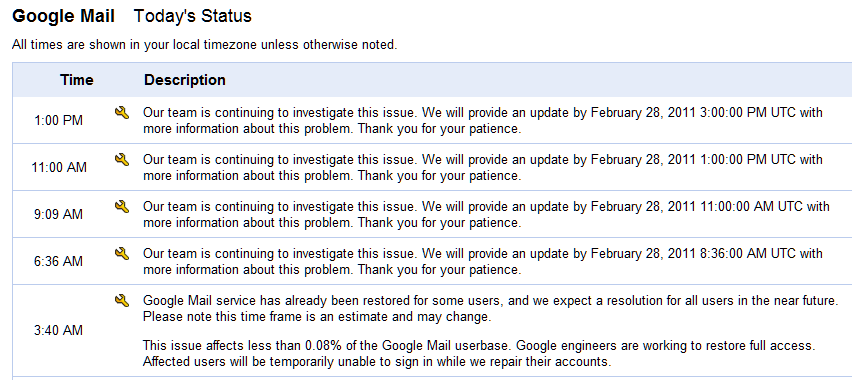
Google’s App Status Dashboard has a series of updates:

image

It does say that the issue affects “less than 0.08% of the Google Mail userbase”. While that does not sound much, if Google Mail has 150 million users that would be 120,000 people. Of those accounts, only a proportion will be critical as some of us use Gmail only casually; but some people are severely inconvenienced:

This really is wildly inconvenient and worrisome, though. I rely on my Gmail an enormous amount for my job, and not having access to it is really crippling me. I can’t even do my work at this point, because all the material I need is in attachments on Gmail, so all I can do is wait until I (hopefully) get it back! I suppose I should have saved my files to my computer, but hindsight is 20/20.

Google is indicating that it will restore the data soon though it is all rather vague.

Of course there are also failed Exchange Servers and the like out there; sometimes backups fail too and data is lost. Cloud providers like Google do tend to lack transparency though, making times like this anxious ones for those who are affected.

The real lesson: if you have data you really care about, keep it in more than one place.