Category Archives: microsoft

What next for Windows as Microsoft announces Build 2014?

Microsoft has announced Build 2014, its premier developer conference for Windows, April 2-4 in San Francisco.

image

In his blog post on the subject, developer evangelist Steve Guggenheimer mentions the Windows 8 app platform and Xbox One, and promises that Microsoft will talk about “what’s next for Windows, Windows Phone, Windows Azure, Windows Server, Visual Studio and much more.”

How is the buzz around Microsoft right now? Here are a few things that are not so good:

  • The Windows 8 app platform continues to struggle, despite picking up slightly from its dismal launch. Most of the conversation I hear around Windows 8 looks back to Windows 7 rather than forward to the new tablet platform: will the Start menu return?
  • The decline of the PC remains in full flow, while the non-Windows mobile platforms iOS and Android continue to grow
  • Xbox One, with its focus on Kinect and family entertainment, is falling behind Sony’s PlayStation 4 in terms of which console is most desired. Sony’s cheaper price and higher resolution on games like Call of Duty Ghosts make it a better for buy for gamers who can live without Kinect

On the other hand, a few positives:

  • Microsoft’s cloud platforms Office 365 and Windows Azure are growing fast, as far as I can tell
  • Server 2012 R2 is a solid upgrade to an already strong server product, and Hyper-V is making progress versus VMWare in virtualisation
  • Windows Phone 8 is making some progress in market share, though whether it will cross the point at which it becomes important enough for companies with apps to feel they have to support it remains an open question (currently they mostly do not)

What does that mean for Build? We may of course just see more of the same: improvements to Windows 8.x, further convergence with Windows Phone and Xbox platforms, new features for Windows Server and Azure, early previews of the next Visual Studio to support the new stuff.

I wonder though whether we may also see some new directions. Microsoft is supporting Xamarin for cross-platform mobile development and it would not surprise me to see more being made of this, or possibly some new approaches, to promote the use of Microsoft’s cloud services behind apps that run on iOS and Android.

Microsoft still intends for Windows 8/Windows Phone to be a major mobile platform alongside iOS and Android but its progress in reaching that point is slow. The task of building its cloud platform seems to be going better, despite competition from the likes of Amazon and Google, and in this context deep integration with the Windows client could be as much a liability as an advantage.

It may seem perverse; but it could pay Microsoft to focus on improving how well its server offerings (and Office) work with iOS and Android, rather than pushing for Windows everywhere as it has done in the past.

Google Compute Engine: good enough to take on Amazon?

A week ago, Google make its Compute Engine generally available. The service offers virtual machine instances as a cloud service, at prices from $0.114 per hour for a single-core VM with 3.75 GB RAM. In addition, you pay for outgoing network traffic and persistent storage. Reflecting the shortage of IP addresses, a static IP costs $0.01 per hour – but only if it is not in use. Linux is the only available operating system.

The service seems similar to Amazon’s Elastic Compute Cloud (EC2), but there are a couple of reasons why Google has the potential to take on Amazon. One is that it has the scale: just as Amazon, prior to the launch of EC2, had datacenters already in place to run its ecommerce business, Google has them to run its search and advertising business, as well as services like the Android Play Store, Google Mail, Docs and other cloud services.

Second, Google can afford Amazon-like commodity pricing. It could even afford to lose money on cloud hosting for an extended period, thanks to its dominance in web advertising, if it needed to do so in order to win market share (though I am not suggesting that it is in that position).

Why though would anyone use Google rather than Amazon? A post on Quora highlights some of the reasons, including sub-hour billing, live migration of VMs (no downtime), persistent disks that can be mounted read-only by multiple VMs, more integrated virtual networking, and better network throughput. This last point is interesting: the suggestion is that Google can use its own private connections between datacenters, where Amazon is more dependent on the public internet.

Amazon also has advantages, including a larger portfolio of cloud computing infrastructure services thanks to its greater maturity. Unlike Google Compute Engine, Amazon supports Windows VMs, for example.

Some large customers will want to spread VMs across multiple cloud providers for resilience, and it will not surprise me if Amazon plus Google becomes a popular combination.

Will Microsoft scrap Windows RT? Here’s why it might not matter

At the UBS Global Technology Conference (aimed at investors, since UBS is an investment bank), Windows Executive Vice President Julie Larson-Green was interviewed about the future of Windows, and Microsoft has helpfully posted the audio and full transcript.

Larson-Green was asked about the viability of the “dual track” for Windows, or put another way, does Windows RT have a future?

I will interject an anecdote here. A neighbour came to me this weekend with a Windows XP laptop. Internet Explorer 8 no longer worked, and as no other web browser was installed, she could no longer get to the web on that machine. Microsoft has advice on reinstalling IE8; you re-run setup. We downloaded the setup from another machine and re-ran setup. It made no difference.

The only clue was an icon in the notification area for secure search. What was it? My neighbour did not know. She mentioned that she had been offered a free backup service and had started installing it. The service informed her that her backup was too large and she would have to pay. She thought she had cancelled and uninstalled it successfully, but maybe this toolbar, which redirects all searches to conduit.com, came along for the ride. Removing the toolbar from add/remove programs brought IE 8 back to life; if she is lucky, that will be end of the incident, if not, there could be other surprises.

It is just hopeless; and although later versions of Windows have improved security, users ultimately have full control of their machines and therefore the ability (with the help of unscrupulous third parties) to break them.

Now listen to Larson-Green’s description of Windows RT, evidence that Microsoft understands these issues very well:

Windows on ARM, or Windows RT, was our first go at creating that more closed, turnkey experience, where it doesn’t have all the flexibility of Windows, but it has the power of Office and then all the new style applications. So you could give it to your kid and he’s not going to load it up with a bunch of toolbars accidentally out of Internet Explorer and then come to you later and say, why am I getting all these pop-ups. It just isn’t capable of doing that by design.

That said, in its first year on the market Windows RT has largely failed. OEMs like Lenovo and Dell, who produced Windows RT tablets last year, have abandoned it. Microsoft is now the only Windows RT vendor, with Surface RT and Surface 2, other than Nokia with the Lumia 2520 – wait, that’s Microsoft too, following the Nokia acquisition.

Why has RT failed? Performance is an issue on most first generation devices (solved on Surface 2), users have been infuriated and/or flummoxed by the inability to install desktop applications, and even those (like myself) who understand and like the Windows RT concept run into functionality gaps, where there is no suitable Windows Store app and nothing built into the desktop that will do.

Nevertheless, something like Windows RT is necessary if Windows is to survive as a mainstream client operating system. What are Microsoft’s plans?

We have the Windows Phone OS. We have Windows RT and we have full Windows. We’re not going to have three. We do think there’s a world where there is a more mobile operating system that doesn’t have the risks to battery life, or the risks to security. But, it also comes at the cost of flexibility. So we believe in that vision and that direction and we’re continuing down that path.

You can read this as saying that Windows RT will be scrapped, to be replaced by Windows Phone OS adapted for larger form factors (which is what some of us thought Microsoft should have done three years ago). Some have drawn that conclusion, even in the mainstream press. However, this is not what Larson-Green said. Rather, she confirmed what has been strongly hinted for some time, that Windows Phone and Windows RT will converge. In fact, the company has already said that there will be a single development platform for Windows Store / Phone apps at some future date. Note that Windows Phone 8 is no longer built on Windows CE, the cut-down version of Windows, but uses the full Windows kernel, so some convergence has already taken place.

There are rumours of a battle within Microsoft: should Windows Phone adopt Windows RT, or vice versa? Windows Phone is increasing its market share, whereas Windows RT struggles, so from a marketing perspective the phone may be the winner here, though from a technical perspective it might be better to adapt Windows RT for the phone so that desktop Office remains possible on future devices.

If Microsoft gets this right, it will not matter to end users which way it goes. Here is what makes sense to me. Microsoft should converge the development platforms for Windows Phone and Windows Store apps so that both types of apps run on both platforms (though developers should be able to specify a minimum display size to avoid issues with apps designed for a larger screen), and a single project in Visual Studio should be able to target both platforms.

The most interesting question is the future of the desktop on Windows ARM tablets. I love having the desktop on Surface RT and Surface 2, because it greatly increases the utility of the devices; my perspective is that it’s great to have the Windows desktop and Office on a locked-down device, rather than lamenting the inability to install new desktop applications. However, it is a compromise that needs keyboard and trackpad or mouse for optimum operation, and means that Windows RT devices suffer from the same dual personality issues as full Windows 8.

If Microsoft managed to implement a decent version of Office as a Windows Store app, could we live without the desktop? Maybe, though I doubt it will be easy to match the full Windows version of Office (even without VBA) in the Windows Runtime environment.

Microsoft cloud account problems

I am working extensively with Visual Studio 2013, Office 365 and Windows Azure, researching cloud development on Microsoft’s platform. It is in general a reasonable experience, but the way Microsoft manages its cloud accounts is a constant annoyance and sometimes a source of bugs.

The problem is that you cannot manage with just one Microsoft cloud account. I have an MSDN subscription which is a Microsoft account, and an Office 365 subscription for which I log in with an Organizational account, for example. Microsoft accounts are for accounts with Microsoft itself, while Organizational accounts are controlled by my business. The distinction makes some sense, but Internet Explorer does not cope all that well when you are using both, which for development seems unavoidable.

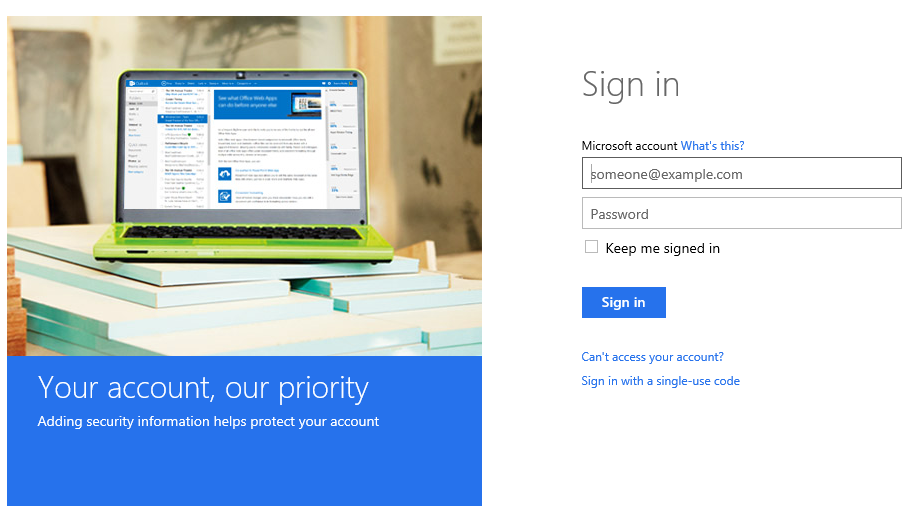
Right now, for example, I have encountered a bug. I want to log in to Office 365, so I browse to http://portal.microsoftonline.com. However, this is redirecting automatically to login.live.com (it should not do this), which is a Microsoft account. So I get this screen:

image

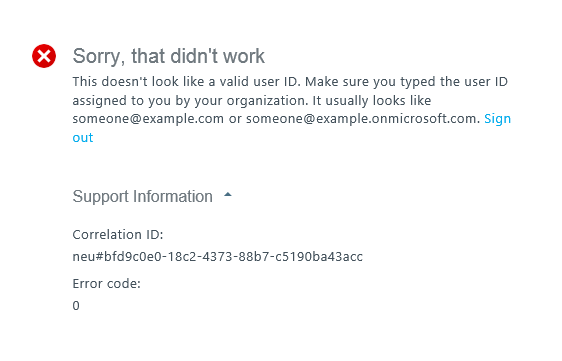
This is for a Microsoft account, which will not work with Office 365. If I now present Organizational account credentials, it says the account is not recognized. If I present valid Microsoft account credentials, I get an error. “Sorry, that didn’t work”.

image

Agreed – but if I now click Sign out, I bounce back to the very same screen. In other words, I cannot sign out.

I have also seen the scenario where you cannot sign out of Office 365. You choose Sign out, Internet Explorer thinks for a moment, then logs you back in automatically. This may be a consequence of checking the mysterious “Keep me signed in” option when logging into Office 365. This should only keep you signed in until you specifically log out, but it can fail in both directions, asking you to sign in again later, or failing to sign you out. “Keep me signed in” is actually required for some features to work properly, such as Open in Explorer (or WebDav) in SharePoint online.

The inability to sign out is a security issue, since you may need to leave your machine, think you have signed out, and find someone else can access your account; though I suppose you can lock your Windows account to overcome this.

It can also be a practical problem. As a developer, you might want to log in with an Office 365 administrator account to configure a new app, and then with a non-administrator account to test. You need to be able to switch accounts for this purpose. It might be better to use a virtual machine for one of the two accounts.

I am not sure what the fix is, though it usually starts working again eventually. As ever, rebooting Windows may well help. Microsoft has a problems when signing out article which hints at some of these problems; it suggests that you to a couple of special logout urls to log out from an organizational account and logout from a Microsoft account but this does not always work. It also suggests clearing all cookies, which is a nuisance because then have to log back in to all your internet accounts, but even this can fail in my experience. Using another browser is a partial workaround. I do not know if you can get this problem in other browsers.

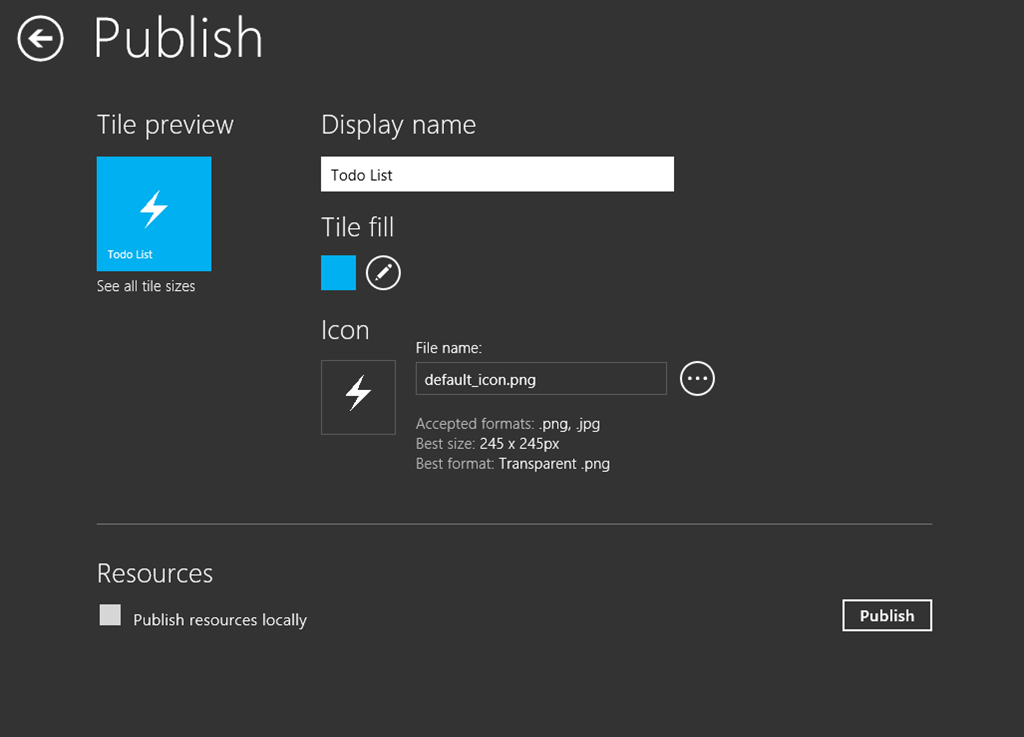
Visual Studio can also get confused. Imagine you are developing an Office 365 application hosted on Azure. You might have a Microsoft account for Azure along with the Organizational account for Office 365. You proceed through a publish wizard which needs both sets of credentials, and you are likely to get an error in my experience.

I can understand that this stuff is complex to get right, but from the user’s perspective logging in and logging out is basic functionality and something Microsoft should get right.rrrrrrrrr

Salesforce 1 and the cloud platform wars

Salesforce has announced Salesforce 1, but what it is? Something new, or the same old stuff repackaged?

image

Even if it is something new, the ingredients are familiar. Salesforce 1, I have been told,  is a new brand over the Salesforce platform, though it does not replace individual components like Force.com or Heroku.

At heart, Salesforce is a multi-tenant cloud database and web services API, designed originally for CRM but easily adapted for other purposes, and easily extended by third-party partners with their own apps. If you review the components of Salesforce 1 you will find the same core platform and services as before.

If you want a quick overview of what makes up Salesforce 1, I recommend this list of platform services, including quick app development using browser-based tools, Heroku for code-centric development using Ruby, Java, Node.js or Python, web site development with site.com, a mobile SDK for iOS, Android or HTML5,  role-based user access management, private app portal, translation services, custom databases, social and collaboration services, reporting and analytics.

There is a new Salesforce 1 mobile app announced which you can customize. It only runs on iOS or Android; no support for Windows Phone.   

The Salesforce 1 proposition is that user identities are managed in the Salesforce database and that you build your cloud applications around them. Therefore the minimal Salesforce 1 product is One Enterprise App, at $25 per user/month, which gives you identity services (and a few others) and the app platform.

I would imagine that most Salesforce 1 customers will also use other Salesforce 1 products such as CRM or the Service Cloud. CRM, for example, runs from $5.00 per user/month for contact management to $300 per user/month for the Performance Edition, including the Service Cloud, workflow approval and unlimited custom apps. There is feature overlap between the various Salesforce products which may explain why the company encourages you to ask for a custom quote.

My immediate reflection on the Salesforce 1 announcement is that it is a cloud platform play. If you agree that the future of business IT is in cloud and mobile, then it follows that the future competitive landscape will be largely formed around the companies that offer cloud platforms. Large scale tends to win in the cloud, so for better or worse only a few companies will be able to compete effectively. Hence the cloud platform wars.

In this context, Amazon is strong on the app platform and cloud infrastructure side, but does not offer a complete enterprise platform, though recent announcements seem to me a move in that direction.

Google has immense scale and Android, but its strong focus on advertising and consumers perhaps hold back its enterprise offerings. If you run Android you are already hooked into Google’s identity platform.

Microsoft, perhaps oddly given its vast desktop legacy, seems to me a close competitor to Salesforce. Where Salesforce has CRM, Microsoft has Office 365, and where Salesforce has its own identity platform, Microsoft has Azure Active Directory. Apps for Office hook into SharePoint and Azure Active Directory in the same way Salesforce 1 apps hook into the Salesforce platform. There is no love between Salesforce and Microsoft, and constant sniping from Microsoft’s Dynamics CRM team. At the same time, there must be many businesses attracted to Office 365 for email and Office, and to Salesforce for CRM, which may lead to some difficult choices down the road. No wonder Salesforce is ignoring Windows Phone.

What does Xamarin’s success say about open source versus proprietary? Miguel de Icaza says he has never been happier

image

Yesterday Xamarin, which offers tools for targeting iOS, Android and Mac with C#, announced a partnership with Microsoft, an announcement which I wrote up on The Register. It drew a few comments, several complaining about the cost:

So it cost more then Visual Studio Pro.

And that is for 1 target platform?

or

Not so useful for little indie developers at those prices.

or

From open source to $999 per developer per year. Monetising Mono seems to have worked, so perhaps PCL being open sourced won’t be such a bargain either.

If you check Xamarin’s pricing you will see that the tools are not cheap for casual users; of course, if you are selling thousands of apps or developing corporate apps at normal rates the tools soon pay for themselves.

Xamarin is doing well as far as I am aware; CEO Nat Friedman told me of rapid growth in the number of customers and I have seen for myself the high interest in the tools at events like Microsoft BUILD earlier this year in San Francisco.

This gives me pause for reflection. What does the success of Xamarin, and the relative lack of success of Mono (the open source C# compiler and .NET Framework on which Xamarin is based) say about how well the open source business model works in the real world?

I was reminded of a conversation I had with Miguel de Icaza, creator of Mono and co-founder of Xamarin, Friedman back in February of this year, when Xamarin 2.0 was launched. I asked de Icaza if the new company publishes the source code for all its products?

“No. Our company does proprietary tools for iOS and Android apps. The entire iOS and Android support is proprietary as well as our commercial Mac support. All those three pieces are proprietary while the IDE and the Mono runtime are open source. Whether the code is open source or not depends on whether it is part of core Mono or core MonoDevelop. Otherwise it tends to end up as proprietary.”

Friedman added: “Mono has a thriving open source community around it, and Xamarin has a thriving community of developers who are building commercial mobile apps. We have 12,000 customers, many of them have never heard of Mono. They came to us because they had a problem to solve, they were C# developers and they wanted to get an iOS or Android app built. We solved that problem and that was worth money to them. The reason we have a business is that Microsoft developers do pay for tools, unlike Web developers for example. It’s been a great market for us. It allows us to invest.”

I asked de Icaza if he gets any grief from the open source community for having proprietary code in his company.

“Actually no. We started doing the proprietary bit at Novell. In fact we’ve been doing proprietary for a long time, even before we were acquired by Novell, at Ximian. We didn’t get a lot of grief from people. I can tell you though that when I was working in the Linux world, they were very stressful days for me, because people constantly complain about a “secret conspiracy” and that thing just went out of control. There are some advocates in the Linux world that don’t like anything that has the label Microsoft on.

“Ever since we did Xamarin which meant we focused on Mac and Windows, all that stress is gone, I don’t think I have ever been happier. In the past I was enduring this constant barrage of senseless attacks, and now I never hear about this.

“One thing that happened in the Linux world is that I was very proud of the four or five big apps that were built with Mono. F-spot that we built, Banshee, and a couple of others. Now with Xamarin I can’t keep track of them any more because they are measured in the thousands. There are thousands of very large apps, over a millions lines of code, that people send us. It’s a very different world, it’s just so much larger than all the work we did in Linux days back then.”

Visual Studio goes online, kind-of

Microsoft held its official launch for Visual Studio 2013 today, at an event in New York, although the product itself has been available since mid-October. VP Soma Somasegar nevertheless made some new announcements, in particular the availability in preview of an online Visual Studio editor, codenamed Monaco. “Developers will now be able to edit their sites directly from the web, from any modern browser, on any device,” said Somasegar on his blog.

Monaco is not intended as a replacement for the desktop IDE. Instead, it parallels what Microsoft has done with Office, which is to provide a cut-down online editor for occasional use. Monaco currently targets only web applications running on Azure, Microsoft’s public cloud platform. The technology is not altogether new, since it is built on the same base as “Napa”, the online editor for Office 365 applications.

image

At the launch, Monaco was demonstrated by Erich Gamma, of Design Patterns and Eclipse fame, who says he uses it for real work. He assured us that it is built on web standards and compatible with iOS and Android tablets as well as desktop browsers.

Online editing with Monaco is only one part of what Microsoft now calls Visual Studio Online. The product also includes a hosted version of Team Foundation Server, offering source code control, collaboration tools, and an online build service. These features were already available as part of Team Foundation Service, which is now replaced by Visual Studio Online. If you are happy with the cut-down Visual Studio Express, or already have Visual Studio, then subscription is free for teams of up to five users, with additional users costing $10 per user/month for an introductory period, and rising to $20 per user/month.

Microsoft is also offering Visual Studio Online Professional, which bundling desktop Visual Studio Professional with these online services, for teams of up to 10 users, at $22.50 per user/month rising to $45.00 per user/month. This follows the same model which Adobe adopted for its Creative Cloud, where you get cloud services bundle with tools that run on the desktop.

Pay even more and you can get Visual Studio Online Advanced, which oddly does not include the Professional IDE, but supports unlimited users and has additional reporting and collaboration features, for $30 rising to $60 per user/month.

When does the introductory offer expire? It’s until further notice – 30 days’ notice will be provided before it ends. Confusing.

Somasegar also announced the preview of a new online service called Application Insights. This service analyses and monitors data from .NET or Java applications running on Windows Server or Windows Azure, and .NET applications on Windows Phone 8, reporting on availability, performance and usage.

Another new service is Elastic Load Test (not to be confused with Amazon’s Elastic Compute Cloud), which simulates multiple concurrent users for testing the performance and behaviour of an application under stress. This requires the expensive Visual Studio Ultimate with MSDN subscription, and offers 15,000 virtual user minutes per month, with additional virtual user minutes at $.001 each.

Finally, he announced a partnership with Xamarin to enable development for iOS and Android in C# and Visual Studio, extending the existing Portable Class Libraries so that non-visual code can be shared across different Windows platforms as well as the new mobile target platforms.

I spoke to Xamarin’s Nat Friedman about this and wrote it up on the Register here.

Microsoft’s strategy here is to persuade existing Windows developers, familiar with C#, Visual Studio, and both desktop and ASP.NET applications, to stick with Microsoft’s platform as they migrate towards cloud and mobile. In this context, the heart of Microsoft’s platform is Windows Azure and Office 365, which is why the company can tolerate iOS or Android clients.

The company will also hope that a proliferation of apps which integrate and extend SharePoint online will help drive subscriptions to Office 365.

The latest Visual Studio includes a new Cloud Business App project type, which is an app that sits on Windows Azure and integrates with SharePoint in Office 365. Coding in Visual Studio and deploying to Azure, both for Cloud Business apps and ordinary web applications, is now an easy process, reducing friction for developers deploying to Azure.

More information on Visual Studio Online is here.

Users report SkyDrive issues: sync failures, Microsoft Account problems

SkyDrive, Microsoft’s cloud storage service, is critical to the company’s strategic direction for Windows. It is the means by which content and settings are kept in synch across different Windows machines; or more precisely, user accounts across different Windows machines.

Content in SkyDrive is accessible via any web browser, and there are clients for Windows and for various mobile devices. Office Web Apps are also built-in so you can create and edit documents in the cloud.

In principle it is an excellent service, but since the release of Windows 8.1 a few problems have emerged. Specifically:

Some users report problems synching. Check out this thread which begins with users of the 8.1 preview but continues through to the release. The main issue mentioned is that synchronisation simply fails for some users, but others report duplicate documents created with names like somedoc-mypc.xls and somedoc-mylaptop.xls, where “mypc” and “mylaptop” are the names of computers used with the service. Working out which document is the most current can be tricky.

I have encountered this myself, even on some occasions with a document created and edited solely on one machine. Somehow SkyDrive manages to think there is a conflict.

Another problems is unnecessary network traffic. Here is an example of some of these issues:

My brand new shiny Surface Pro 2 was set to have the documents available offline and everything else online only.  The sync has stalled just like everyone else reports in this thread.  I changed the folder to "online only" and the sync claimed to complete.  I then changed the folder back to "available offline" and it proceeded to redownload thousands of files, finally stalling again with a little more than 200 left.  The Metro app says that the files have completed yet they are still in the pending queue.

Many users express what seems to me a valid complaint, that Windows 8.1 gives you less information and control than was in Windows 8.0.

Some users dislike being tied to a Microsoft account. SkyDrive is a consumer service, and you can only use it with a Microsoft account (MSA) – a descendant of what was once called Passport. In Windows 8 and earlier, which had standalone SkyDrive clients, that was not too bad. You can sign into SkyDrive just as you would into Dropbox or any cloud service. In Windows 8.1 though, SkyDrive is baked into the operating system, which means that you have to sign in centrally to a Microsoft account.

There are several reasons users struggle with this, including privacy concerns, inconvenience if you have more than one SkyDrive account you want to use, and complications when you have a corporate login to a Windows domain as well as SkyDrive:

When I login with my domain account and connect my MSA to it, Skydrive still won’t sync, it keeps creating "Skydrive" folders in the user directory each time it tries to start. I can’t find anything in the logs to help.

If I instead login with the MSA account to the computer it will sync.

SkyDrive is a free service and Microsoft has good reason to encourage users to sign in with one of its accounts, which gives access to the Windows Store, Xbox Music and other services. I can see why users object, but also why Microsoft wants to encourage users to sign in.

It is harder to understand why the service does not work reliably. The impression I get is that this is more to do with the client, especially in Windows 8.1, than with the cloud service; but it is hard to be sure.

How extensive are the problems? Again, it is hard to get firm data. I find it works reasonably well for me, though I get the duplicate file problem as well as regular issues saving Office documents. The notorious Office Upload Center reports a problem and you have to re-open the document in Office and save to resolve it.

Ransomware like CryptoLocker is a game changer in the malware wars – and not in a good way

The rapid spread of CryptoLocker, an example of a malware category known as ransomware, is upping the stakes in the cyber security wars. I think it is a game changer.

Ransomware is malware that steals your data by encrypting it, and then demands a ransom to decrypt it. The latest breed of ransomware uses strong encryption, and the key to decrypt it is only held by the criminals. I have not heard of any successful decryption without paying the ransom.

Why a game changer? The first reason is that the consequences of infection are more severe than was the case with most previous attacks. Previously, your infected machine might send out spam and cause you problems by getting your genuine email blacklisted as well. Or you might have passwords to online accounts stolen, leading to fraudulent transactions where in most cases you can recover the cost from your bank. Or your machine might have to be be wiped and applications reinstalled, which can be expensive if you need professional help as well as inconvenient when you have many applications to reinstall.

Malware like CryptoLocker is different. If the infection succeeds in encrypting data for which you do not have a usable backup, it gives you a difficult decision. Pay up, thus financing the criminals and perhaps making yourself a more attractive future target, or do not pay, and suffer the loss of whatever value that data has to you or your business.

That value may well exceed the ransom amount, which suggests that the rational thing to do in these circumstances is to pay up. That is risky though, not only because of the long-term consequences but also because there is no guarantee that it will work, or that the cost will not escalate. You are dealing with criminals after all.

Some people are paying. For example:

We paid as our client did not have new enough backups of the files. It encrypted 90,000 files in 5 hours, silently and then announced itself.

For reference, we researched this for 15 hours straight before paying and it really was the last resort.

Since this type of attack is highly profitable, it seems likely that we will see increasing frequency and variety of attacks, until the industry figures out the best way to counter the threat.

The best defence, of course, is not to get infected. The second best defence is to have a reliable disconnected backup. In general, data on servers or in the cloud is more likely to be protected, because it is more likely to be backed up or have a file history so you can revert to an earlier version; but bear in mind that malware executes with the same rights as the user, so in principle if you have the rights to modify data then the malware does as well.

Synchronisation services, now popular with applications like Dropbox and SkyDrive, can work against you if your encrypted documents are dutifully encrypted across all your devices.

Here are my immediate questions:

  • What is the most effective way to prevent infection? We are confronted with the failure of anti-virus products to protect effectively against new and rapidly mutating threats.
  • How much safer is a Mac? How much safer is Linux?
  • How much safer is Windows RT (a lot)
  • How much safer is an iOS or Android tablet?
  • What action, if any, should system administrators take now to protect their users?
  • What will Microsoft do to protect its users?

It would not surprise me if this kind of threat drives the industry more towards locked-own operating systems, whether Windows RT, iOS or Android, to the extent that a full operating system like OS X or Windows x86 is only used by those who specifically require it.

For more information about CryptoLocker see for example:

Sophos: Destructive malware CryptoLocker on the loose

Microsoft proves resilience with bumper quarter, but is not yet a devices and services business

Microsoft delivered record revenue of $18.53 billion in the quarter ended September 30th 2013 – which might come as a surprise if you have been focusing on the companies failings in tablets and smartphones versus Apple and Android, the steep decline in PC sales, and its small market share in search versus Google, but less so if you have been watching the advance of products like Office 365, Windows Azure, SQL Server and Windows Server, all of which have been making good progress.

In its report, the company says the Windows OEM revenue declined 7% (reflecting PC malaise) but Surface revenue grew to $400 million. Search advertising revenue grew 47% reflecting some degree of success for Bing.

SQL Server “grew double digits”, as did “Lync, SharePoint and Exchange.”

Commercial cloud revenue grew 103%, though bear in mind that Microsoft is not telling us the absolute figures; you can easily grow fast if you start from a small number.

Microsoft has changed the way it segments its revenue, making it difficult to track, especially with large sums of money ($1.6 billion) reported as “Commercial Other”. Here is how the new segments look:

Quarter ending September 30th 2013 vs quarter ending September 30th 2012, $millions

Segment Revenue Change Profit Change
Devices and Consumer Licensing 4343 -335 3925 -178
Devices and Consumer Hardware 1485 +401 206 -242
Devices and Consumer Other 1635 +235 352 -10
Commercial Licensing 9594 +645 8801 +618
Commercial Other 1603 +355 275 +170

Now, how to make sense of this? The segment changes are detailed here (Word document). In summary:

Devices and Consumer Licensing: non-volume and non-subscription licensing of Windows, Office, Windows Phone, and “ related patent licensing; and certain other patent licensing revenue” – all those Android royalties?

Devices and Consumer Hardware: the Xbox 360, Xbox Live subscriptions, Surface, and Microsoft PC accessories.

Devices and Consumer Other: Resale, including Windows Store, Xbox Live transactions (other than subscriptions), Windows Phone Marketplace; search advertising; display advertising; Office 365 Home Premium subscriptions; Microsoft Studios (games), retail stores.

Commercial Licensing: server products, including Windows Server, Microsoft SQL Server, Visual Studio, System Center, and Windows Embedded; volume licensing of Windows, Office, Exchange, SharePoint, and Lync; Microsoft Dynamics business solutions, excluding Dynamics CRM Online; Skype.

Commercial Other: Enterprise Services, including support and consulting; Office 365 (excluding Office 365 Home Premium), other Microsoft Office online offerings, and Dynamics CRM Online; Windows Azure.

From this you can see that despite 103% growth, Azure and Office 365 remain relatively small, many times exceeded by the on-premise software licensing which is mainly in “Commercial Licensing”. However Microsoft is reporting a contribution to profits from this segment, though with smaller margins than from software licensing.

Simple addition also tells us that consumer revenue ($7,463 million) is less than business revenue ($11,197 million).

Overall it is obvious that Microsoft is not yet a “devices and services” company even if it has set that as its goal. Most of its revenue comes from traditional software licensing. Can it ever make that transition without shrinking in the process? A good question, and despite excellent figures, one that will ensure Microsoft’s future remains the subject of intense debate.