Category Archives: microsoft

Silverlight 5 is done. Is Silverlight also done?

Microsoft has has announced the release of Silverlight 5.0.

image

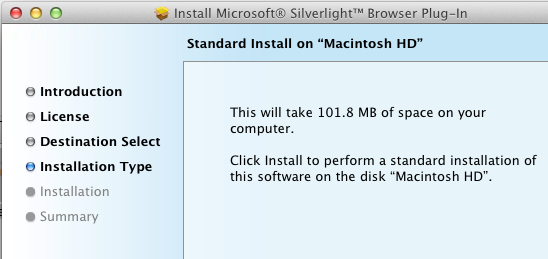
Silverlight is a cross-platform, cross-browser plug-in for Windows and Mac. It is relatively small size – less than 7MB according to Microsoft, though the Mac version seems to be bigger, with a 14MB compressed setup .dmg and apparently over 100MB once installed:

image

Never mind, it is a fine piece of work and has considerable capabilities, including the .NET Framework, the ability to render a GUI defined in XAML, multimedia playback, and support for applications running inside the browser or on the desktop. New in version 5 is better H.264 performance, 3D graphics, and Platform Invoke support on Windows enabling trusted applications to call the native API. Another change is that in-browser applications can also run with full trust, again only on Windows. The cross-platform idea has become increasingly diluted.

If Microsoft had come up with Silverlight early in the .NET story it might have become a major application platform. As it is, while still useful in some contexts, the technology has been side-lined by new things including HTML 5 and the Windows Runtime in the forthcoming Windows 8.

While I have huge respect for the team which created Silverlight and rapidly improved it, it now looks a sad story of reactive technology that failed to capture sufficient developer support. Microsoft invented Silverlight when Adobe Flash looked like it might take over as a universal runtime for web applications. The outcome was that Adobe evolved Flash with renewed vigour, keeping Silverlight at bay. Then Apple invented a new platform called iOS that supported neither Flash nor Silverlight, and the whole plug-in strategy began to look less compelling. Adobe has now reduced its focus on Flash, while Microsoft has been signalling a reduced role for Silverlight since its Professional Developers Conference in October 2010.

The question now is whether there will ever be a Silverlight 6.

Microsoft itself uses Silverlight across a number of products, such as administrative consoles for various server applications. Silverlight will be around for a while yet. Of course it is also the runtime for Windows Phone 7. Visual Studio LightSwitch generates Silverlight applications, and this one I am rather sad about, because it is an interesting tool that now seems to target the wrong platform. Perhaps the team will create an HTML 5 version one day.

Not allowed in Windows 8 Metro: porn, ads in live tiles, bugs, or opt-out data collection

Microsoft’s newly published Certification Requirements for the forthcoming Windows 8 store includes some notable points. Here are a few that caught my eye.

2.3 Your app must not use tiles or notifications for ads

No complaints about that one.

3.2 Your app must not stop responding, end unexpectedly, or contain programming errors

Hmm, this could be a tough one.

3.3 Your app must provide the same user experience on all processor types

OK, no “Intel-only” features. However you could by implication submit an “Intel-only” version of your app as long as it is called something different than than the ARM version.

3.7 Your app must not use an interaction gesture in a way that is different from how Windows uses the gesture

This is interesting as an example of enforcing application style guidelines. The intent is a consistent user experience, but is this heavy-handed?

4.1 Your app must obtain opt-in or equivalent consent to publish personal information

No stealthy personal data collection. A good thing; though if opt-in means “Hand over your data or you cannot run the app” it can still be difficult for users to avoid.

4.4 Your app must not be designed or marketed to perform, instruct, or encourage tasks that could cause physical harm to a customer or any other person

What a relief!

5.1 Your app must not contain adult content

Windows Metro a porn-free zone? This could be troublesome though. No games beyond PEGI 16? This is a preliminary document and it would not surprise me if there is some change here; maybe this is a restriction for the beta period only.

Windows Store: Microsoft explains another piece of its new platform

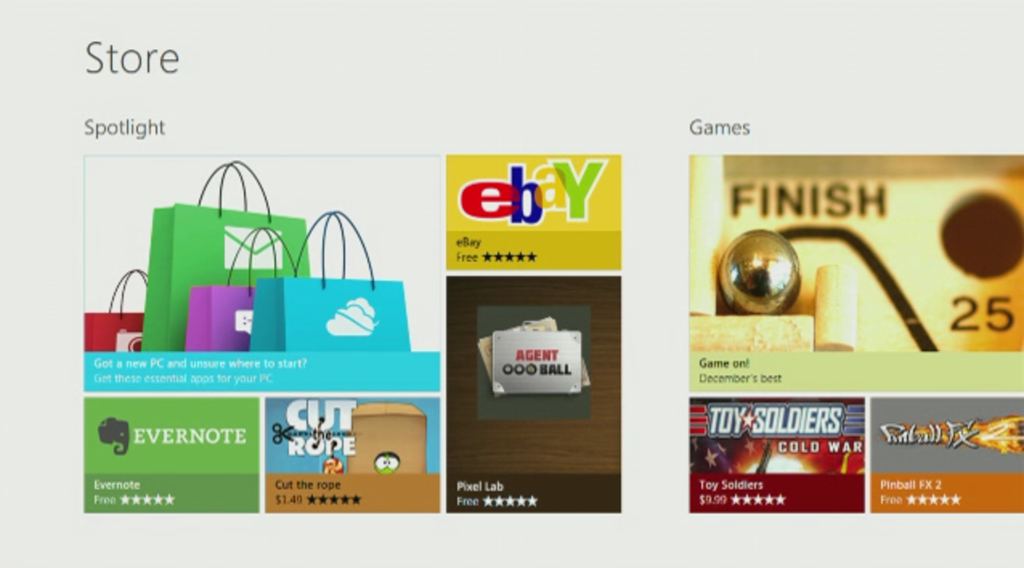
Microsoft’s Ted Dworkin, Partner Progam Manager, has posted details of how the forthcoming Windows Store will work. There is also detailed new information on MSDN. It is a key piece if you care about the next version of Windows, including details of how enterprises will be able to deploy apps as well as the terms of business for independent developers.

image

Here is a quick summary:

  • The store is both an app and a web site. The same content will automatically appear in both.
  • The store is for Metro-style apps, which run on the Windows Runtime. No word about desktop apps; my presumption is that they are excluded. The certification requirements refer only to Metro-style apps.
  • Apps can be offered as full-featured, limited or unlimited trial, upgradeable via in-app purchases.
  • Enterprise apps can be deployed through the store with access limited to employees.
  • Enterprise apps can also be deployed outside the store, using PowerShell scripts to domain-joined machines. Apps must be signed.
  • App vendors can use their own transaction engine and/or ad service if they choose, or use the built-in services for sale, in-app purchase and advertising. Subscriptions do not have to go through the store. My impression is that the initial sale does not have to be transacted through the store either but this is not 100% clear to me.
  • Developer registration for the store costs $49.00 for individuals or $99.00 for companies.
  • Revenue share is 70%, rising to 80% if you achieve over $25,000 revenue for an app.
  • Apps are subject to approval, but developers are given the App Certification Kit as part of the SDK. There is still scope for disagreement over the interpretation of policies.


There is an initial beta preview period during which all apps will be free. Microsoft has also annoyed most of the world’s developers by restricting a First Apps Contest to those who:

 are a developer – professional, hobbyist, or student – and you are a legal resident of the 50 United States and District of Columbia, France, Germany, Japan, or India

Why there are no tablets running Windows Phone 7

Once again people are asking why Microsoft has not allowed OEMs to build tablets running Windows Phone 7. Matthew Baxter-Reynolds says it is to do with income from OEM licenses:

Now, Microsoft charges OEMs far less for Windows Phone licenses (about $15 per unit) than for full-on Windows licenses (on average, working out to about $56 per unit) …  But for Ballmer and the team, this is the bad news scenario. Only $15 per licence? And even less in profit? Compared to $37 in profit? It’s a money-loser, people.

While I agree that Microsoft has a problem with its business model in the new world of mobile devices, I do not follow this reasoning. There is nothing to stop Microsoft charging more for Windows Phone OS on tablets than on phones if it could get away with it. Nor is it necessarily true that Microsoft will succeed in charging as much for Windows 8 on tablets as it does for Windows 8 on PCs. In fact, that is unlikely to be be true; they will be cheaper, especially on ARM.

If it is not this then, that still leaves the question of why Microsoft has not licensed the Windows Phone 7 OS for tablets.

Microsoft has undoubtedly fumbled tablet computing and this was a costly mistake. Nevertheless, it is a company capable of strategic thinking. I think it goes something like this, in no particular order.

First, I reckon Microsoft is thinking beyond the initial OEM license income for its profits from Windows 8 tablets. It is all about the apps – 30% of the income from every app sold on the locked-down ARM edition of Windows 8. Apps tend to be cheap, and there is cost in running the store, but there is potential for ongoing income that will exceed the initial license sale. Especially if, like Apple, Microsoft insists on a cut of subscription income, in-app advertising income, and so on.

Second, Microsoft is also betting on cloud computing. Windows Phone 7 is marketed mainly as a consumer device, but Microsoft is going to play the “this is the device for professionals” card at some point. You can bet that Windows 8 tablets, and their successors, will be promoted as the ideal client for Office 365, as well as for on-premise Exchange, SharePoint and Lync. Sell a tablet, buy a customer for Office 365. Lock customers into Office 365, and sell them other cloud applications and services. Plenty of opportunity for profit.

Third, my guess is that the Windows team at Microsoft does not consider the Windows Phone 7 OS good enough to be the foundation of its future mobile platform. They respect it enough to borrow its Metro design language, along with many aspects of the development model, but in the end Sinofsky and his team were not willing to hand over the future of Windows on devices to Windows CE and Silverlight.

What we are getting with the forthcoming Windows Runtime is a more deeply thought-through new platform in which .NET, native C++ code, and HTML 5 are equally well supported, and in which developers are forced to use asynchronous APIs that keep the user interface responsive. It will be a better app platform than the current Windows Phone OS; in fact, I fully expect Windows Runtime to migrate to the phone in some future version.

If Microsoft had allowed Windows Phone 7 onto tablets, it would have the difficult task of explaining to its customers how Windows 8 tablets differ from Windows Phone OS tablets as well as from those old Windows tablets from Bill Gates days.

Therefore Microsoft took the decision to wait until Windows 8 was ready. That was a bold decision, and it may be too late, but the reasoning is plausible.

image

Exchange 2010 Service Pack 2 with Office 365 migration wizard and retro Outlook Mini

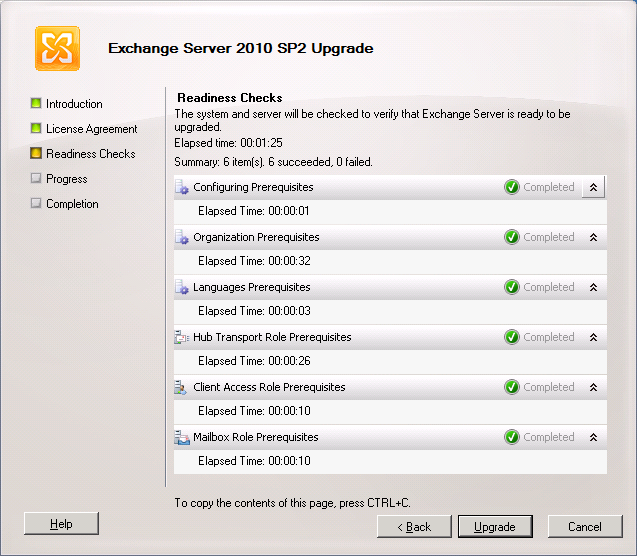
Microsoft has released Exchange 2010 SP2, which I have successfully installed on my small system.

image

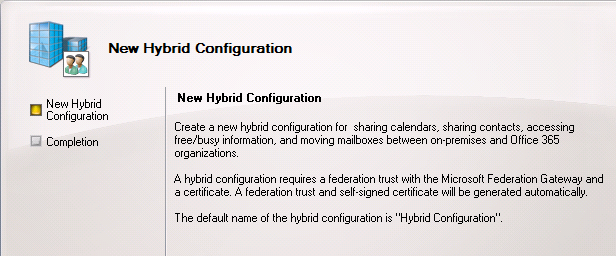
There is a description of what’s new here. The most notable features are the Hybrid Configuration Wizard for setting up co-existence between on-premise Exchange and Office 365, and Outlook Mini for low-end phones with basic browsers.

A hybrid setup lets you include on-Premise Exchange and Office 365 Exchange in a single organisation. You can move mailboxes back and forth, archive messages online (even from on-Premise mailboxes), and synchronize Active Directory information. The feature is not new, but the wizard is.

image

This looks similar to the Exchange migration tools for BPOS and Office 365 so this is mainly a matter of baking them into the product.

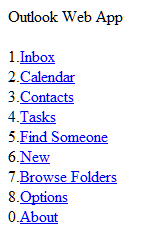
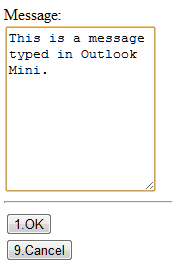
Outlook Mini is very retro; I like it. It is also called Outlook Mobile Access and is similar to a feature of Exchange 2003 though it is new code; it is actually built using Outlook Web Access forms and accessed at the url yourexchange/owa/oma. There is no automatic redirection so users will have to be shown where to find it.

image image


Finally, this note amused me as evidence of how far litigation issues have permeated into Microsoft’s products. But what is the point of a “litigation hold” if it is so easily bypassed?

In Exchange 2010 SP2, you can’t disable or remove a mailbox that has been placed on litigation hold. To bypass this restriction, you must either remove litigation hold from the mailbox, or use the new IgnoreLegalHold switch parameter when removing or disabling the mailbox.

Oxygene for Java released: develop for Android and Java runtime with Delphi language in Visual Studio

RemObjects has released Oxygene for Java, a new version of its Object Pascal compiler. Object Pascal is pretty much the Delphi language though with some additional features of its own. Previous versions target the .NET runtime, and a version of this is marketed by Embarcadero as Prism. The IDE for Oxygene is Microsoft’s Visual Studio. This new version targets both the Java Runtime and the Android Dalvik VM. The obvious target market is Delphi developers who now want to create apps for Android, or cross-platform Java applications.

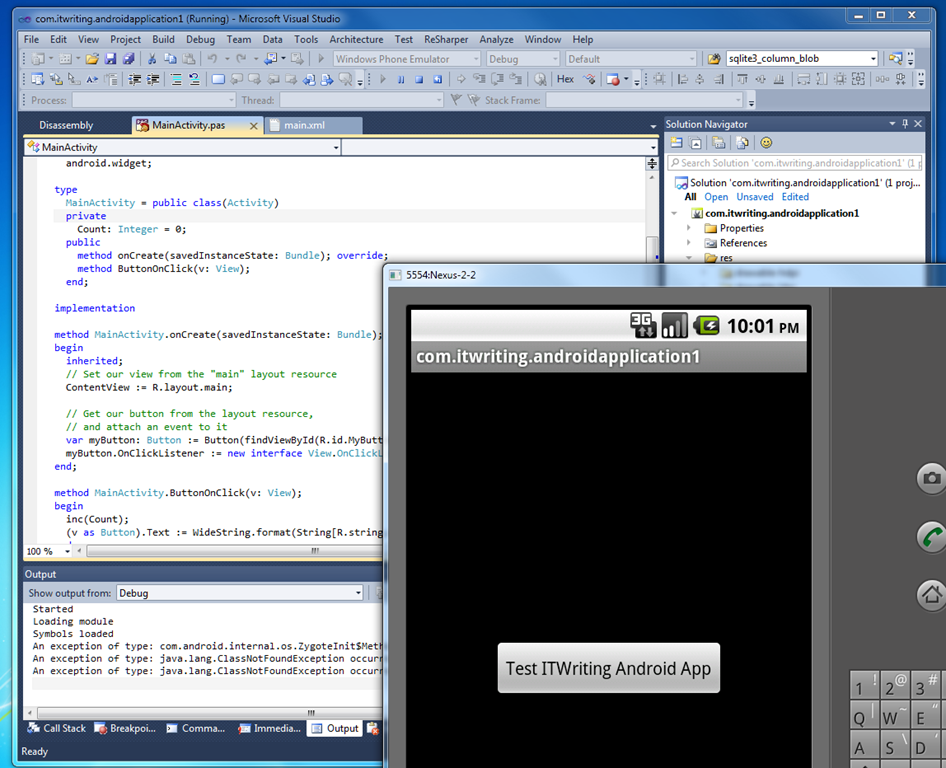
I downloaded the trial and ran the supplied Hello World in the Android emulator … it works.

image

A few further notes from the RemObjects announcement. While only Visual Studio is supported initially, an Eclipse version is also in preparation. Oxygene directly consumes .JAR libraries so you can use both first and third-party libraries. There is also a tool called Oxidizer that lets you import Java language code, which will be converted to Oxygene Object Pascal.

A point to note is that Embarcadero has already announced that its cross-platform FireMonkey framework will support Android as well as Apple iOS. This means that developers who want to code for Android in the Delphi language will have two choices. It looks to me as if Oxygene will be more suitable if you want to stay close to the Android SDK, whereas FireMonkey has its own custom-drawn user interface widgets and effects and should come into its own if you want the same code to run on both iOS and Android.

Given that a skilled Delphi developer would probably learn Java fairly quickly, how much value is there in Oxygene for Java? I guess factors include how much more productive you can be in Oxygene and the value of sharing code across projects targeting different platforms, presuming that you do not want to run Java everywhere.

Thoughts on the future of the Win32 platform

Overheard last week at a non-techy social event: “I have just got an iPad. It is gorgeous. It is amazing how much it can do” … conversation continues … “Trevor is always swearing at his computer. He always blames Microsoft. It doesn’t matter what the problem is, he blames Microsoft.”

This is the kind of conversation which is annoying to hear if you are remotely technical. I have and enjoy using an iPad, but it has many limitations and its own share of annoyances. Recently the iOS WordPress app crashed whenever I tried to moderate comments on this blog. On Windows I could have done some troubleshooting, but on the iPad there was little to do other than blindly try removal and reinstall, or wait for a fix. As for Windows, I find it generally reliable and the majority of issues I have with it are not the direct fault of Microsoft.

In other words, reality is not so clear cut; but there is a powerful myth out there that goes along the lines of the conversation I overheard; and it is a myth that is not entirely unfounded given the quality of Apple’s design work and the problems that surround what we might call the Windows ecosystem: foistware, hardware built down to a price, the peculiarities of Outlook, and so on.

I do not think conversations like that quoted above are exceptional and it illustrates the pressure Microsoft is under. For years Windows has been in an almost unassailable position because the alternatives were insufficiently compelling to most people: Linux too awkward and fractured, Mac/OSX too expensive. Now change has come about because of the rise of new kinds of devices, smartphones and tablets, for which Windows was unsuitable. The result is that Apple iOS and Google Android are widely used and growing fast.

That said, we still need PCs, and although the Mac is gaining ground the large majority of these still run Windows. The smartphone or tablet model does not fit all kinds of computing. In fact, if we are thinking of the iPad in particular, it is only a good fit for a minority of uses. I am not thinking of what you just about do with an iPad if you have to, I am thinking of the scenarios where it is your tool of choice. Take word processing for example: the iPad has a version of Pages and you can get an external keyboard but even so I would rather type on a PC or a Mac, or even a netbook, and will get my work done quicker that way.

image

Leaving aside the software that is available, a full PC or Mac gives you keyboard, mouse, and easily supports one or more large high-resolution screens. Whether it is Microsoft Excel, Adobe Photoshop, the latest graphics-intensive game like Bethseda’s Skyrim, CAD software, or development tools like Visual Studio or Eclipse, there are many activities for which a tablet is a poor PC substitute.

Even for things for which a tablet is generally considered good, such as web browsing, a full PC or notebook is better. When browsing the web on an iPad there are little annoyances like slower typing of search queries (and the often daft auto-correct in iOS), awkwardness of looking up a password for a login and pasting it into the browser, small screen size making you scroll around, difficulty of hitting small hyperlinks on sites like discussion forums, and so on.

All of this means that the traditional PC, Mac or notebook seems still to have a strong future, which seems further to imply that Windows also is secure.

I would argue though that this is a rose-tinted view of the future of the Win32/Win64 platform – by which I mean full desktop Windows rather than the “Metro” tablet platform which Microsoft has previewed for the dual-personality Windows 8. Here are three reasons why it is under threat:

1. Tablets will get better and will gradually encroach on the PC market as they become more capable. This process will be complemented by web sites adapting to work better for the growing number of tablet users.

2. Hybrid devices like the Asus Eee Pad Transformer, which runs Android but also docks into a laptop-like keyboard and clamshell case, will cause users to question whether they really need to replace their Windows laptop when it wears out.

3. The drive towards cloud computing will reduce our dependence on desktop applications. Although Google’s Chromebook has not yet caught on, the fact that it exists shows the progress cloud computing is making: a notebook that only has a web browser is a viable proposition.

My assumption is that many of us would like to use tablets for a greater proportion of our computing activities if we could easily do so, because we like their mobility, convenience, low power demands, and relatively low cost. This is especially true for consumers, and less applicable to more regimented offices where there is a computer on every desk.

Another factor for Win32 is that Microsoft itself will slow down its future development, concentrating instead on Metro and its Windows Runtime, as well as cloud services. There are good business reasons for this. Microsoft is not under pressure to improve Win32; users would like it to run faster and with greater reliability, but their main demand is that it continues to run their critical applications successfully.

The conclusion: although Win32 will remain an important and stable platform for many years to come, it is now in slow decline. This will be the case whether or not Microsoft manages to bring Windows itself back on track with a success for Windows 8 on tablets, and overturns the assumption reflected in my initial quote: that an Apple iPad is delightful and Windows nothing but problems.

Windows Phone, Exchange, and self-signed certificates

I am setting up a Nokia Lumia phone, which runs Windows Phone 7.5 “Mango”. I am impressed with the smoothness of the setup experience, though I had one slight hassle which I do not blame on Nokia or Microsoft because it is is not typical.

I run an Exchange Server (and SharePoint) for test purposes with a self-signed certificate. On the iPhone and I think Android, you just get a warning the first time you connect and after that it all works. Windows Phone though gives you a certificate error when Outlook tries to connect and will not let you proceed further.

Which of these approaches is right is a moot point: convenience versus security I guess.

Fortunately it is not too hard to get Windows Phone to trust your certificates. Here is what I did:

1. Email the certificate(s) to myself on Google Mail.

2. Go to Google Mail in the phone’s browser. For this to work I found I had to use the Basic HTML view, as the mobile view did not let me download the attachments.

3. Open the email you sent to yourself. Tap the attachment. Windows Phone offers to install the certificate, tap to install.

4. Now go back to Outlook and synchronise, everything works.

You will also need this for SharePoint if you want to use Office on the device.

Of course if your Exchange and SharePoint use a certificate from a trusted certificate provider then these steps are not necessary.

HTML5 scorecard: Amazon Kindle Fire weak, iOS 5 great, IE10 preview one of the best

The Sencha blog has a great series of posts on HTML5 support on various devices. This is of direct interest to Sencha because its products are JavaScript and CSS application frameworks, Sencha Touch for mobile and ExtJS for any browser. The latest post is on the Amazon Kindle Fire – and it is weak:

The Amazon Kindle Fire doesn’t seem designed to run HTML5 apps as a primary goal. It does a good job of displaying ordinary web pages and its resolution and rendering capabilities meet that need well. But there are too many sharp edges, performance issues, and missing HTML5 features for us to recommend that any developer create web apps primarily for the Kindle Fire. The iPad 2 running iOS 5 continues to be the tablet to beat, with the PlayBook a respectable runner-up in HTML5 capabilities.

Part of the problem is that the Fire runs Android 2.3.4 (Gingerbread) which has a weaker browser than later versions. That is not the only source of disappointment though. According to Sencha’s Michael Mullany, the GPU is not used for hardware acceleration of browser content, the JavaScript timer is laggy, there is no embedded HTML5 video (videos launch in a separate player), and CSS corners are not properly anti-aliased.

But what about the Kindle’s cloud-accelerated browsing that we heard so much about when it was announced? This is the biggest disappointment:

One of the main selling points of the Kindle browser is supposed to be its cloud-caching and pipelined HTTP connection that uses the SPDY protocol. This does seem to speed up normal page browsing a little, but it’s not very noticeable and we didn’t test this rigorously. But for HTML5 web apps, where code is downloaded and executed, there doesn’t seem to be any performance difference when we tested with acceleration on and off. It doesn’t appear as if client JavaScript is executed on the server-side at all, so the Kindle does not seem to have Opera Mini-style server-side execution. And SunSpider scores were essentially the same when accelerated browsing was turned on or off.

Moving on from Kindle, it is interesting but not surprising to see a great report for HTML5 in Apple’s iOS 5. Less expected though is a big thumbs-up for HTML5 in Microsoft’s IE10 preview on Windows 8:

Simply put, (and with the caveat that we were running on the notably overpowered developer preview hardware) the IE10 HTML5 experience is one of the best we’ve seen on any platform to date. After a decade of web neglect, Microsoft is back with a vengeance.

image

The main caveat is the absence of WebGL. Microsoft is supporting its own 3D graphics library.

Another worry for Microsoft is simply the level of hostility towards the company and IE in particular, among the developer and designer community it so much wants to reach. You can get a flavour of this from some of the comments to Mullany’s post, for example:

I never really like Windows and I absolutely despise Internet Explorer. There are so many exceptions in code to be made for Internet Explorer that i stopped trying so hard to make it look the same as other browsers. Hopefully, IE 10 will stop all of these exceptions and weird additions that are made to websites that make everything instantly awful so I can actually go back to trying to make things look nice in IE. It’s really sad though that so many people use Windows and IE that we cannot ditch it for a better system and better browser.

What about Android? The most recent offering covered in the Sencha series is Motorola Xoom which is a disaster:

We were excited about the first true Android operating system for tablets and had high hopes for a mobile browser that was as powerful as the platform. Sadly, the Xoom and Honeycomb are a real disappointment. We found consistent and reproducible issues in CSS3 Animations and CSS3 Transitions among other things. We had issues where the browser either hung or crashed. Regular scrolling was slow or below full framerate. We had issues where media playback failed or performed incorrectly. At times it felt like we were using a preproduction device, but we bought our test device from a Verizon Wireless store.

I have a hunch that the latest Galaxy Tab might fare better. Sencha did like the HTML5 support in the BlackBerry PlayBook though.

With Adobe Flash now in decline on mobile devices (Adobe is no longer working on the mobile Flash player) HTML5 support is all-important for rich browser-hosted apps; I will be watching with interest for future Sencha reports.

Microsoft backs ECMAScript, dismisses Google Dart

Microsoft has posted an article on Evolving ECMAScript on its IE Blog. ECMAScript is the official standard for what we call JavaScript. The company is proposing some minor additions “to address gaps in Math, String and Number functionality as well as Globalization.” It has also taken the opportunity to take a shot at Google, which is proposing a new web language called Dart:

Some examples, like Dart, portend that JavaScript has fundamental flaws and to support these scenarios requires a “clean break” from JavaScript in both syntax and runtime. We disagree with this point of view. We believe that with committee participant focus, the standards runtime can be expanded and the syntactic features necessary to support JavaScript at scale can be built upon the existing JavaScript standard.

Dart will compile to JavaScript so there is a measure of compatibility, but if the language catches on then browsers without a native implementation will be disadvantaged.